|
I love visiting lighthouses and the one at the Mull of Galloway is special because it's at Scotland's most southerly point. This lighthouse is also open to visitors, which is not always possible at other lighthouses. Here, you can climb the lighthouse steps for spectacular views. You can also enjoy a refreshment in Scotland's most southerly cafe. Mull of Galloway is about 22 miles from Stranraer.
Getting there
I did this as a day trip from Portpatrick, around 23 miles from the Mull of Galloway lighthouse. Portpatrick is pretty straightforward to reach using a train to Stranraer, followed by a 7 mile cycle. All the details are on my Portpatrick blog.
The first 16 miles of the route is described in my cycling to Logan Botanic Garden blog. From Logan Botanic Garden I took the B7065 to reach the lighthouse. It starts off as a 2 lane road, but 5 miles or so from the lighthouse it becomes single-track with passing places. Farms and sea
A large part of this route is farming land with views out to the sea. The road was quiet to begin with, but got busier with cars the closer I got to the lighthouse. It's not a surprise as this is one of the most popular things to visit in this area.
The coastal views become very impressive, with cliffs and the gleaming white lighthouse.
There's a lot of good walking here and I spent some time exploring on foot. I headed to Lagvag Point, the furthest south point of Scotland, looking towards the Isle of Man.
From here you might be lucky to witness the Nine Tides. It's caused by tidal rips after low tide. There is a local legend that 9 witches caused the tides in an attempt to shipwreck a witchfinder coming over from Ireland. The Foghorn
I took the steps down to the foghorn. It's been here since 1894 and operated until 1987, when sea visibility dropped below 4 miles. The foghorn was restored in 2018 and on Sundays you may be able to hear its blasts, when its turned on specifically for visitors. It's the only operational foghorn on mainland Scotland.
The lighthouse was built in 1830 and is 26 metres high. A lighthouse keeper, 2 assistants and their families lived here until the lighthouse was automated in 1988. It is now operated remotely from Edinburgh.
Designed and built by Robert Stevenson, the famous Scottish engineer. The Stevenson family built most of Scotland's lighthouses. The tower was not open during my visit, but you can usually climb the steps for views over to Ireland, England and the Isle of Man.
The engine room houses an exhibition about the lighthouse. You can find out all about the history of the lighthouse. The engines are turned on for visitors during occasional demonstrations.
Scotland's most southerly cafe
The cafe is in a separate building with a turf roof, so that it blends in with the landscape. The windows and outdoor patio provide amazing views. You can get breakfast, sandwiches, burgers, salads and more. I enjoyed a good coffee and slice of banoffee pie.
Returning via Scotland's southermost village
I made my way back to Portpatrick using a different route. I left the lighthouse at 5pm and this turned out to be an ideal time for getting the A716 coastal road mostly to myself. I went through Drummore, the most southerly village in Scotland.
Where to next?
During my trip to the Mull of Galloway I explored:
Other lighthouse experiences
My favourite lighthouse experience in Scotland was cycling to the Mull of Kintyre lighthouse. It's even more remote than the Mull of Galloway and you cannot visit the lighthouse, but the journey to get there is spectacular. In fact, the lack of visitors made this more of a memorable experience for me.
The journey to the Cap Wrath lighthouse is another unforgettable experience. There's a museum of Scottish Lighthouses in Fraserburgh.
0 Comments
It does not feel like Scotland here. At Logan Botanic gardens its more like Australia or South America. Thanks to the warming influence of the Gulf Stream, these gardens are home to an incredible collection of exotic plants. The gardens are located in south-west Scotland, around 14 miles from Portpatrick.
Getting there
Use Portpatrick as a base to get to Logan. Porpatrick is pretty straightforward to reach using a train to Stranraer, followed by a 7 mile cycle. All the details are on my Portpatrick blog.
Tiny, hilly roads
It took me a while to find my way out of Portpatrick. I decided to avoid the B7042 and take minor roads that felt like a confusing spiderweb of tarmac. There are lots of junctions and its easy to go the wrong way. Hills appear with very little warning, meaning lots of gear changes.
It's also lovely. There were few vehicles and no people. A rabbit dashed in front of me. Flocks of small birds erupted from hedges. Some roads had a strip of grass growing down the middle, the classic sign of a road less travelled. The verges were thick with grass, wildflowers and thistles. I spotted a Belted Galloway, the breed of cattle famous in this region of Scotland. Kirkmadrine stones
After 10 miles I reached a chapel that's home to some of Scotland's oldest surviving Christian monuments. The carved stones at Kirkmadrine date from the 6th century. They are kept behind glass in the porch of the chapel. This preserves them from the weather and means this 'museum' is always open.
The thing I found the most interesting was a large stone with three smooth indents. These had been rubbed away by people turning pebbles on the stone, as they prayed.
I had the place to myself. It was a peaceful spot with cows lounging in the sun and views of the sea.
Coast road to Logan
It's 6 miles from Kirkmadrine to Logan Botanic Garden. I took the A716 coast road, which skirted many tempting beaches.
Leaving Scotland behind
At Logan Botanic Garden winding paths take you by towering palms, giant tree ferns, and exotic flowers. You feel like you've left Scotland and landed somewhere else. The member of staff at the reception told me an Australian visitor had thought the 'Tasmanian Creek' part of the garden was incredibly realistic. They said the only thing missing was the wallabies.
The gardens were started by the McDouall family in the 1870s. Agnes was a keen gardener and introduced plants from the warmer regions of the planet. The passion was passed through the family. In 1969 the garden was gifted to the nation and became part of the Royal Botanic Garden Edinburgh
My favourite part of the gardens was the Gunnera Bog. You walk inside this canopy of weird plants with huge leaves and stalks with spiky bits. The Gunnera comes from South-east Brazil and the leaves can grow up 2.5m across. There's nothing like this in Scotland and it was a unique experience to be among these magnificent plants.
The Potting Shed cafe at Logan is a great spot to enjoy locally-sourced produce. I loved my Mull of Galloway crab salad.
From Logan Botanic Garden its 10 miles to the Mull of Galloway Lighthouse, one of the main attractions in this area.
Read my blog about cycling to the Mull of Galloway lighthouse.
It's one of Scotland's most attractive seaside villages. Located in southwest Scotland, its quite easy to get there by taking a train to Stranraer and then cycling 7 miles. The village is a good base for visiting places like Logan Botanic Garden and the Mull of Galloway lighthouse.
Highlights
Getting there
Take a look at where Portpatrick is on a map and you'd be forgiven for thinking it's a bit out of the way. It's on the west coast of a peninsula, the Rhins of Galloway, which is closer to Belfast in Northern Ireland than it is to Glasgow.
But to get there all you have to do is jump on a train from Glasgow to Stranraer. That takes around 2.5 hours. Then cycle about 7 miles. Stranraer
Stranraer station was built to connect with ferries to Northern Ireland, so it is located on a pier. Since 2011 ferries were moved to a terminal near Cairnryan, so the station location now feels odd. There's a lot of fenced off infrastructure from the closed ferry terminal and it feels quite far from the town centre.
Castle of St John
It's worth taking a look at Stranraer's most distinctive building, the castle of St John. It dates from the 1500s and it is a free museum. You can climb its spiral staircase to the top for great views over the town. In the early 1800s it was used as a prison- look for the prisoner's drawings of ships carved on the cell doors.
Stranraer to Portpatrick, 7.2 miles
The Old Military Road is the most direct route from Stranraer to Port Patrick. It gets you there quickly and safely. The cycling was easy with not many cars. After a mile or so its worth looking back for the great view over Stranraer and Loch Ryan. The town really looks grey from here, the main colour of the buildings, but the backdrop of the sea and hills creates some balance.
The road smelt of ferns, grass and manure. I heard sheep, crows and songbirds. The loudest sound was spinning wind turbines.
At one point I found a group of curious lambs, their ears looking more like those of rabbits. Enjoy a drink at Portpatrick harbour
The picturesque harbour with its pastel coloured houses is the highlight of Port Patrick. It's everything you dreamed a Scottish seaside village would be. In the evenings there can be a lively atmosphere with plenty of outside seating to enjoy a drink. I had a pint at The Crown Hotel, and it was so pleasant and relaxing to overlook the harbour and feel the gentle sea breeze.
Eating out in Portpatrick
There's a lot of choice for eating out in Portpatrick. I stayed at the Fernhill Hotel and had an amazing meal. The starter was a trio of West Coast seafood. This was 3 neatly presented rounds- one with white crab meat, one with prawns marie rose and smoked salmon and potato salad. The main course was sea bream with Isle of Aran mustard and dill dressing. It came with potatoes, beetroot and tomatoes. The flavour combinations of this worked so well. The dessert was a chocolate torte with rum and raisin ice cream.
Walk to Dunskey Castle
This clifftop walk to a ruined castle was my favourite thing about Portpatrick It's only about half a mile to the castle. It begins with a lot of steps and an uphill path to the clifftop.
The view over the cluster of buildings and the harbour is great from up here. At one point you are sandwiched between the cliffs and a railway cutting. Until the 1960s there used to be a railway between here and Stranraer and this part of the line is an incredible piece of engineering.
The drop to the sea is steep and waves splashed into the rocky formations whilst seabirds made a racket. My bare legs brushed against thick grass and the route was dotted with wildflowers.
Day trips from Port Patrick
Visit my blogs on the other attractions I explored from Portpatrick:
An Easy Escape to a Remote and Romantic Scottish Castle. Morton Castle in Dumfries and Galloway3/6/2018
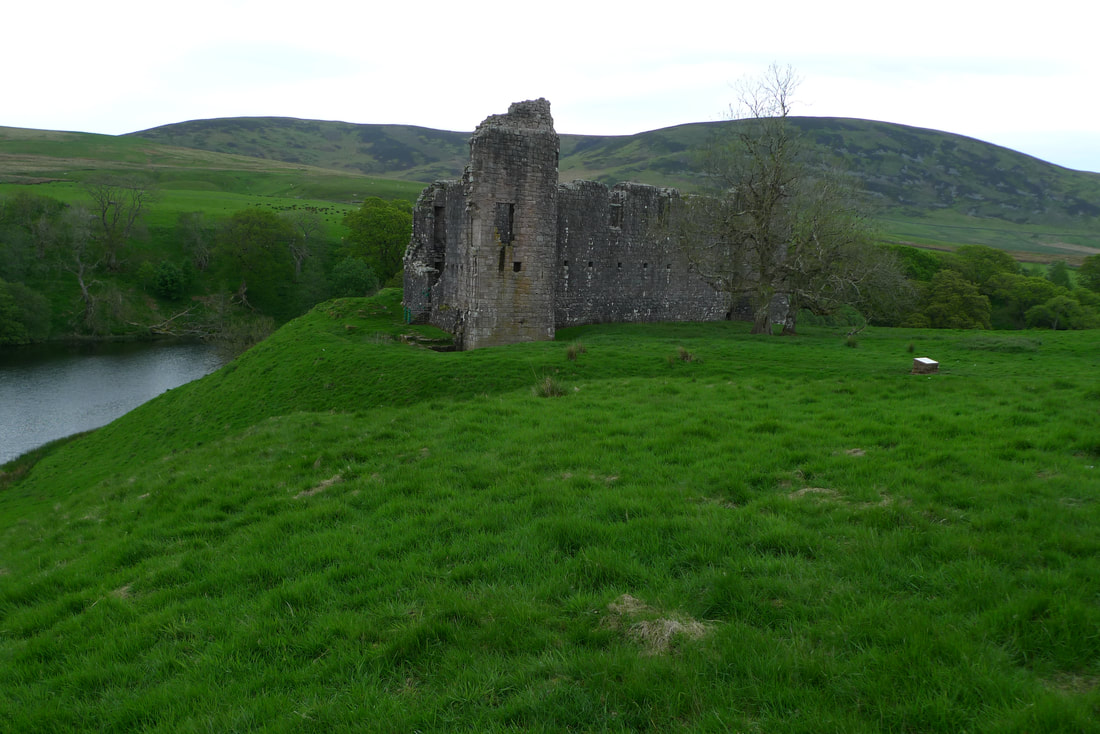
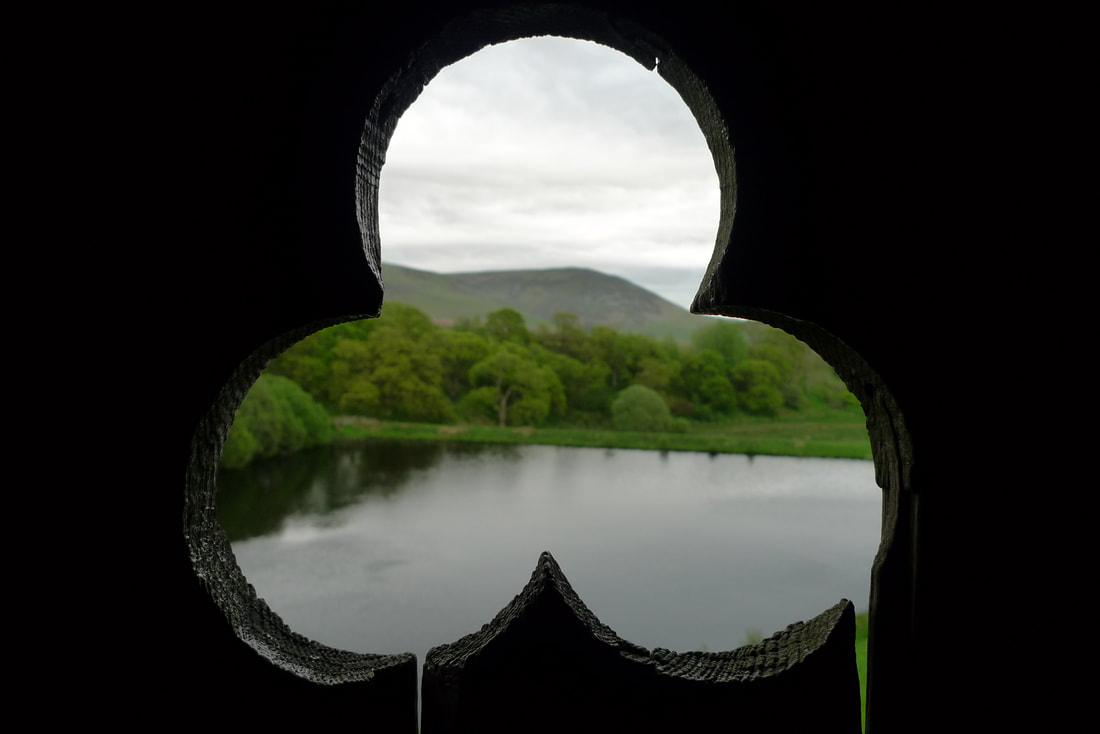
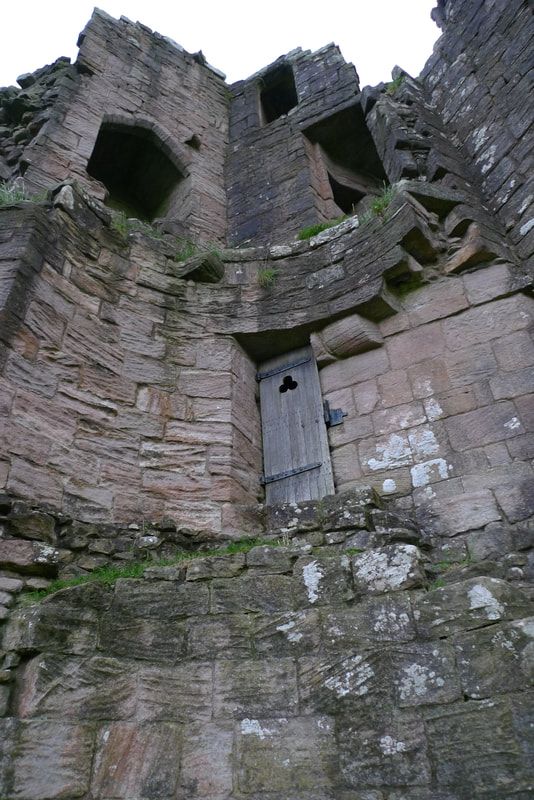
Are you looking for that perfect Scottish castle ruin? A place that you can have all to yourself? A place that has magnificent scenery? Morton Castle could be just what you are looking for. And you don't have to travel for miles and miles to get there-it is just a few hours from Glasgow.
Morton Castle is so remote and challenging to find that you will easily feel that you are deep in the Scottish Highlands, but you may be surprised to learn that it is in the south of Scotland, in Dumfries and Galloway. To get there take a train from Glasgow to Sanquhar. In just 1 hour and 20 minutes you are deposited in this tranquil town surrounded by fine countryside. Find out more about Sanquhar in my travel feature on the area.
You can use this map to get to Morton Castle from Sanquhar.
This map also includes directions to Drumlanrig Castle which is on the way and worth visiting. From Sanquhar it is 14.5 miles to Morton castle, a bit less if you choose not to visit Drumlanrig. The route is on single-track lanes that are little troubled by vehicular traffic. It is glorious cycling with forest, fields and impressive panoramas of lush, green hills. There is a great variety of scenery within a relatively short distance, making this one of the best short cycle routes that I have found in Scotland.
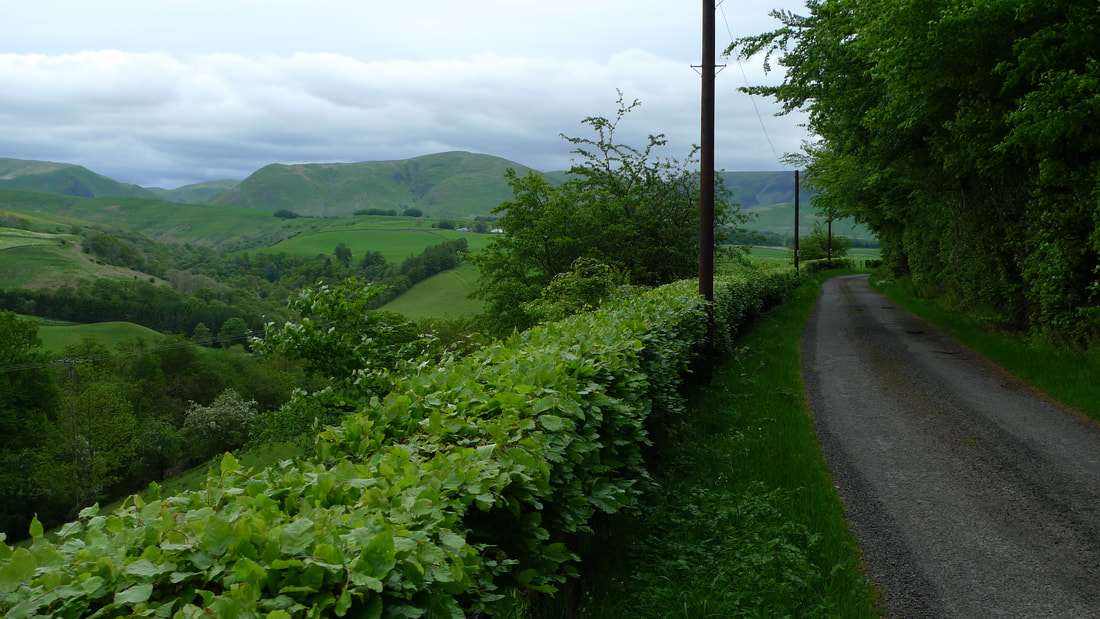
The final few miles requires the crossing of two A-roads, but at the time of my visit there was no traffic and it was easy to cycle across to the other side.
There is a distinct lack of signage to the castle, so you may feel that you are lost or you have travelled too far. But just keep going and you will find it. The last stretch of the road is lined with trees, so there is no clue to the magnificence of the landscape that the castle sits in. This means that it takes you by surprise. One minute you are on a straight road, quiet and unmemorable. The next minute you find yourself deposited somewhere with a loch and hills. Is it the Scottish Highlands? That's the funny thing. The Scotland of the imagination is a place where travel north, to the Highlands, seems the only way to discover glorious scenery and fairy tale castles. The south of the country is somewhat undiscovered, but Morton Castle goes to show that you can find the Scotland of your dreams in this area.
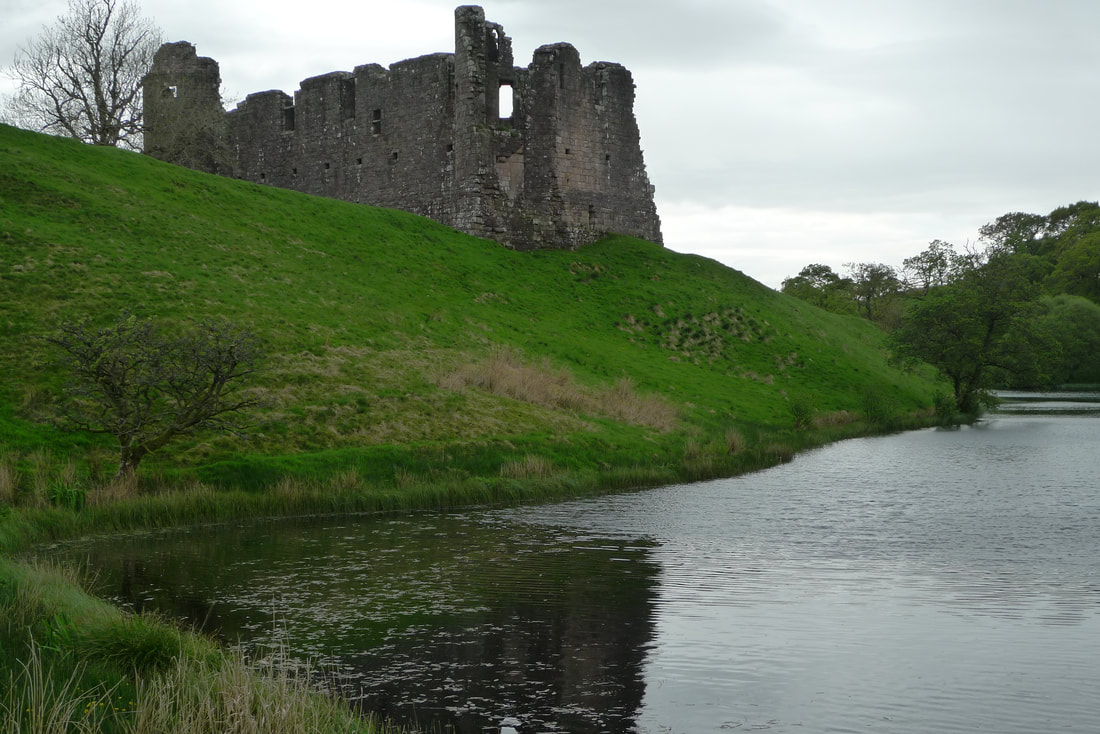
This castle has no visitor centre, cafe or shop. In fact, there is very little to see, but that keeps it free of crowds and probably means you will have it all to yourself.
You can go inside the ruin and have a wander, but it is just a shell with no interior walls or roof.
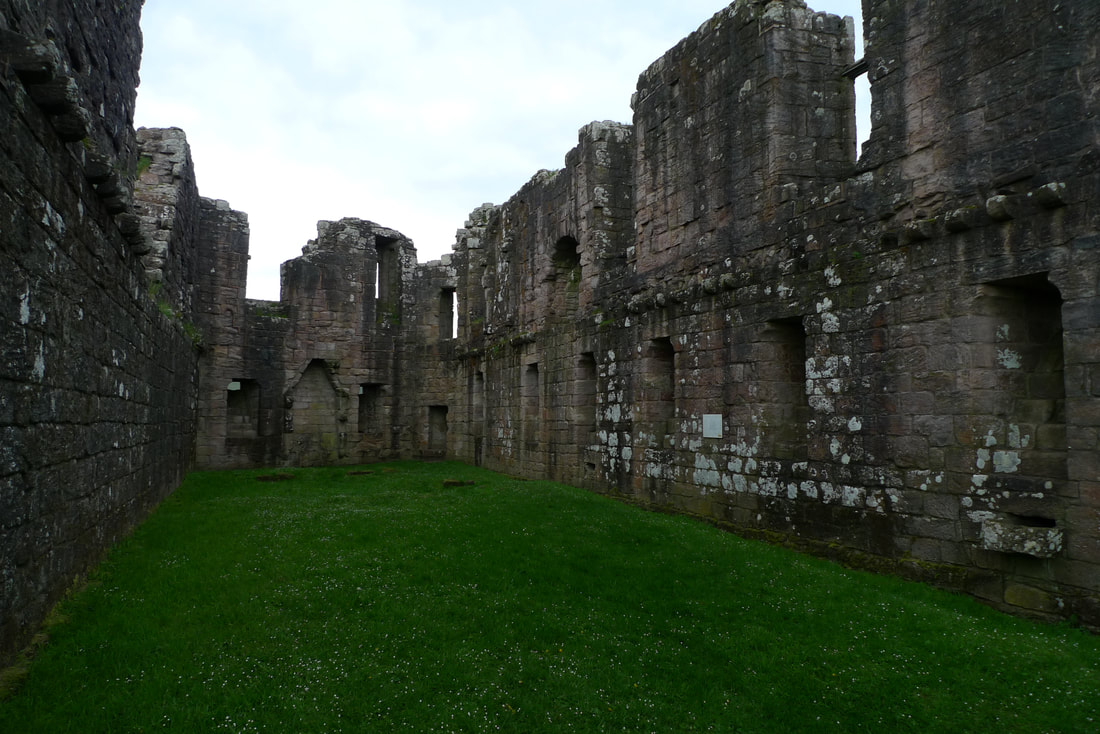
Little is know about the castle's history. It was probably built around 1300, but nobody knows for sure. There is also no certainty about who built the castle, but it came into the hands of the Douglas family until it fell into ruin in the eighteenth century.
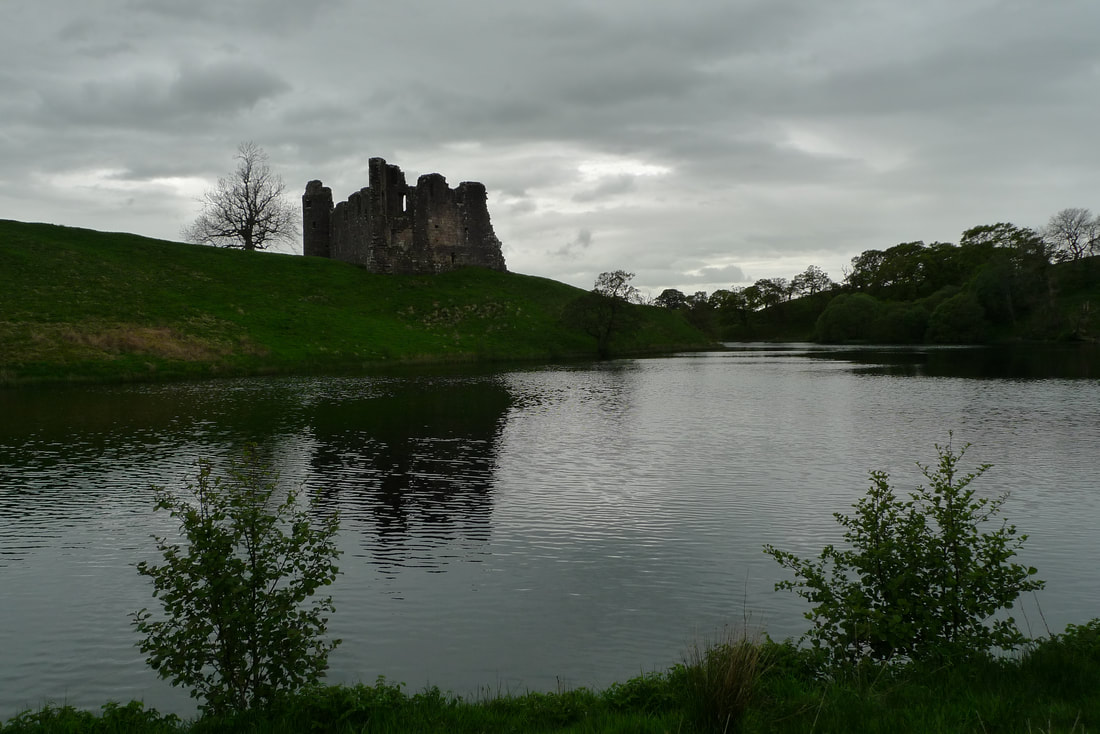
The castle sits on a triangle of land, jutting over Loch Morton with the sweep of the Lowther Hills on the horizon. This setting is breathtaking and the reason that this castle is so special and worth seeking out.
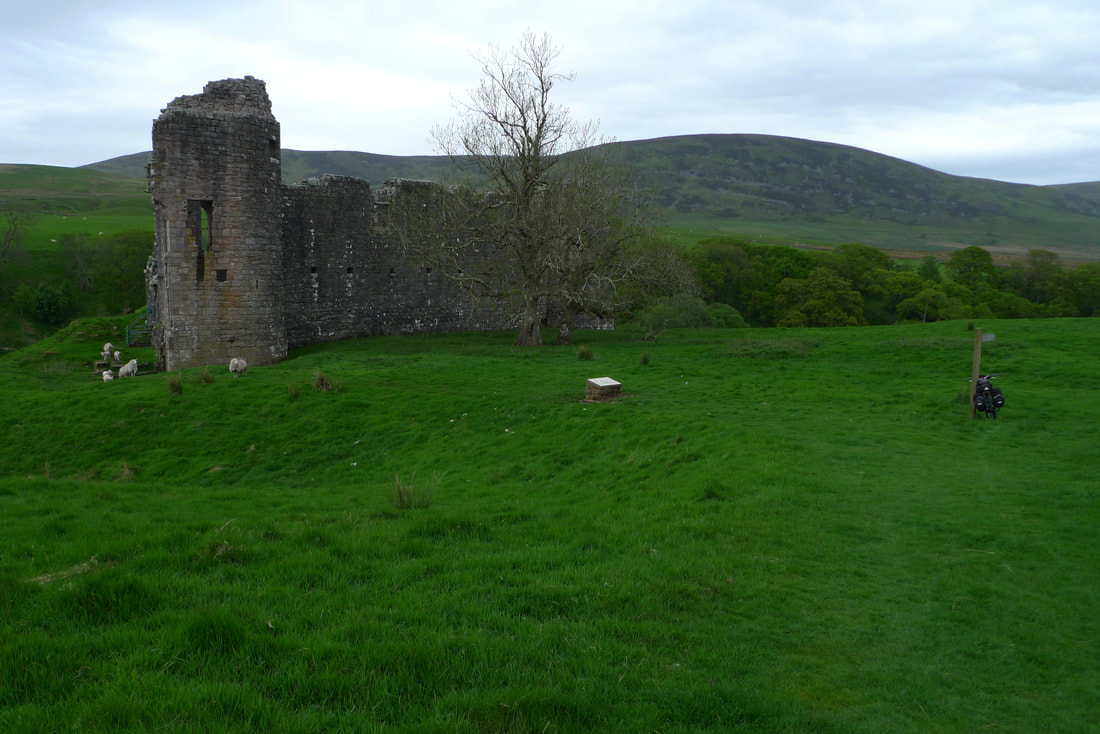
This is the kind of place to bring a picnic and spend a day enjoying the peace and quiet. It is so easy to get here from central Scotland that you could easily do this as a day trip and that makes it a perfect escape from city life.
Spend longer in the area and visit Drumlanrig Castle or cycle to Scotland's highest village at Wanlockhead. |
Categories
All
Archives
July 2026
|