|
Ah, Scotland – a land of rugged landscapes, historic castles, and a captivating blend of culture and nature. If you're planning a road trip through this picturesque paradise, get ready for a journey that promises breathtaking vistas and unforgettable experiences. From navigating cell service dead zones to indulging in delectable Scottish cuisine, here are three essential tips to ensure your Scottish road trip is nothing short of epic. 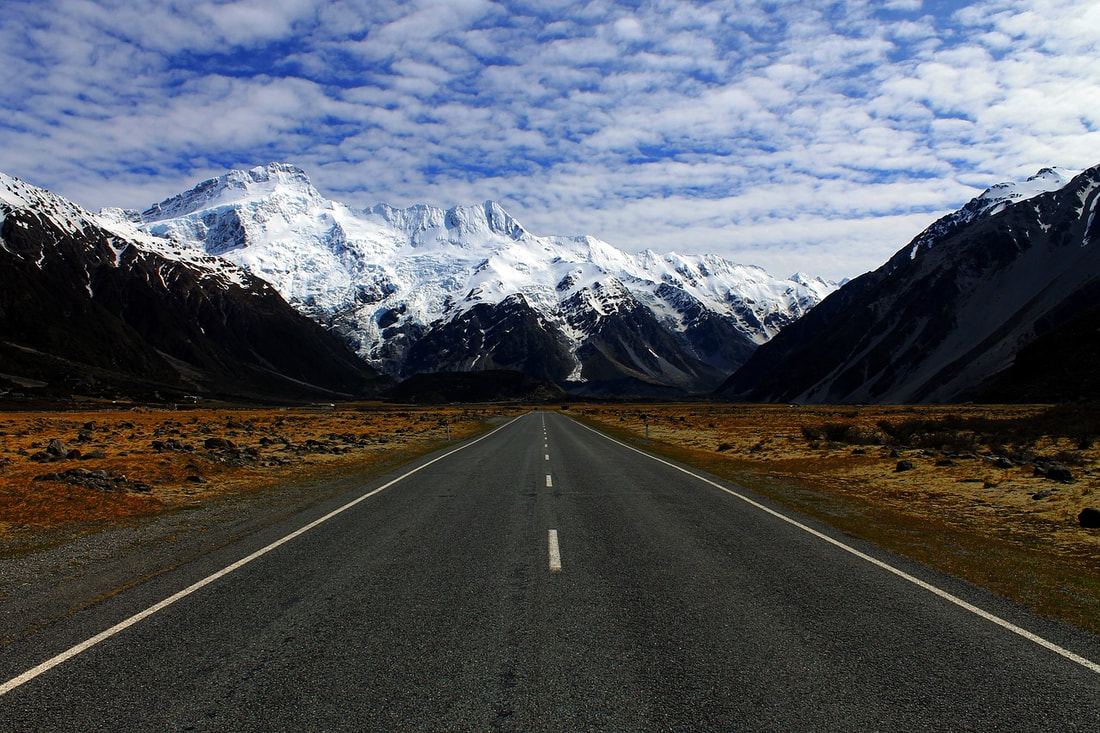 1. Conquering cell service conundrums: staying connected on the goPicture this: you're driving through the stunning Scottish Highlands, eager to capture every breathtaking view and share it with the world. But as you reach the peak of a mountain pass, your cell service fizzles out, leaving you in a digital dead zone. Fear not, intrepid traveller, for conquering cell service conundrums requires a bit of preparation and savvy. Before embarking on your road trip, research the areas you'll be visiting and check the coverage maps of your cell service provider. While Scotland's remote beauty can sometimes come with limited connectivity, you can boost your chances of staying connected by investing in a portable Wi-Fi hotspot or a local SIM card. During your downtime, you probably won’t struggle to get a connection strong enough to browse social media, play slots online, or upload your photos to cloud storage. Live gaming and streaming movies to your phone is probably a no-go, so download a few titles to watch in the evenings. Additionally, consider downloading maps and navigation apps that offer offline capabilities. This way, you can still navigate your way through winding roads and hidden gems, even when your cell service decides to take a breather. Remember, while the allure of disconnecting from the digital world is tempting, a bit of connectivity can go a long way in enhancing your road trip experience. 2. Savouring the flavor: indulge in authentic Scottish cuisine No road trip is complete without culinary adventures, and Scotland is a treasure trove of flavours waiting to be explored. From hearty classics to delectable seafood, Scottish cuisine is a feast for the senses that will leave your taste buds dancing with delight. While exploring the Scottish culinary landscape, don't miss the opportunity to savour traditional dishes like haggis, neeps and tatties (turnips and potatoes), and a buttery slice of Dundee cake. If you're a seafood enthusiast, indulge in succulent Scottish salmon, brimming with the freshness of the surrounding seas. 3. Embrace the unpredictable: weather and packing essentials Ah, Scottish weather – a tapestry of sun, rain, wind, and mist that can change in the blink of an eye. As you embark on your road trip, it's essential to embrace the unpredictable nature of the Scottish climate and pack accordingly.
Layering is your best friend when it comes to dressing for the ever-changing weather. Pack waterproof and windproof outer layers, along with warm sweaters and comfortable hiking boots. Don't forget to bring a trusty umbrella and a sturdy rain jacket that can withstand the occasional downpour. And let's not forget the essentials for exploring Scotland's stunning natural landscapes. From the ancient beauty of Loch Ness to the majestic heights of Ben Nevis, packing hiking gear, including sturdy footwear and a backpack with snacks and water, is a must for any adventure-seeking traveller. As you set off on your Scottish road trip, remember that the journey is just as important as the destination. Conquering cell service challenges, savouring authentic Scottish cuisine, and embracing the unpredictable weather will all contribute to a road trip experience that's rich with memories and stories to share. So, buckle up, crank up your favourite Scottish tunes, and let the winding roads guide you through a land of enchantment and discovery. From the mist-covered glens to the charming villages, Scotland's roads are a gateway to the heart and soul of a country that's waiting to welcome you with open arms. Adventure awaits – all you need to do is take the first step onto Scotland's storied highways.
0 Comments
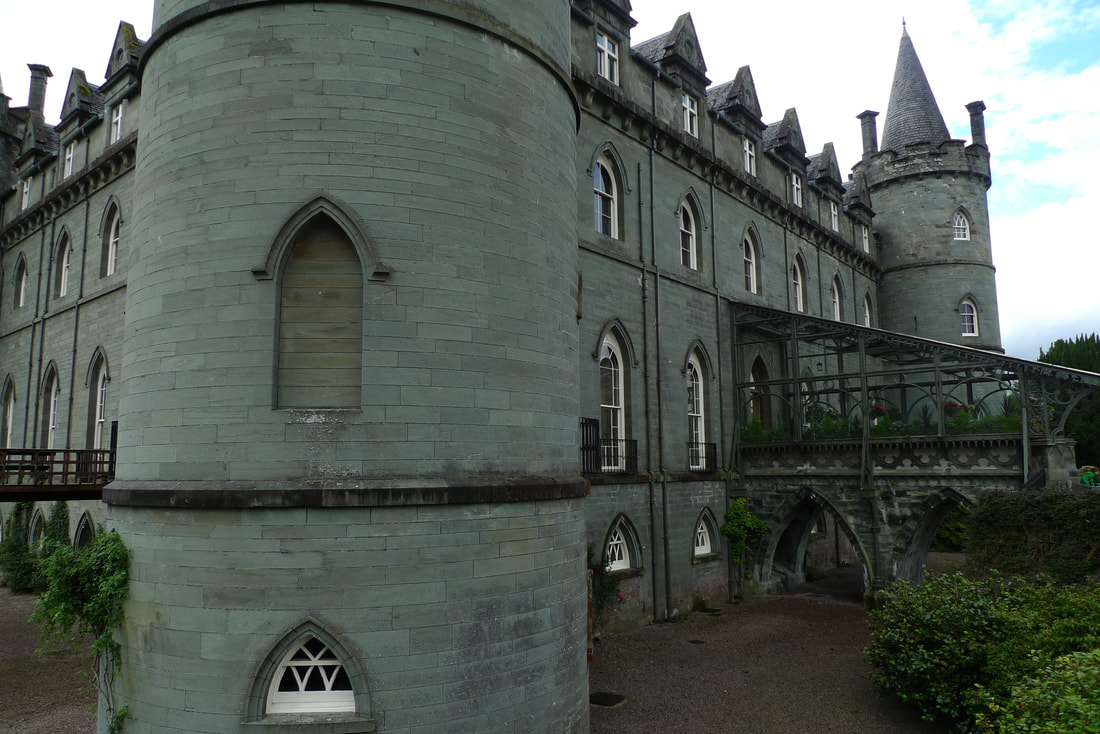 Turrets. Lavish interiors. Immaculate gardens. Used as a location in films. Inveraray Castle ticks all the boxes for 'classic Scottish castle'. It's around 60 miles from Glasgow and is still the family home of the Dukes of Argyll. Getting hereMy cycling to Inveraray post will help you plan your route. It involves taking a train to Dalmally, followed by a 15 mile cycle. Botanical entranceProbably my favourite thing about this castle is the entrance. You walk under a glass canopy adorned with colourful flowers and plants. It sets the scene that this is a home, a welcoming place and not a fortress to keep people out. 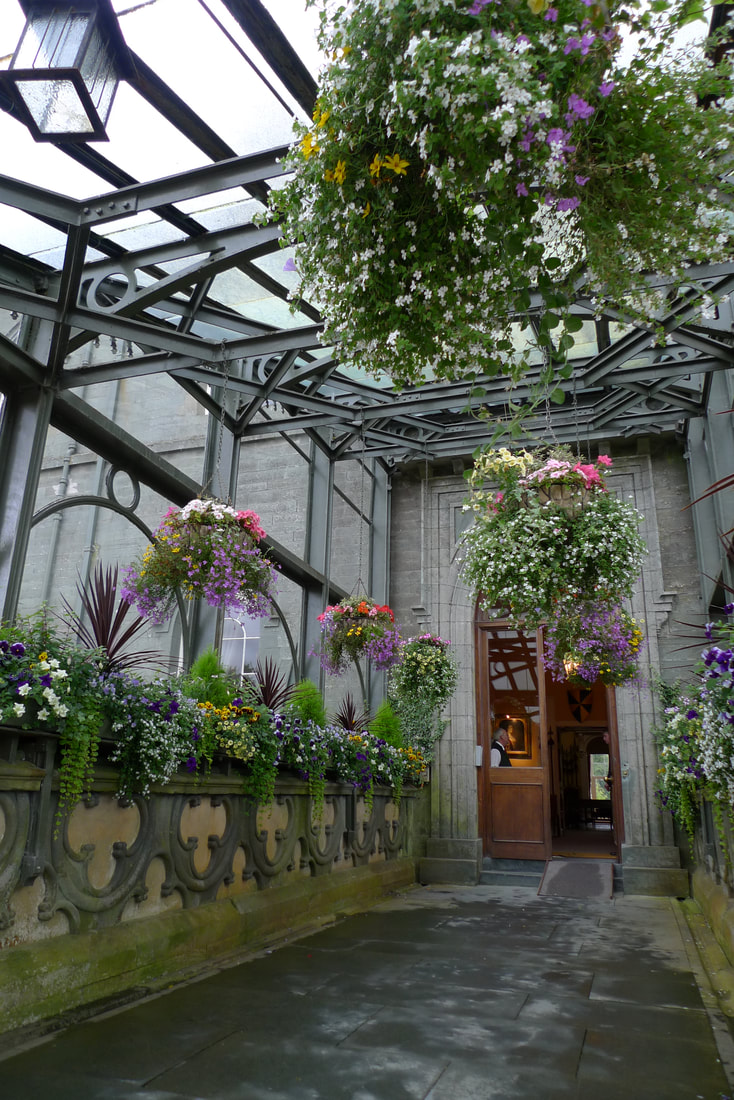 Entrance canopy to Inveraray Castle 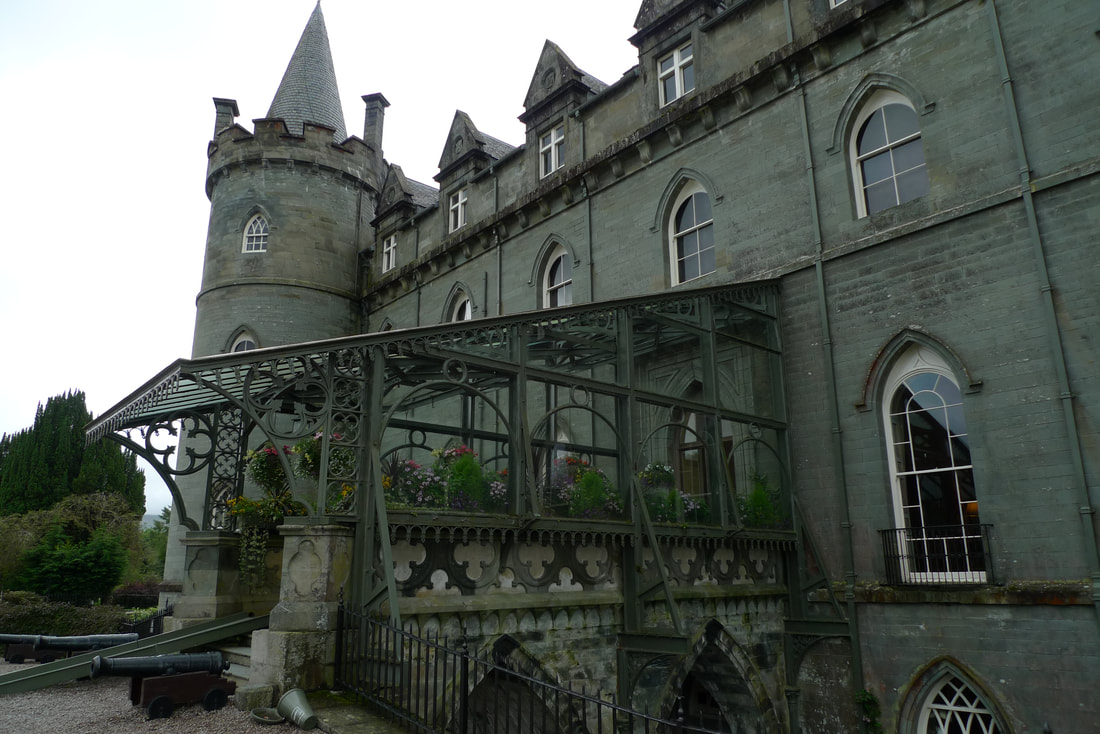 The entrance to Inveraray Castle has a decorative iron canopy filled with flowers and plants The ironwork on the canopy is decorative and makes for a striking feature set against the heavy stone of the building. I've not seen a Scottish castle with such an attractive and unique entrance. Armoury HallThis room is incredible. It takes up the full height of the castle. That's 21m. The information card in the room says it is the highest room of any house in Scotland. The walls are covered in all kinds of weapons, 1300 of them. The fan display of muskets that fits into the architecture of the building is an interior design masterpiece. 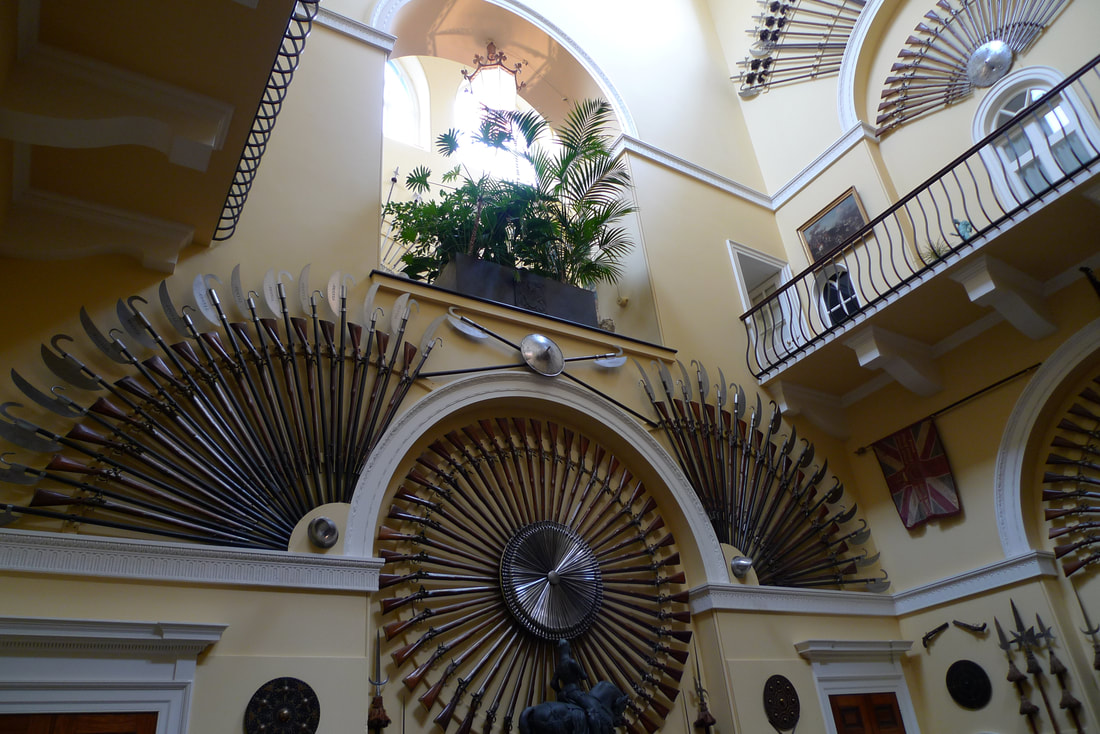 Armoury Hall at Inveraray Castle 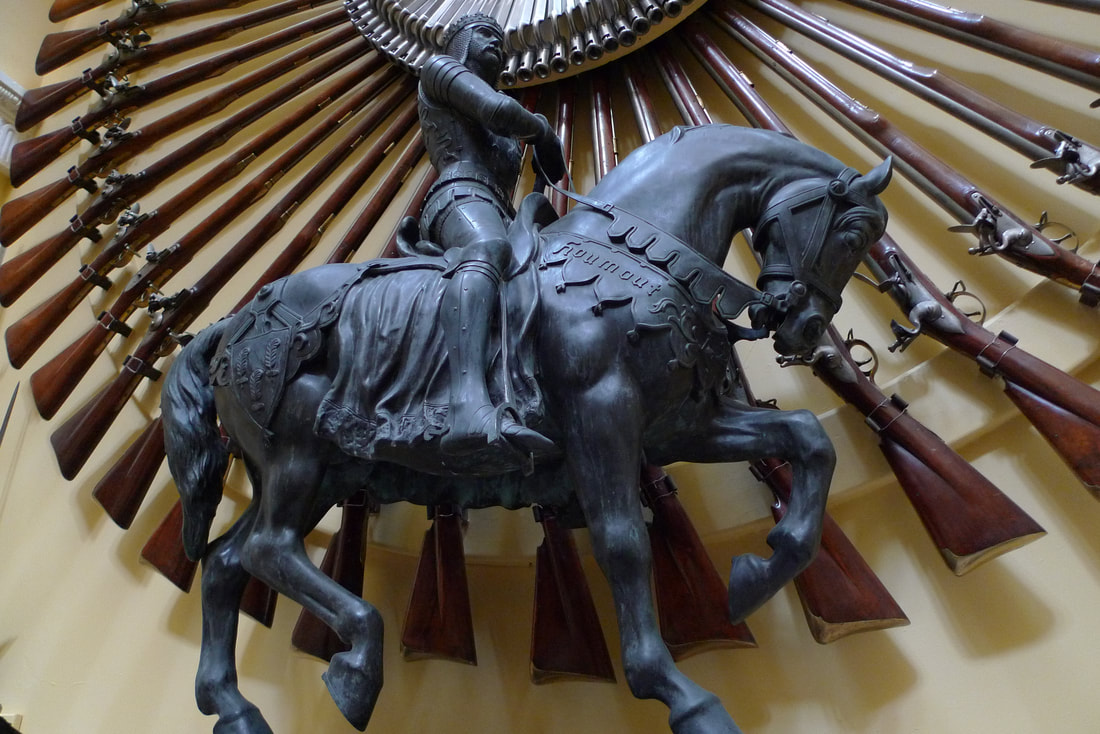 Musket display at Inveraray Castle What would you like for dinner?A midweek bowl of noddles just feels wrong in this room. The table is set with a sliver punch bowl that was a gift from Queen Victoria. Look up at the ceiling and you know you need to be eating something special in this room. 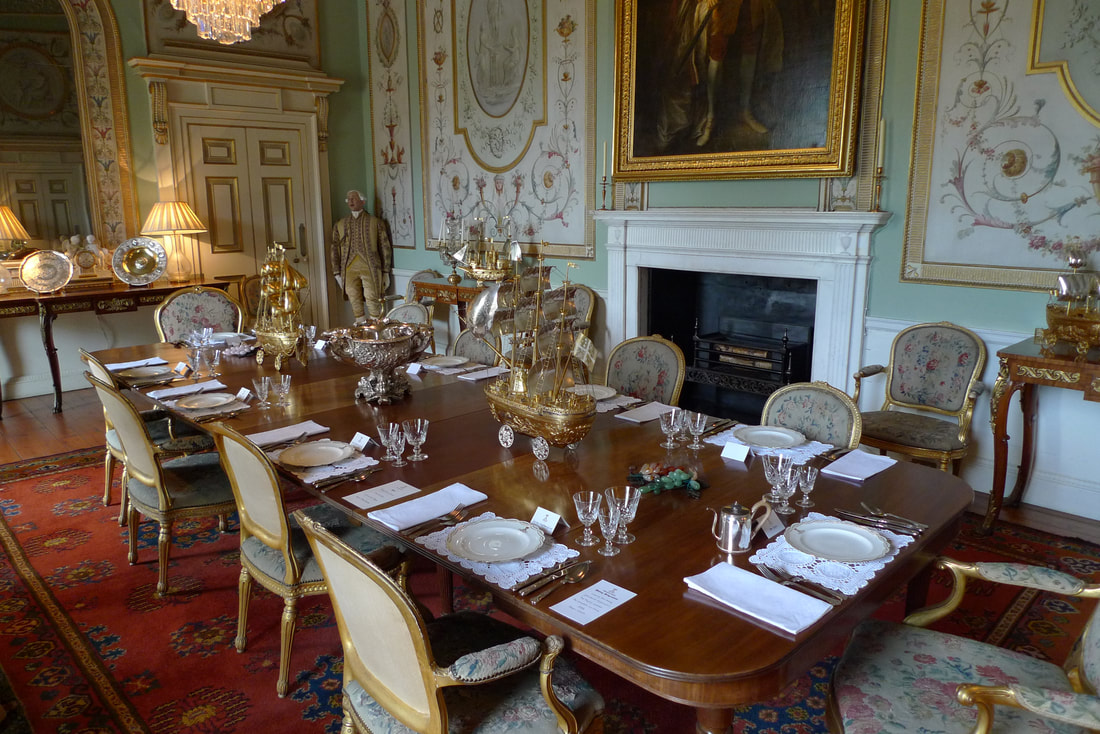 Dinning room in Inveraray Castle 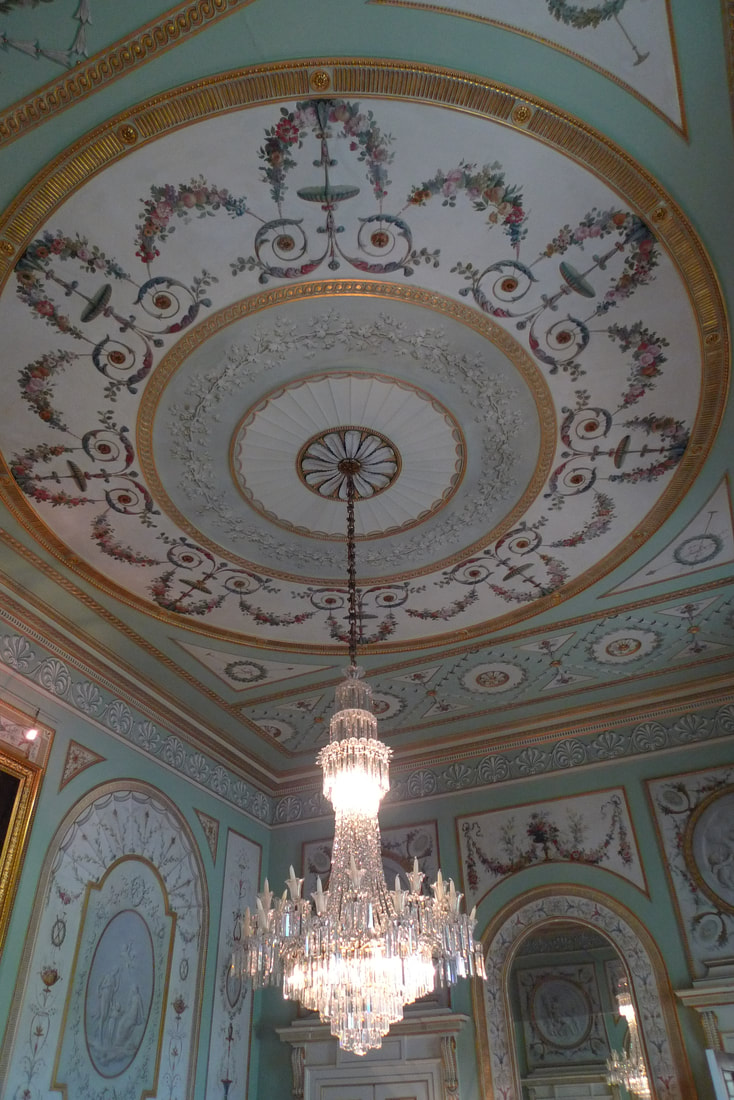 Ceiling of the dining room in Inveraray Castle "Make yourself as invisible as possible"I thought the dinning room and the armoury were the most impressive rooms on the self-guided tour. I also enjoyed the saloon with its portraits. In the old kitchen I found a list of rules for servants in Victorian times. One of these rules was: "if you encounter one of your betters in the house...you are to make yourself as invisible as possible, turning yourself towards the wall and averting your eyes." 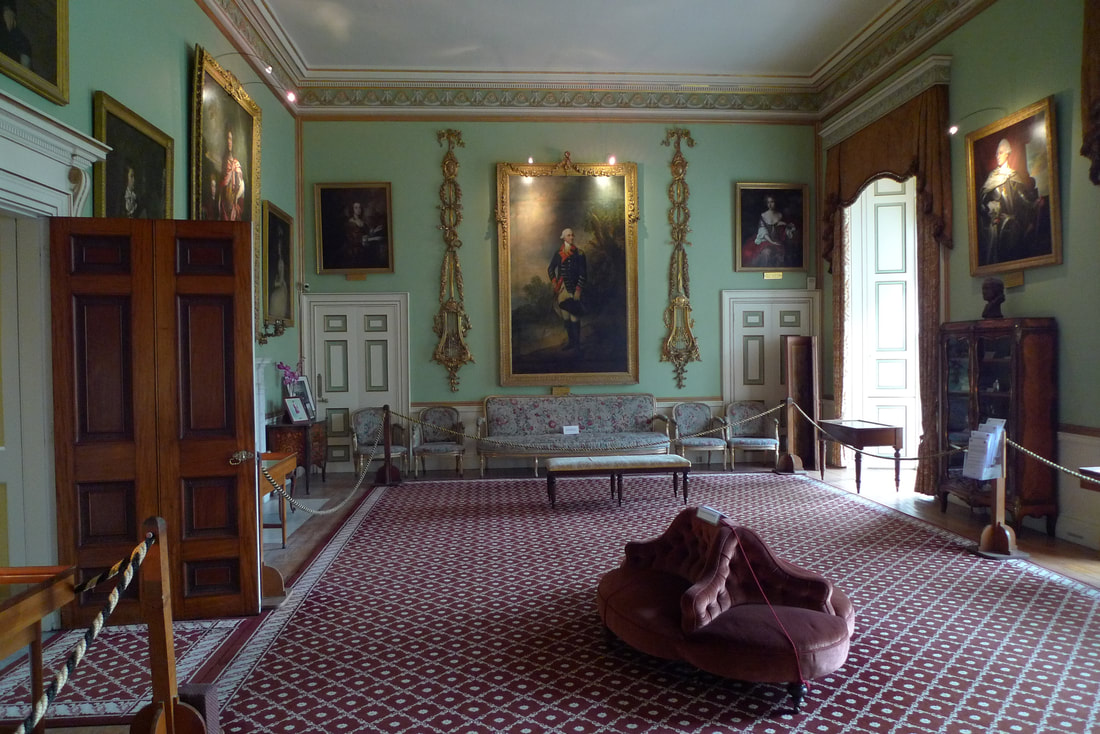 The saloon, Inveraray Castle There's a grand staircase up to some more rooms, but it didn't feel like there's as much to see inside Inveraray as there is in some of Scotland's other castles. This is probably because this is a family home, so its only natural that visitors are restricted to a few rooms. Even so, this was a busy place during my visit. It's situation, both stunning and convenient for Glasgow, makes it a good choice for a castle fix. It was a film location for Downtown Abbey and A Castle for Christmas, which is bound to attract a lot of visitors. The gardens From the gardens the castle looks magnificent The castle looks amazing from the gardens. It's framed by gravel paths, immaculate lawns and gorgeous flowers- the best place to get a photo. As nice as these gardens are I felt I had seen more impressive ones at other castles. For example, the gardens at Drummond Castle, near Crieff, are one of my favourites. My thoughts on Inveraray CastleScotland has a lot of castles to choose from- entrance fees and limited time mean you can't visit them all. If your prioirity is to see lots of rooms and extensive gardens I wouldn't pick Inveraray Castle. There are other castles that let you see you more, but remember Inveraray is a family home. The Armoury Hall is one of the most impressive rooms of any castle in Scotland and I just love the entrance canopy with the plants and hanging baskets.
Inveraray Castle is also in a good location, not so far from Glasgow and located right next to a town with good facilities. Another benefit of choosing to visit Inveraray Castle is that you could combine it with a visit to the brilliant Inveraray Jail. 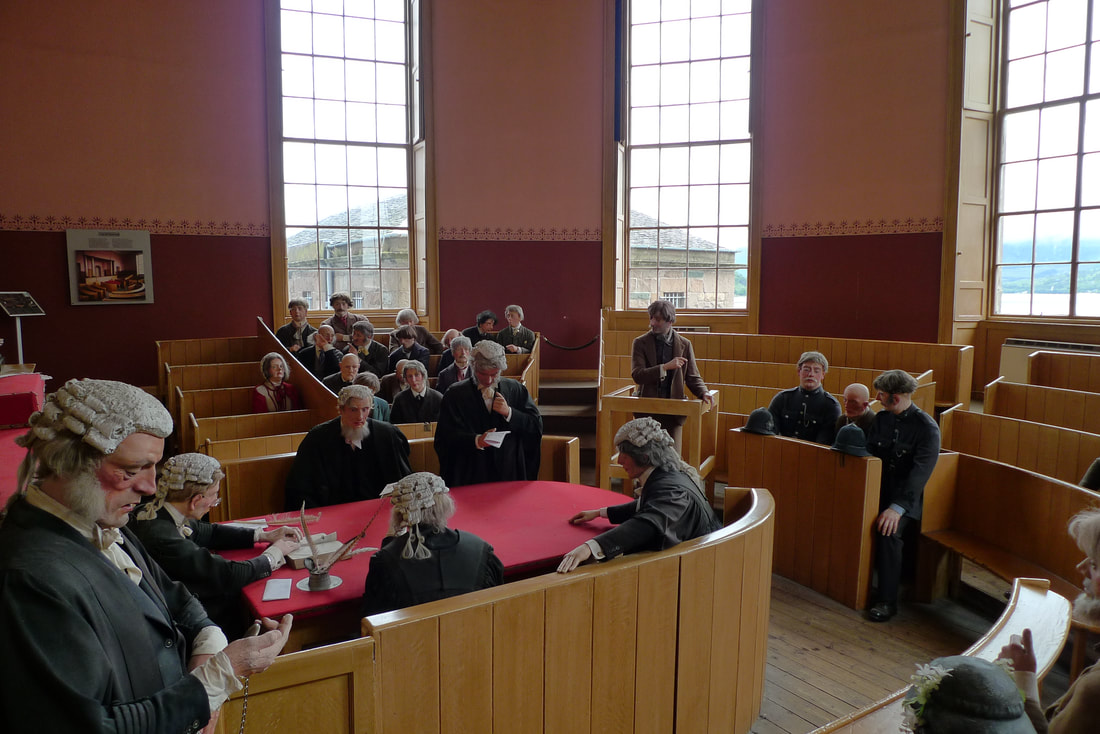 The courtroom in Inverary Jail Inveraray Jail is one of the best visitor attractions in Scotland. It is a beautifully preserved nineteenth century prison, brought to life with costumed characters. You can sit in the court room and listen to a trial. You can learn the stories of real prisoners, including children as young as 7. Consider the changes to crime and punishment that have happened in the last 200 years. It's remarkable that a prison dating from 1820 has survived in near original condition. This is why it feels like you have stepped into a different era at Inveraray Jail. You are immersed in a historical experience that feels so real and raw, particularly the shocking practices that prisoners endured. Journey into the pastWalk up Church Square toward the jail and it looks like it is still guarded by men wearing nineteenth century red tunics. They look correct for the era of the building, but out of place next to the lines of parked cars. Once you are close enough you soon realise they are mannequins. 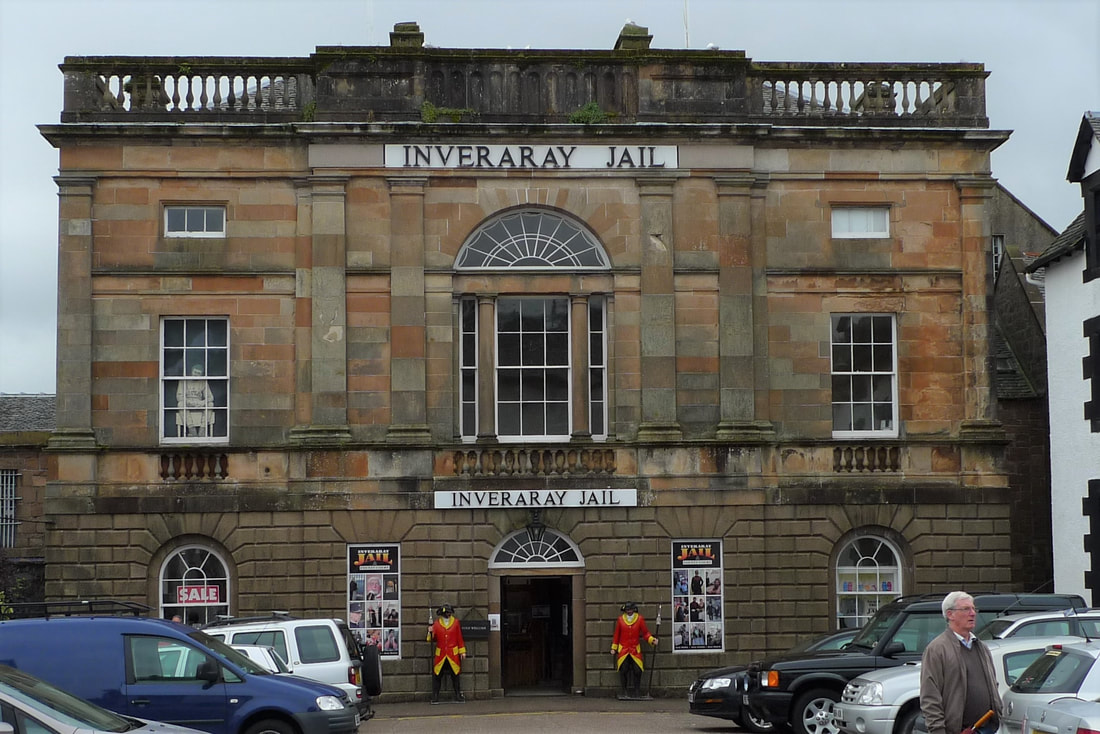 Mannequins are use to great effect throughout the jail, most noticeably in the court room. The figures are so realistic that on first entering this room I got a bit of a fright. It felt like I was walking in on a meeting with dozens of real people. You can take a seat alongside these nineteenth century people and listen to a real trial. It feels eerily realistic. This court room is magnificent. The windows are huge, like something you would find in a palace. They flood the room with natural light and give a perfect view over Loch Fyne. Perhaps a deliberate design to make sentenced criminals reflect on their loss of freedom? 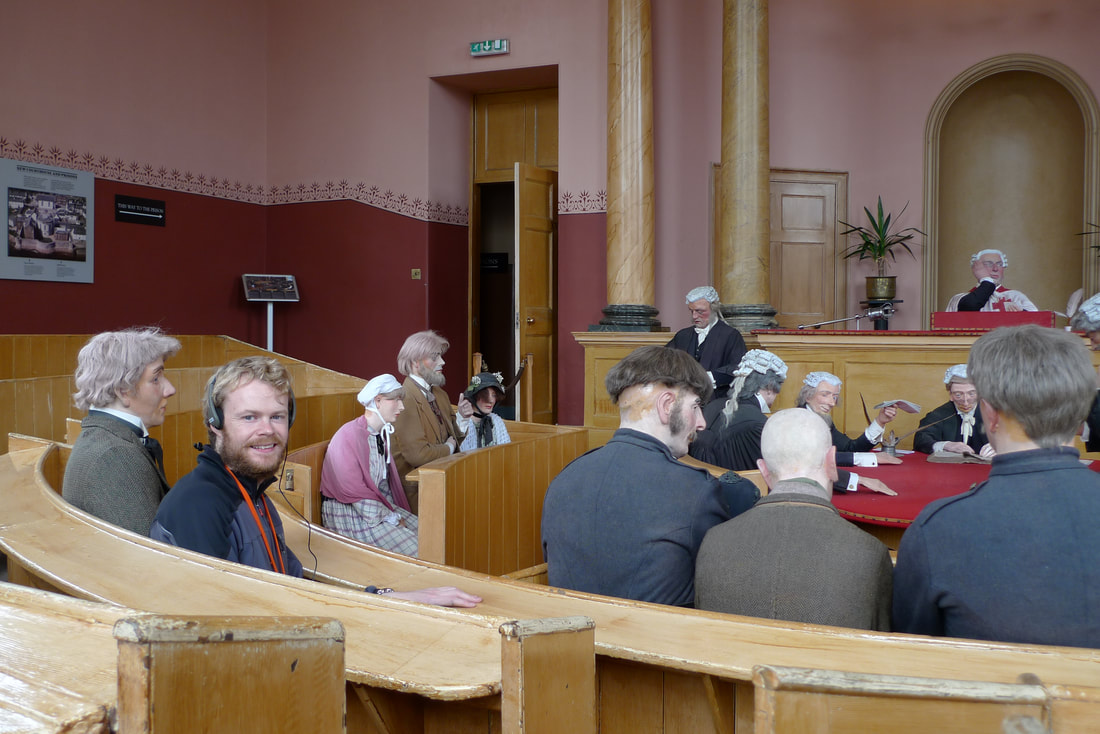 Can you spot the 21st century person among the 19th century people? 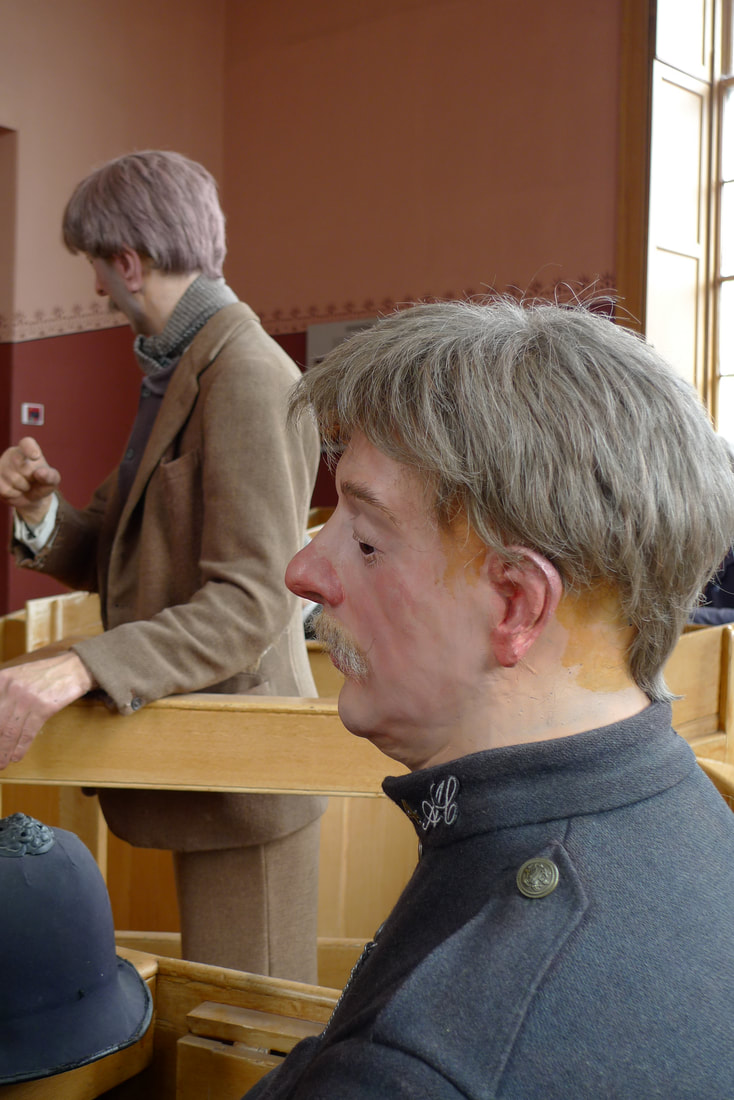 The dummies in the Court Room at Inveraray Jail look very real 6 weeks in jail for stealing applesWhat shocked me is the trivial offences that children could end up in the jail for. In 1859 14 year-old Duncan Livingston was imprisoned for 6 weeks for stealing apples from a garden. James McLachlan spent 13 months at the jail in 1850. He was sentenced to 7 years transportation to Australia for stealing a silver watch, gold chain and gold seal. Whipping was an alternative punishment to putting boys in prison. There was a whipping table in the jail. Boys 14 or over could be whipped up to 36 times. Crank MachineUseless manual labour was another form of punishment used in the jail. A crank machine had to be turned 14,400 times each day by the prisoner. I gave it a go- it is hard work! The prison warder could make it harder to turn by tightening the screw and that's where the slang word for a prison officer came from- 'screw'. A prison warder was not a well-paid job. They received less than a labourer cutting wood. 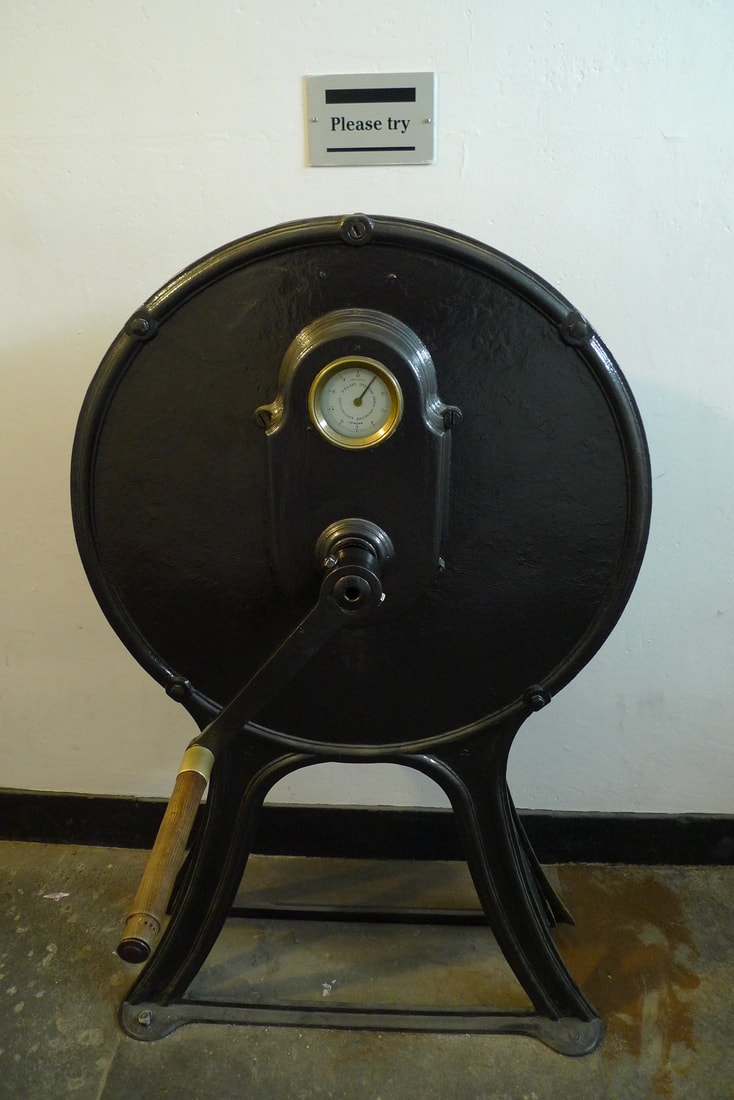 The crank machine in Inveraray Jail 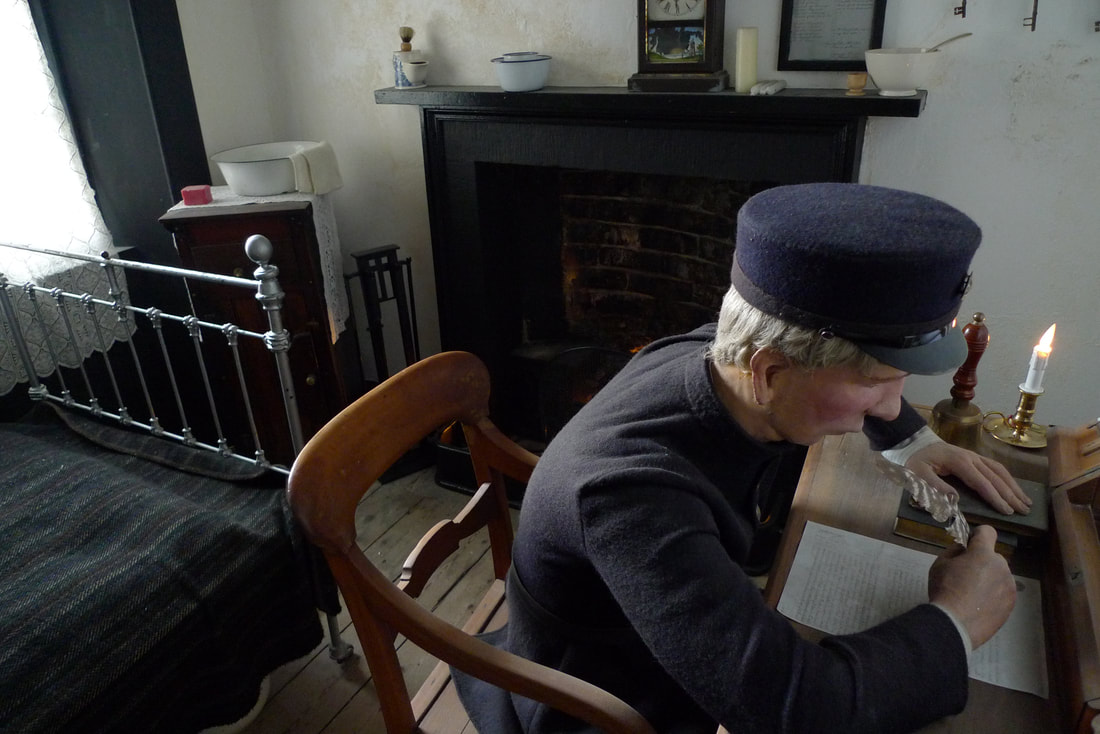 The Warder's room at Inveraray Jail Exercise timeThe 'airing yards' were an 1843 addition to the prison. Prisoners would be brought here, one at a time, to get one hour of exercise each day. 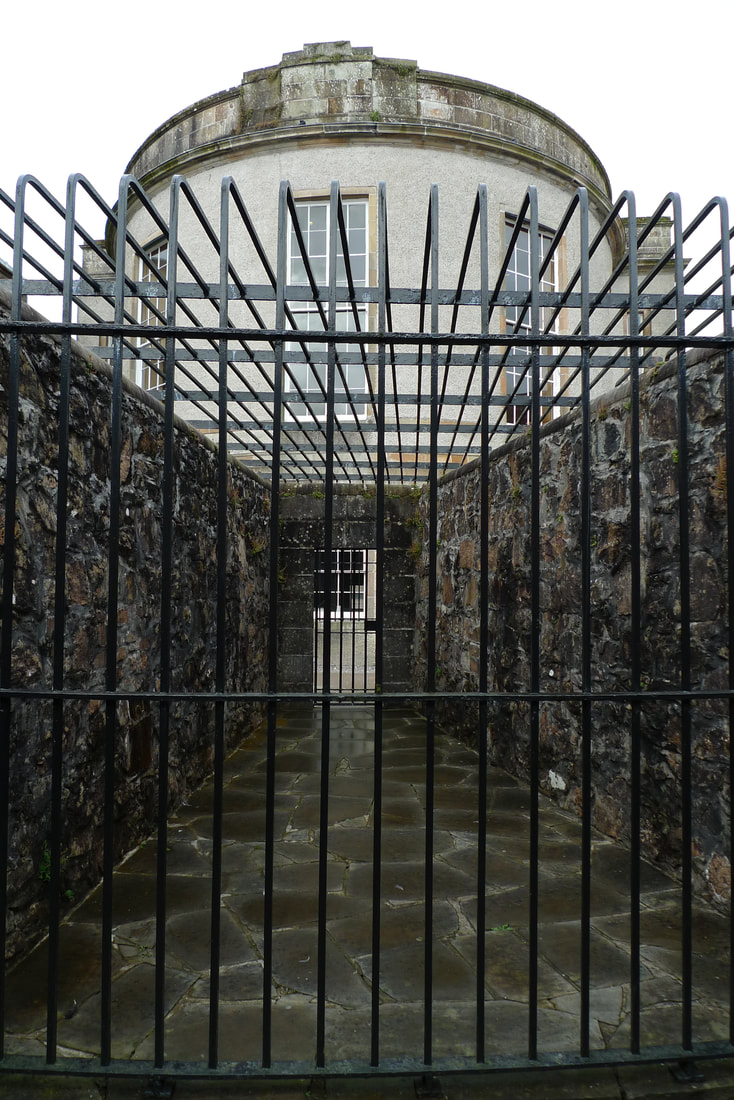 Exercise yard at Inveraray Jail There was a 'prisoner' in one of these caged enclosures during my visit. Real people, dressed in authentic clothing, can be found throughout Inveraray Jail. I thought about saying 'hello', but I felt weird making small talk with someone behind bars! I read that when prisoners were locked in the yards they were not allowed to communicate with each other. Model prisonA part of Inveraray Jail had been a model prison where conditions were a huge improvement on the older part of the jail. There was no overcrowding, a strict hygiene regime, proper food and books to read. Standing in one of these 'new' cells it doesn't feel like a great place to spend time. Still preferable to what came before- no heating, no toilet or washing facilities and hammocks to sleep on. 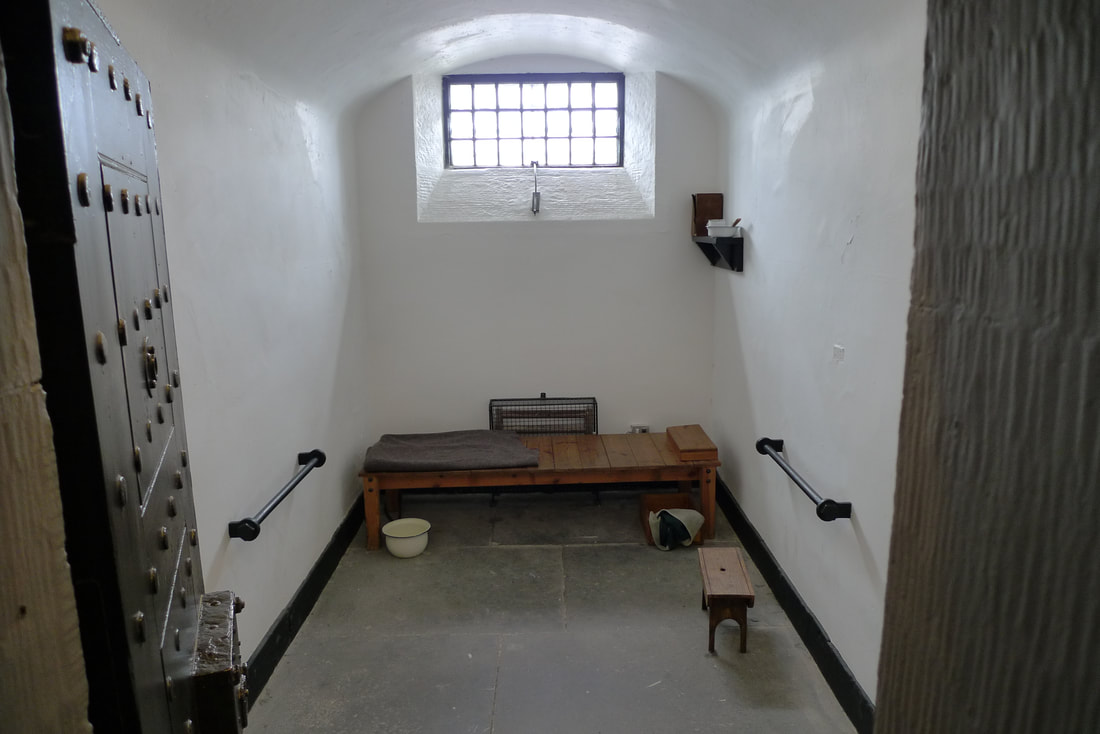 What do you think of the cell in the 'model' prison? Inveraray Jail is one of the most authentic attractions I have visited. It's special to see and experience a nineteenth century prison in such an immersive way. It makes you reflect on crime and punishment and how much things have changed. How to get hereYou can get to Inveraray by taking a train to Dalmally and then cycling 15 miles on a low-traffic route. My post about this route has all the details.
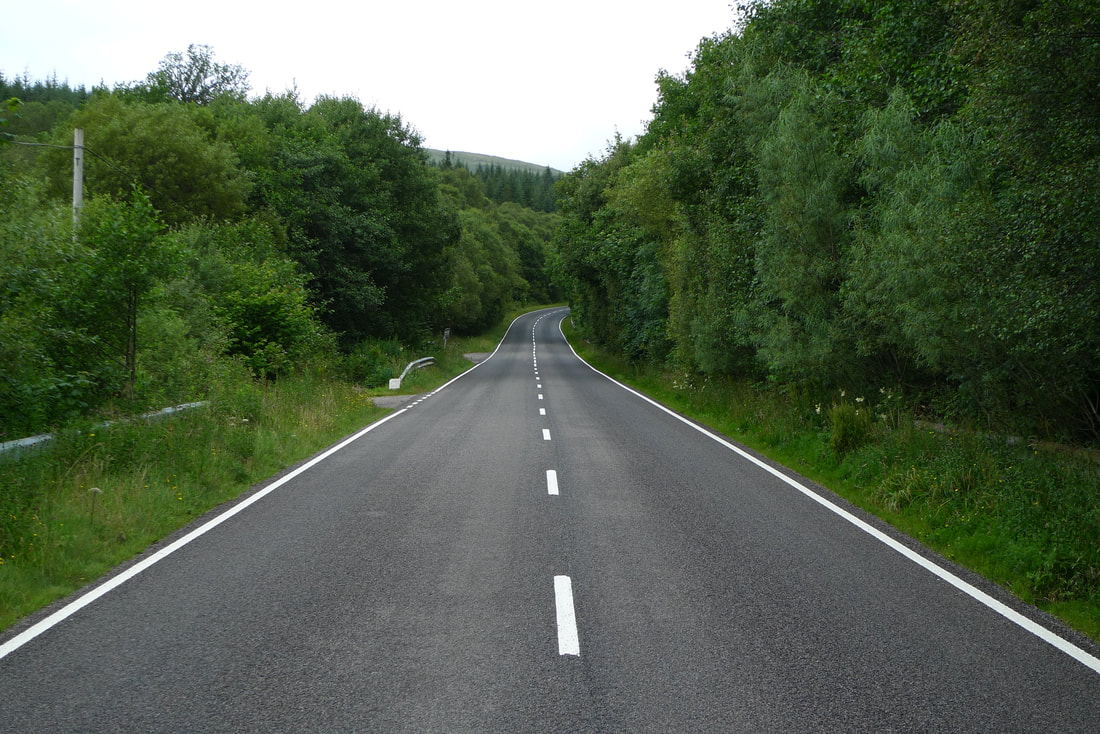
The A819 road to Inverary
The busy A83 is the easiest way to reach Inveraray, but it isn't so pleasant for cycling. There's a quieter road that will take you there- the A819. Along the way you'll get to visit one of Scotland's prettiest train stations and the most photographed castle in the country.
Highlights of this route
West Highland Line to Dalmally
Book a free bike space and take one of Scotland's most scenic trains to Dalmally. It's around 45 minutes from Oban and about 2 hours and 20 minutes from Glasgow. Some of these trains have a special bicycle carriage, so there's plenty of space.
Dalmally station
I loved this station ever since my first visit. Back then it was in a sorry state, boarded up and forgotten about. This time I found that something wonderful had happened. Graham took on the challenge of restoring the building and he has done an amazing job. You can now book a room and stay the night at the station. One of the rooms is called The Posting Room- it had once been used to store mail arriving by train.
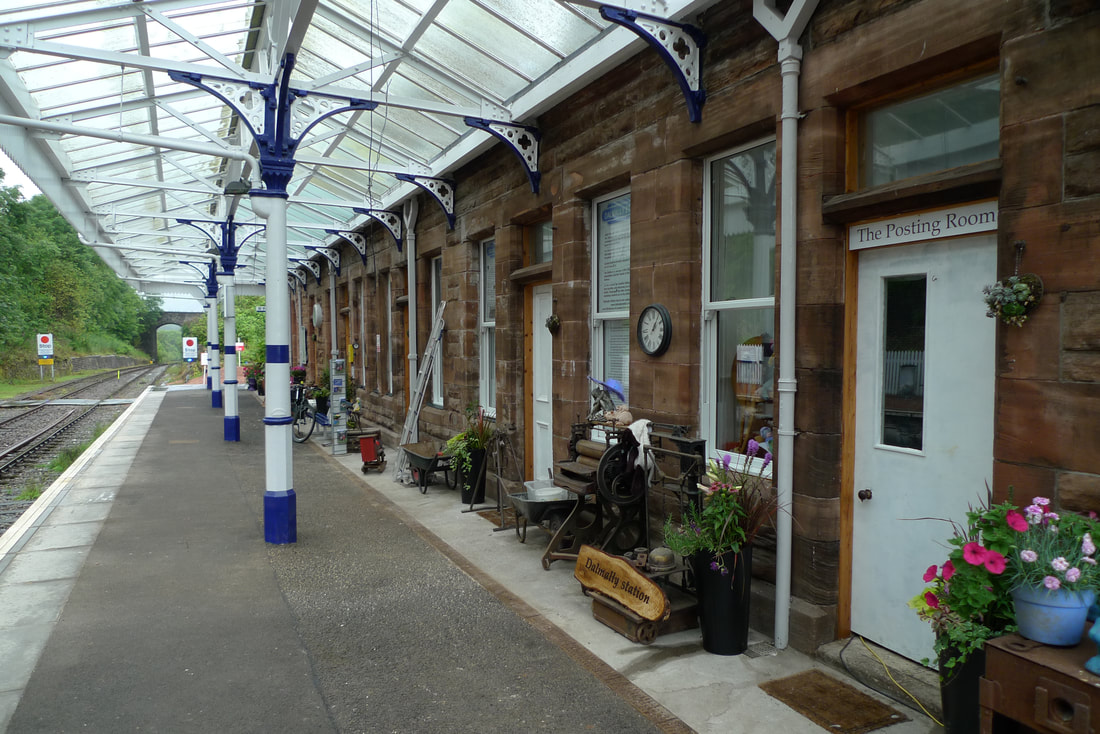
Dalmally station platform has an iron and glass canopy
Graham offered me a cup of tea and showed me around. Inside, there are many features to discover, such as original fireplaces and cornicing. "I managed to save all the ceiling roses," Graham proudly told me.
He recalled how dilapidated it had been when he took ownership, "you should have seen the size of the mushrooms growing inside. There was a fireplace fulll of them." 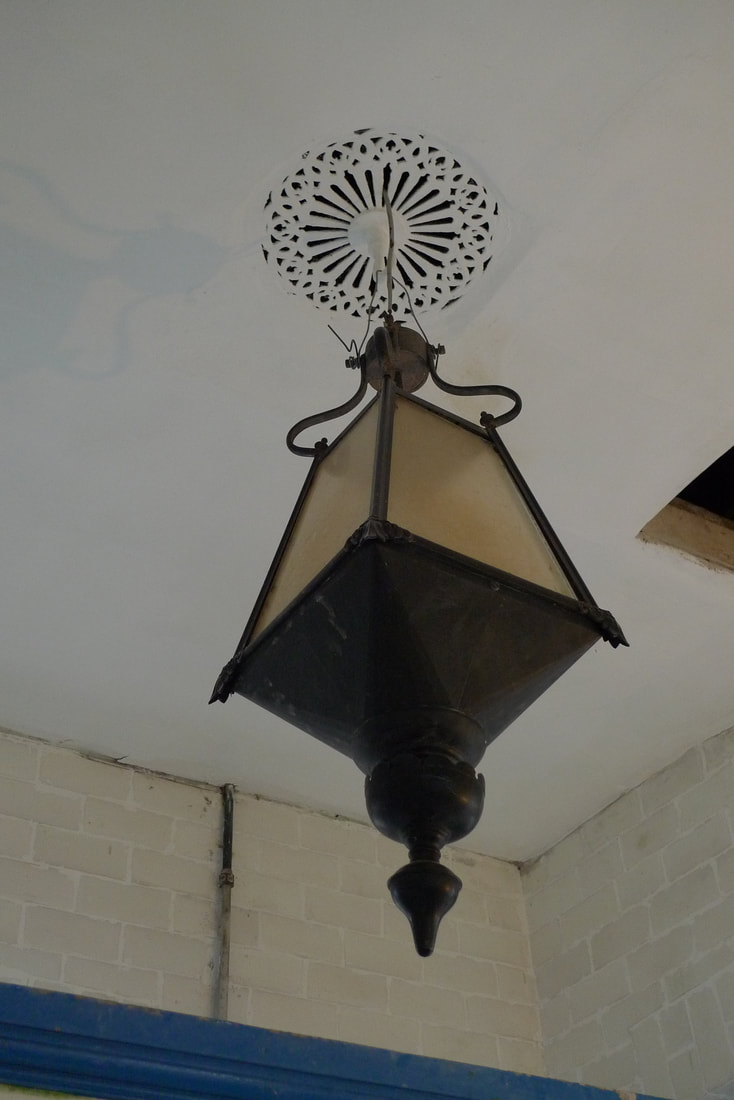
The decorative ceiling mount for this beautiful lamp tells of a bygone era of station architecture
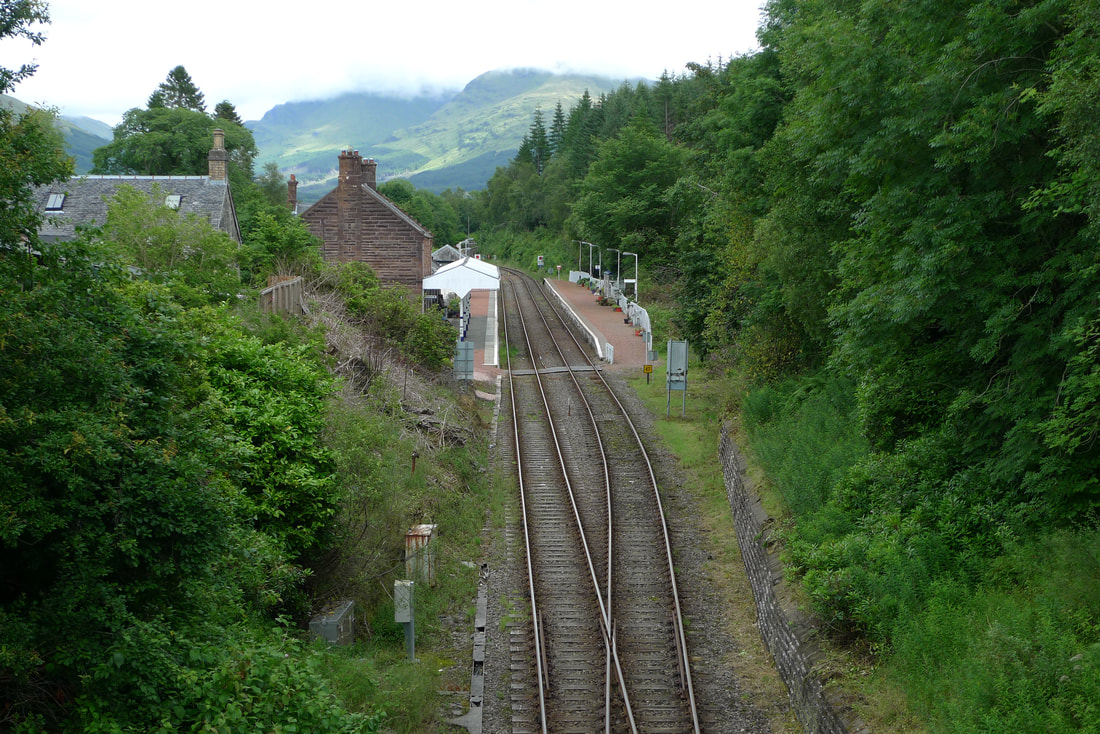
Looking down the tracks towards Dalmally station
There's a sculpture of a granite heron on the platform. It's made from Ben Cruchan granite, the mountain that can be seen from the station.
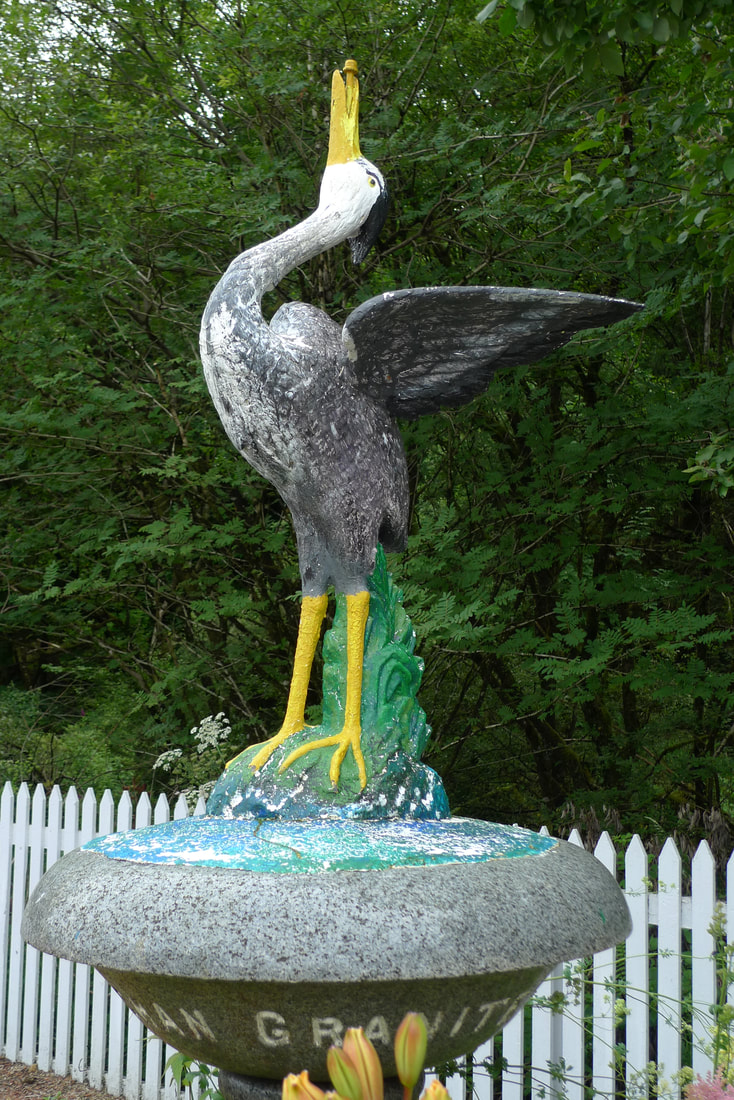
Granite heron on the platform at Dalmally Station
Kilchurn castle and Loch Awe
From Dalmally station a 1 mile cycle along the A85 takes you to the start of the A819. The nicest part of the A819 is this stretch alongside the shore of Loch Awe. There's a great view of Kilchurn Castle, one of the most photographed castles in Scotland.
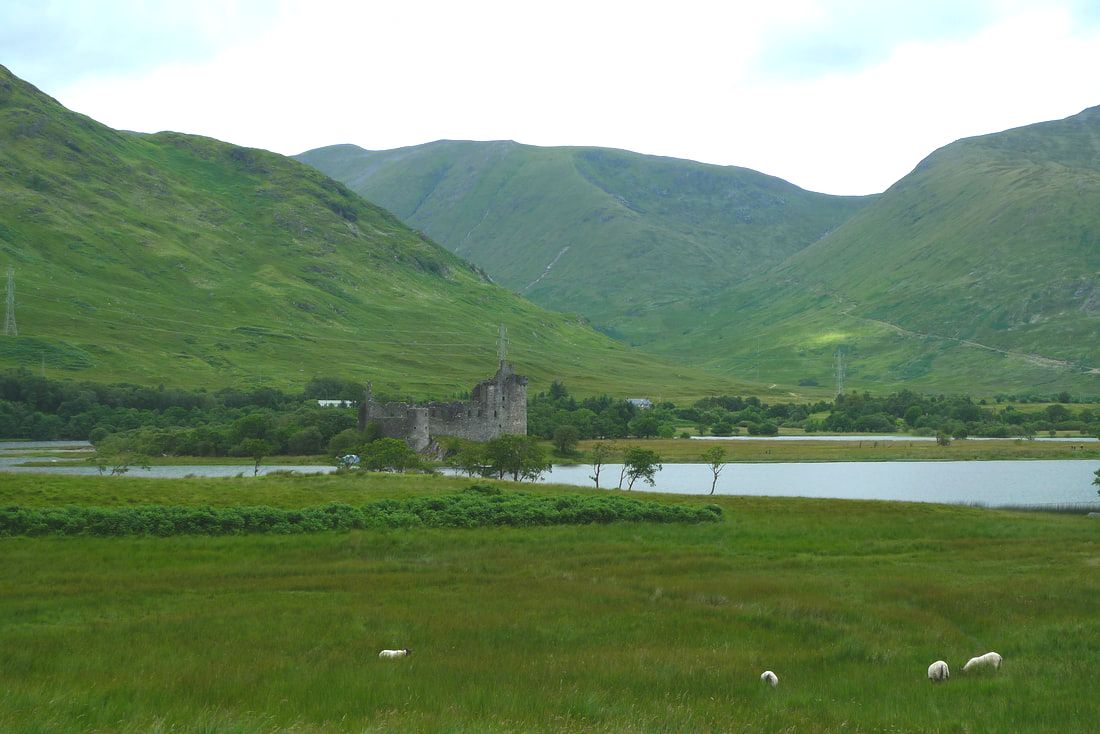
Kilchurn Castle
The road then heads away from the loch. It's a steep climb, but you are rewarded with fine views.
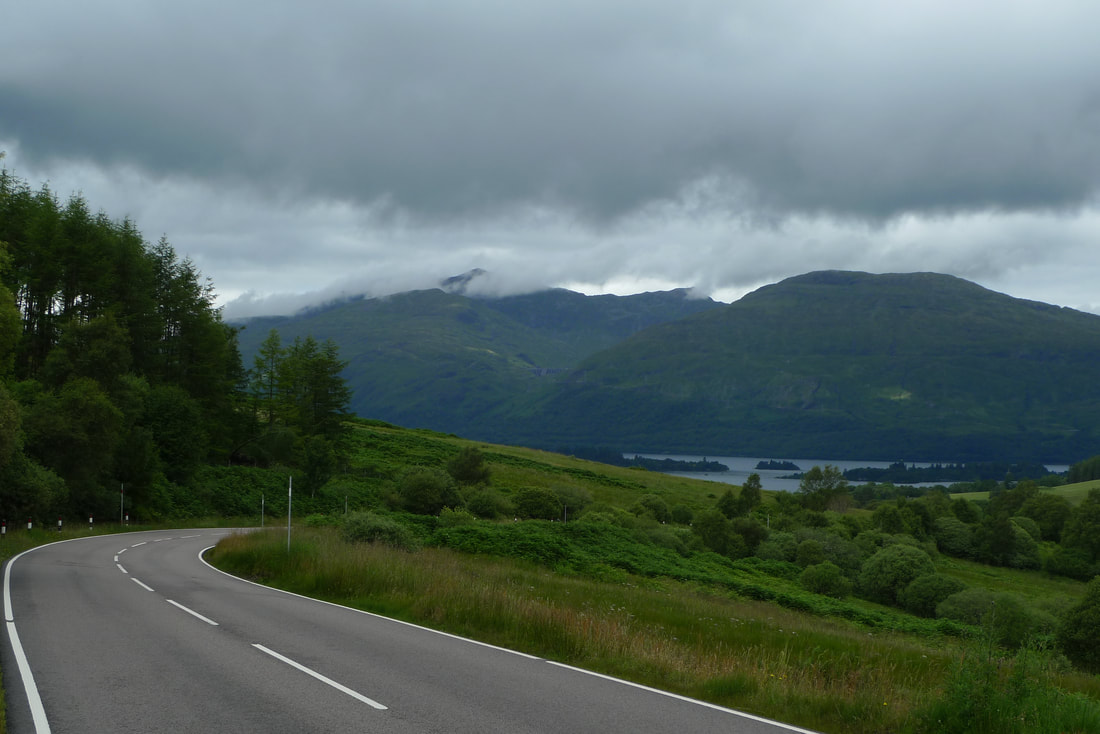
View of Loch Awe from the A819
Soon the road is hemmed in by forest and there's not much to see. It's a functional road, not a destination in itself. The benefit is to use it as a safer and more pleasant way to get to Inverary.
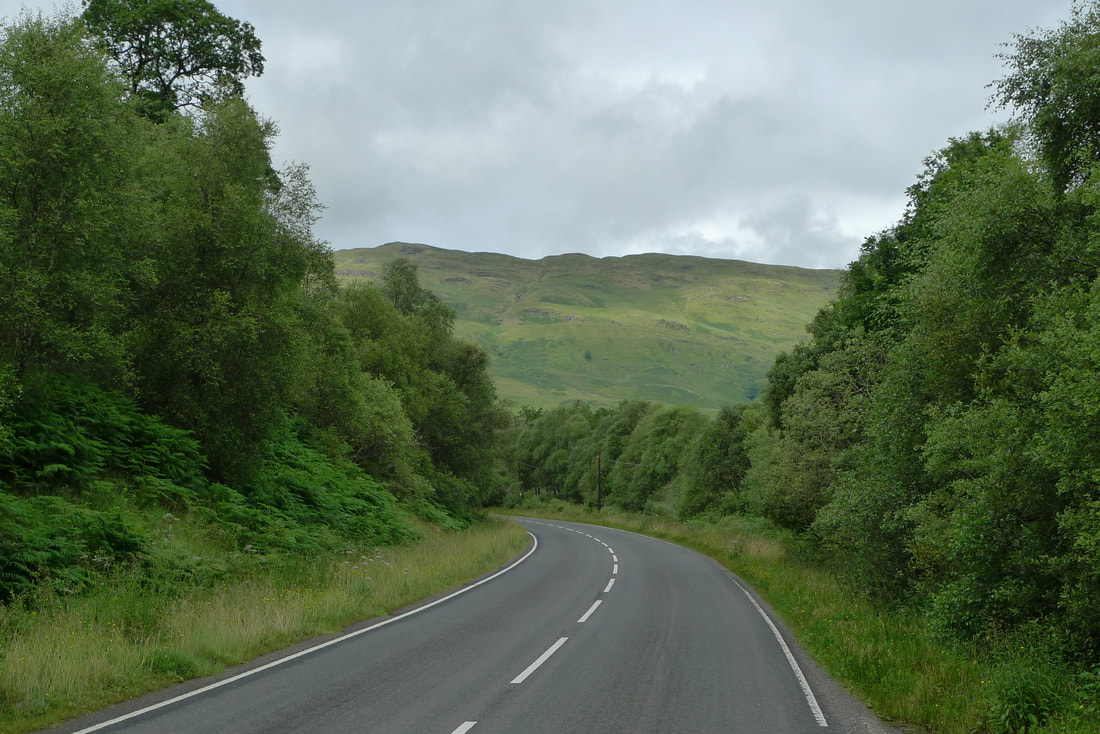
Most of the A819 is hemmed in by forest
Neil Munro monument, author of Para Handy
After 1.5 miles there's a hiking path to a monument dedicated to one of Scotland's most famous writers. Neil Munro was born in Inveraray, in 1863. He wrote the Para Handy stories about a steamboat captain making deliveries from Glasgow to Loch Fyne.
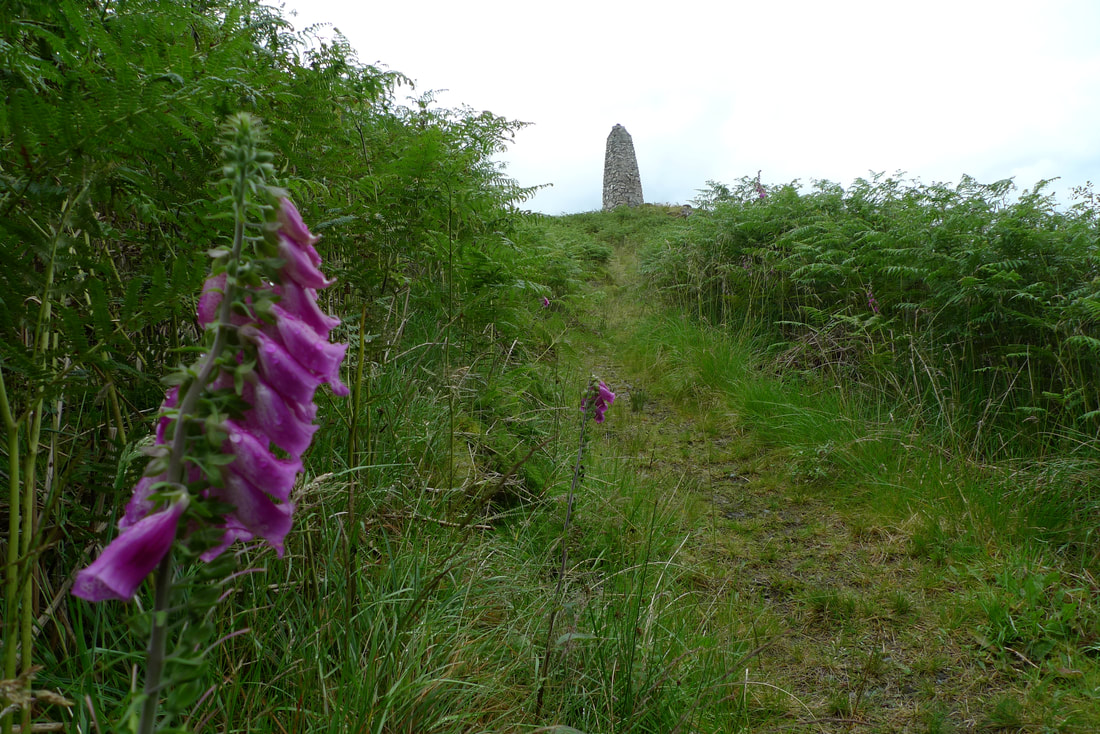
Neil Munro monument
It's a small hill, but it gives an outstanding view. For sure this was the best part about this road
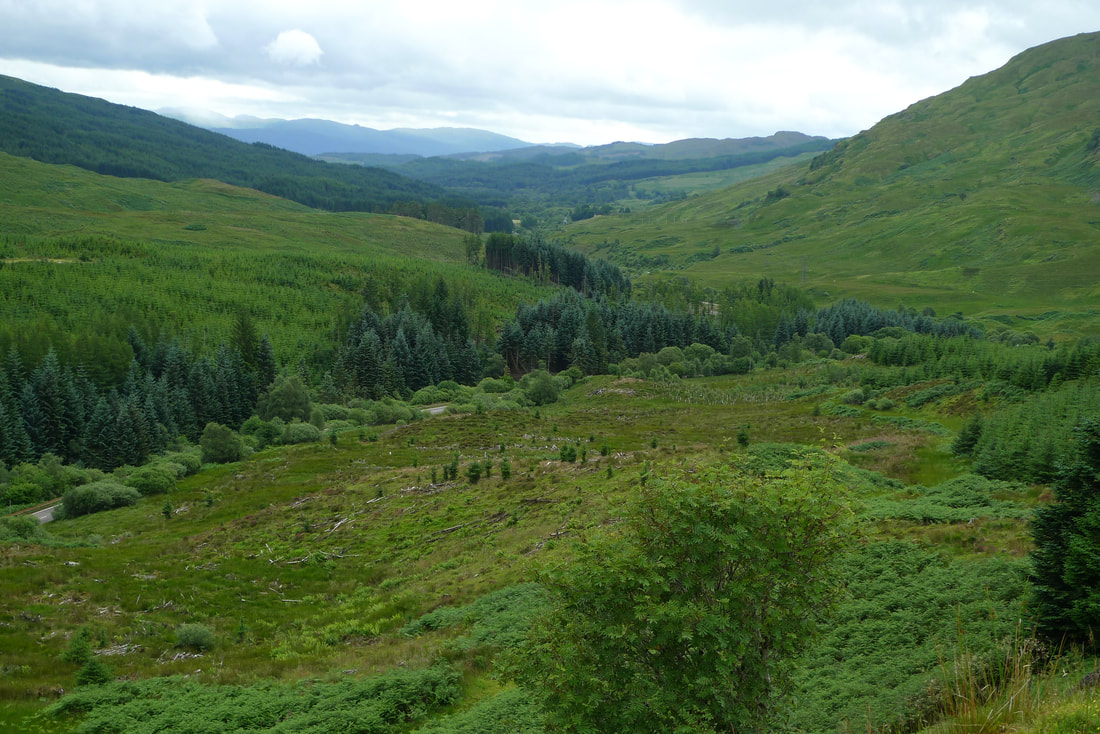
The view from the Neil Munro monument
The downhill to Inveraray
The glorious descent on this road is one of those experiences that goes to make cycling one of the best things in life.
I had experienced thunder, lightning and torrential rain for most of the ride. When it passed there was a torrent of water flowing down the side of the road, gushing waterfalls on the hillsides and rocks glistening in the sunshine. The sun came out and quickly dried my sodden clothes. I was jubilant as I cruised down that hill, feeling that I had survived the extreme weather and came out the other side a better person. My thoughts on using the A819 to reach Inveraray
This road is a much quieter and safer alternative to reaching Inveraray by bike. You will not be bothered by traffic. It might not be the most exciting road in Scotland, but the fast descent at the end is a joy and there are some great views towards Loch Awe.
The problem is that once you get to Inveraray you have no option but to use the A83 if you want to go further, or you must go back the way you came. However, if you stayed the night in Inveraray you could start cycling the A83 early in the morning when the road is quieter.  
Life as a bicycle courier in London is challenging. Julian Sayarer doesn't hold back in his honest and sometimes brutal portrayal of the world of bicycle messengers. We learn what it's really like to work in one of London's most poorly paid jobs. We meet a cast of fascinating characters who work as couriers and we experience a lesser-known side to the city. The book is often cynical, sometimes depressing but also rich in detail, observation and social commentary.
Julian Sayarer had just completed a record breaking cycle around the world. He wrote about this in Life Cycles, which I thought was one of the best cycling travel books I've read. Messengers sees the author return to London, somewhat reluctant to write a book about couriering, but his agent believes it is a great subject for a book. I found this book less thrilling than Life Cycles, but still highly captivating for how honest and realistic it is. It draws you into the subculture of the bicycle courier. A world where couriers call each other by their radio call signs, instead of their real names. It's a world of hard work for low pay and very little respect. There are some moments of joy, like a romantic relationship with another courier which is much needed relief in the tough life of a messenger. There's a euphoria he feels when getting a package delivered on time, when nobody expected him to be able to. He recalls an incident of name calling over the courier radios that's hard not to laugh out loud at. This is a job that brings you into contact with all of London society. The people who work alongside the author all have a story to tell about how they ended up in this job. Sayarer has interesting encounters with bankers, secretaries, the super rich, the homeless and the police. He tells of the dangers of the road, the daily conflicts between motor vehicles and bicycles for space on congested streets. You learn about a different side to London, often only known to those doing jobs like couriering. This is another great book by Julian Sayarer. It's a realistic and devastatingly honest look at London through the eyes of a bicycle courier. What goes around by Emily Chappell is another great book about London bicycle couriers. In today's world, we increasingly face issues like pollution, high carbon emissions, congested cities and a sedentary lifestyle leading to health issues. Rethinking our ways of moving around has never been more important. Commuting by bike or cycling for leisure is a wonderful way to get around, stay healthy and enjoy your days more. The so-called "active travel" is becoming increasingly popular and a subject of policy changes aiming to encourage people to take up more walking and cycling and reduce our widespread car dependency. However, the numbers of people cycling are still low. According to the Annual Cycling Monitoring Report by Cycling Scotland, only 4% of people say they cycle regularly to work, and 1.5% say cycling is their main mode of transport. There are many reasons why people are averse to cycling, but often they feel like their destination is simply too far to bike to. This is often an issue that can be solved by a little bit of research, route planning and combining modes of transport. This blog will look at how multi-modal journeys can help people travel more actively. It will explore the benefits of combining transport and what steps need to be taken to make this type of travelling even more reliable, feasible and easy to use for everyday journeys. What is a multi-modal transport journey?Multi-modal transport is the combining of several types of transport over the course of a single journey. It is a great way to break longer travel into stages by using different vehicles for some of them. Say you live in Livingston and work in Edinburgh. That would be a 16-mile bicycle ride over an hour and a half – probably an unreasonably long and exhausting commute for most people. However, splitting it into several phases could make this quicker, easier, and cheaper. You could ride your bike to Livingston North, park it at the train station's bike parking facilities and hop on your train bike-free. You could also consider taking your bike with you on the train, which is free. This may sound scary at first glance, but it really isn't that complicated. You can use this guide to help you get your head around the logistics of taking a bicycle on the train. Benefits of multi-modal transport journeysUsing the train system is a daily necessity for many commuters; it can also be a wonderful way to explore the country. Surprisingly to many, this can really be done with a bike which, as mentioned above, can be taken with you on the train. There really are many benefits to combing bikes and trains, whether you leave your ride at the station's bike parking or you take it on board. Using your bike to get around congested cities during rush hour is often quicker. It is sometimes easier for bicycles to travel through as riders can take less busy roads and pass through sections which are not accessible to cars. Cycling also consistently offers the most reliable journey time for the rider. Riding a bike to and from the station, on one or both ends of your journey, is almost always cheaper than getting the bus or driving. It saves you the cost of a bus ticket and money on fuel costs. Cycling to your destination all the way or partly is also just the healthier way to move around. By doing at least part of your journey with a bike, you can seamlessly fit some exercise into your daily routine without having to dedicate extra time to it. This is good for your bones, muscles, heart, and overall fitness. How can we encourage more bikes on trains?Cycling to and from stations and taking a bike on the train is absolutely doable. However, there are some limitations which are stopping more people from comfortably combining cycling and train travel. This is especially true for rush hour trains and commuting. To encourage more people to embrace a more active living and travelling, authorities and train operators need to work together to improve cycling facilities. Let's explore the existing issues and what their solutions are.
To make multi-modal journeys viable for more people, more bike storage must be available for cyclists wanting to park their bicycles at train stations. This is easily solved by installing innovative and space-saving solutions like two-tier bike racks or, at a minimum simple bike stands, preferably in a sheltered and safe area. This is important, as one of the main concerns of cyclists is the safety of their bikes. ScotRail has a convenient tool where you can look up your specific station and see what facilities it has – click on the Interchange section to see if there is bicycle parking, how many spaces it has, the type of storage it is and whether or not there is CCTV to make the bike storage extra safe. Another step that needs to be taken is to increase onboard bike storage in trains. This may be a harder and slower process as train carriages have limited space by default, and there is very little room for expansion. However, it is not impossible, and there are some fantastic examples from Denmark, like Copenhagen's S-Train. In 2010, DSB – the train operator, made significant changes. It announced that all bikes could now travel for free, and it redesigned the interior of all its trains to accommodate up to 60 bicycles. This led to an increase in the number of passengers, and the number of passengers who took a bike on board jumped from 2.1 to 9 million. A step in this direction is especially important to make commuting by train and bike easy, as often rush hour is a tough time to find a space for both bikes and people. Train station infrastructure is another piece of the puzzle that makes a journey with a bike more complicated than it needs to be. An example of such limitations is some short platforms where you may end up at a door which won't open due to the length of the train exceeding that of the platform. Stations, especially rural ones, can often have outdated infrastructure, or at least infrastructure that wasn't built with wheels in mind – like footbridges with many stairs. However, an increasing number of them are being updated with lifts and ramps which cyclists can use. Lastly, the bigger picture of cycling infrastructure is another deterrent. Statistics show people feel unsafe cycling on roads across cities. This means they are unlikely to want to take up commuting by bike for all or part of their journey or riding a bike for leisure. Even though cycling infrastructure across the country is getting better, there are still a lot of things that need improving. To begin with, there is a real need for more cycle paths to make even beginners, or parents cycling with children, feel safer. Ideally, there should be bike-only lanes on busy roads, and more neighbourhoods should be trying out traffic calming and traffic-reducing measures like low-speed-limit zones and no-car zones to make roads safer for cyclists and pedestrians. Here you can read about a journey on Edinburgh's Spylaw Bank Road through a cyclist's eyes. Creating synergy between bikes and trains can be a great way to empower people to travel more actively for all or part of their journeys. Creating the right conditions for feasible multi-modal transport can transform our communities. Encouraging commuters to combine bikes and trains will not only improve accessibility and convenience but also reduce congestion, lowers carbon emissions, and enhances public health. Embracing the power of bikes and trains in multi-modal journeys is a key step towards creating vibrant, eco-friendly cities that prioritise active travel and lower our car dependency. If you love cycling and have a favourite trail, or simply a competitive spirit, then hosting a cycling competition could be a great way for you to meet new people, raise funds for a good cause or even promote your business.
Whatever your reason, cycling contests require in-depth planning if you want them to succeed and become a core part of the biking competition calendar. As well as legal issues and permits you’ll need for your cycling event, you also need to be aware of the ways that you can market and promote the competition to draw a crowd of spectators and participants. Keep reading to find out more. Choose The Perfect Route The route of your event will have a significant impact on who can participate, what type of bikes they can use and the general rules. As such, when you’re thinking about setting up an event, before you consider rules or any other information, you need to plot the route and create a clear map of where it will go. You can then use this to inform future marketing materials and help entice participants. Create Enticing Prices Any competition requires prizes, even one that is just for fun and isn’t part of a wider tournament. Cyclists who are entering will want to know what they could win if they do well, so it pays to get some mock-ups made for promotional purposes and to see what kinds of medals or trophies you can get ahead of time. Consider working with providers that offer custom medals so that you can inscribe them with the details of the event and use them as a promotional tool for the future. Build An Online Presence Sharing your event online is the fastest and most cost-effective way to get it noticed by a wide range of potential participants and attendees. So, you need to build an event website with details of the route, rules, prizes and cause, then choose off-page platforms like social media sites and cycling forums to promote the website further and get noticed by passionate cycling fans like yourself. If you have the digital marketing, SEO and web design skills, then building your own site and managing your online presence will be easy. If not, consider using a web hosting service and template to quickly create your site, and then collaborating with others to expand its online reach within the cycling community. Promote Your Event Once you have an online presence for your event, you can start promoting it and drumming up interest. To begin, focus on the cycling groups and pages you’re already a part of, then broaden your horizons and share your event with the wider road biking community. There are many ways you can promote your event online for free, so that you don’t have to spend a lot and can get it noticed by the avid cycling fans you want to participate. Social media is a great tool for this, as you can put up posts and create online reminders at no additional expense. If you wanted to go one step further, you could also try filming an event promo video and uploading that online, as visuals are arguably the best way of advertising an outdoor event. Hosting your own cycling contest for fun, whether for fundraising or just for a bit of friendly competition, can be a unique and unforgettable experience for passionate road bikers. To get it off the ground and make the event memorable for the right reasons, use these tips. Good luck! If you’re looking for a better way to tour Scotland’s rugged beauty and captivating landscapes without literally losing your breath, you should consider upgrading to a fat tire electric bike. The rise of e-bikes, also known as hybrid bikes, in the cycling world has shaken up the way people commute to work and go on long distance rides. While electric bikes were initially associated with short commutes, manufacturers have now introduced models to accommodate the demands of various customer lifestyles. A fantastic example of a hybrid bike that can take you not just from to and from work but also from home to anywhere you want to go is a fat tire electric bike. This design is incredibly versatile, as it offers increased comfort, safety, and range for its rider. As cycling enthusiasts, we are always on the lookout for innovative ways to elevate our riding experience. Whether you’re looking to upgrade your cycling gear or just want to get to know this new breed of bikes, many brands provide a solid case for quality fat tire electric bikes with two of its 750 watt fat tire electric bike models. Why Should You Consider Touring Scotland with a Fat Tire Electric Bike?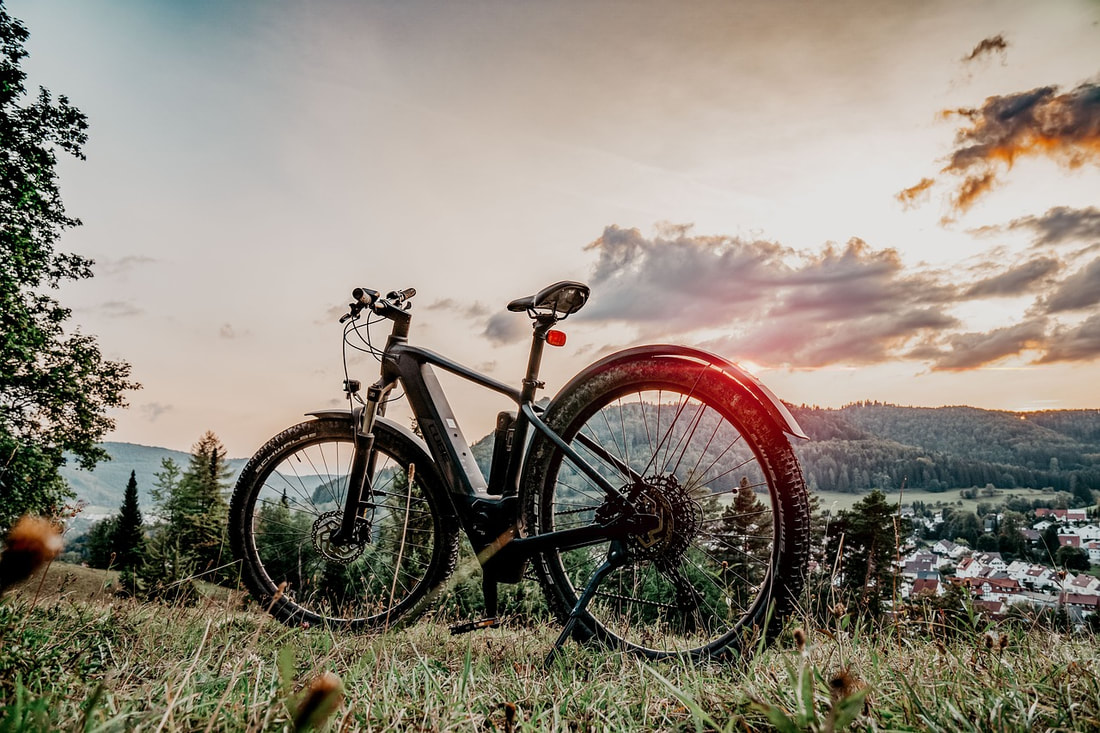 Image from: https://pixabay.com/photos/mountain-bike-e-bike-bicycle-mtb-5567847/ Touring is always an exhilarating and rewarding experience. However, it can also be physically challenging, especially when you plan to ride across a region as diverse in terrain as Scotland, with its rolling hills, rocky trails, and muddy paths. The best way to conquer these paths is to come prepared – and what better way to start than by having the right bike? Here are several reasons why you should consider touring Scotland with a fat tire electric bike: Terrain Versatility: Fat tire electric bikes are designed to handle diverse terrains with ease, giving you stability and traction on uneven surfaces. Enhanced Stability: You’ll have more control of your balance and stability with a fat tire bike, as the fat tire offers a wider contact patch with the ground. This is especially more useful when you’re navigating challenging terrains or encountering unpredictable weather conditions. Power and Performance: Electric bikes are equipped with powerful motors that assist in pedaling and conquering steep inclines. The added assistance allows riders to cover longer distances in shorter time, tackle hilly terrains with relatively more ease, and navigate Scotland’s undulating landscapes without needing to physically overexert themselves. More Range: Fat tire electric bikes offer riders more range in less time thanks to their high-capacity batteries. 750 watt fat tire electric bikes have the battery to help you venture off the beaten path, explore remote areas, and reach more breathtaking viewpoints that would otherwise be a major challenge if you were on a regular bike. Less Fatigue, More Comfort: You’ll be able to enjoy your tour more as fat tires absorb shocks and vibrations from the ground better than regular tires. Ride In Any Weather: Scotland is famous for its unpredictable weather. With fat tire electric bikes, you won’t need to fret over being caught in the rain as its wider tires provide you with better traction over wet and slippery surfaces. This also means that you are assured a safe ride in challenging conditions. Experience More: With the increased comfort, stability, and range from your bike, you have more chances of exploring historical sites, ancient castles, and hidden landmarks while enjoying the scenic beauty around you. Fair Ride: Whether you’re touring alone, with family, or with a mixed group, these bikes are a great choice, as they can accommodate riders of varying fitness levels and abilities, thanks to its electric assistance. Scotland Loves E-BikesTo make e-bikes more accessible to people across Scotland, the Scottish Government created the eBike Grant Fund to assist organizations across Scotland to adopt e-bikes as a sustainable alternative to traveling by car. Apart from providing people with a travel alternative, the fund also aims to reduce transportation costs and emissions as well as set an example of active travel for businesses and organizations. However, it’s still best to be aware of the e-bike laws of the place you’re planning to tour before you go. Fat Tire Electric Bikes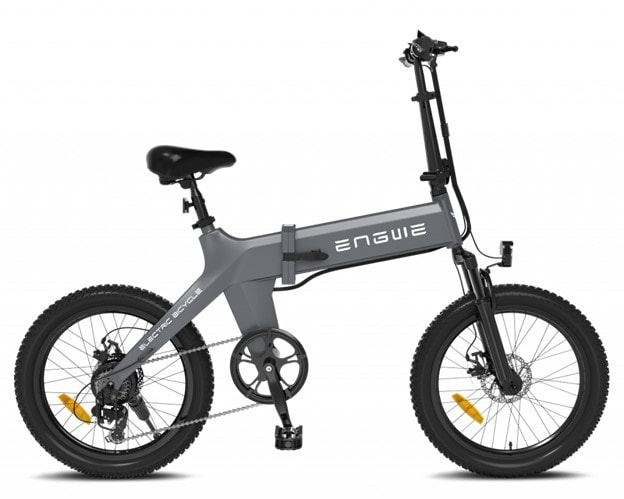 Image from https://engwe-bikes.au/product/engwe-ep2-pro-750w-fat-tire-electric-bike/ If you’re an on-the-go cyclist, fat tire electric bikes will make a great addition to your collection as it offers a versatile combination of power, convenience, and speed. Currently, there are three categories of fat electric bikes you can choose from. These three main types offers unique advantages, catering to the different preferences and needs of riders: Folding Electric E-Bikes: One of the most popular designs for fat tire electric bikes take shape in the form of folding bikes. This style is particularly popular as it allows cyclists the opportunity to take their e-bike along with them anywhere they want to go! Folding fat tire electric bikes boast smaller frames and lighter weights but do not scrimp on the power and ride quality it delivers. Some of the best contenders in this category include the Engwe EP-2 Pro, and the ADO A20F (which has a removable battery!). Hunting Fat Tire E-bikes: As fat tire e-bikes are associated with off-road use, it’s only natural that there would be a variation created specifically for hunting use. These bikes are kitted with additional accessories and components designed to complement the needs of hunters and tackle the rough backcountry trails. General Use Fat Tire E-Bikes: If you want a bike you can take anywhere - to the beach, to the mountains, or around the city - all-rounders are for you. These general purpose fat tire e-bikes strike the perfect balance between power and adaptability, offering optimal motor power, battery capacity, suspension, and component quality to accommodate your lifestyle. Some notable all-rounder options include the sleek Engwe C20 Pro and the Nakto Discovery Fat Bike. In conclusionFat tire cycling bikes make an ideal companion if you’re looking for a more immersive touring experience. With their unmatched versatility and power, these bikes offer comfort, safety, assistance, and longer range, you can certainly look forward to an unforgettable journey across Scotland’s breathtaking landscapes.
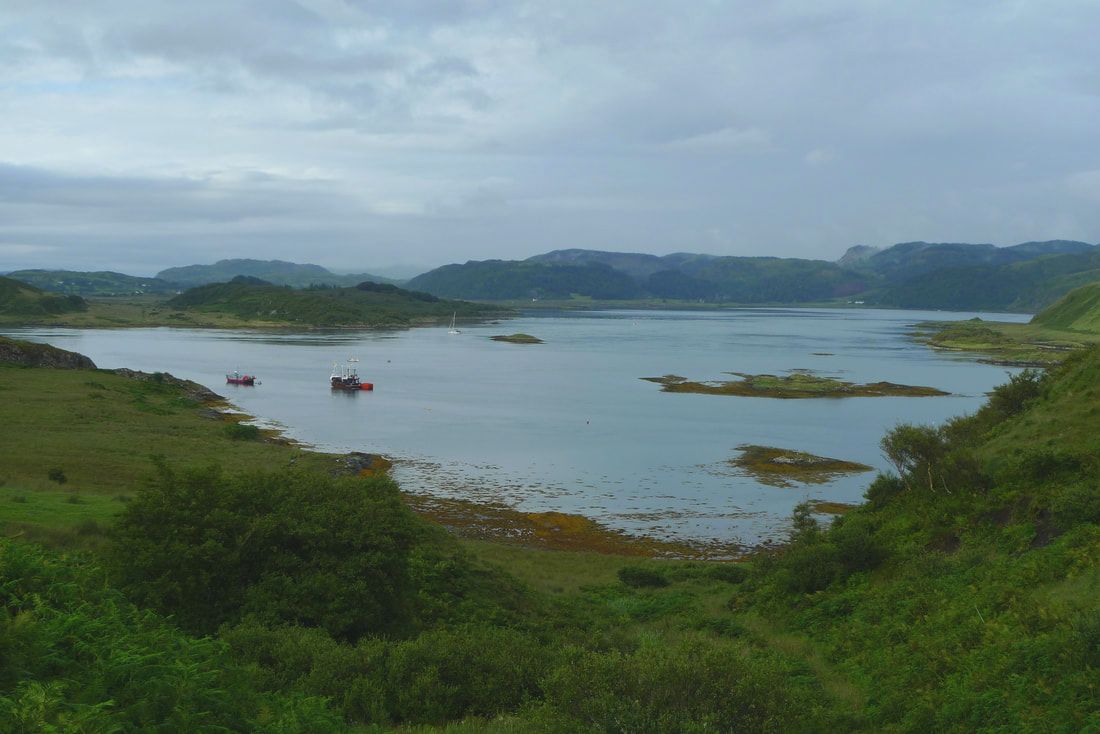
They were known as the islands that roofed the world because of their huge slate deposits. The Slate Islands have a rich industrial heritage in beautiful surroundings. They are 12 miles south of Oban and a joy to explore by bike.
Highlights
Getting there
The first step is to travel the 12 miles from Oban to the Clachan Bridge, the 'bridge over the Atlantic.'
The Clachan Bridge takes you over to the Isle of Seil, the northernmost Slate Island. The single-track road on the island feels like it's a guest here, almost overwhelmed by the trees, ferns and grasses that enclose it.
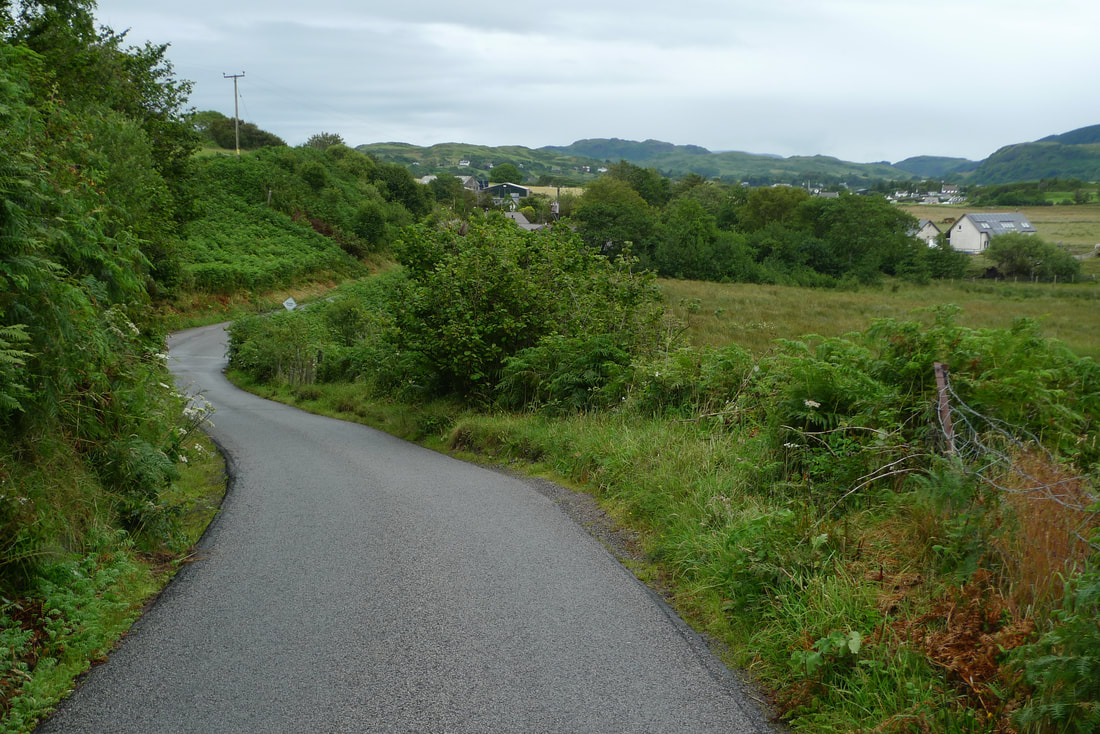
Twisty road on the Isle of Seil
Kilbrandon Church
Three miles from the Clachan Bridge you'll find this gorgeous church. The interior is worth seeing with the stunning stained glass windows beautifully framed by the bare stone walls.
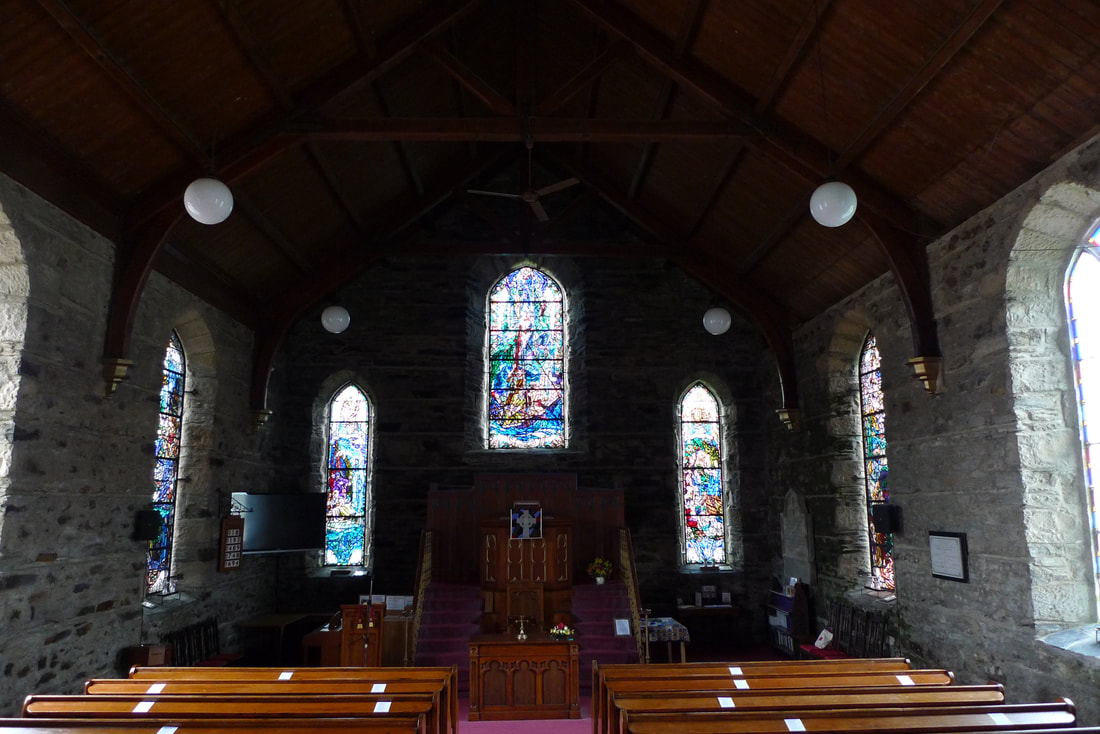
Kilbrandon Church

Detail from a stained glass window in Kilbrandon church
From the church there's a view to Ballachuan Loch, surrounded by the lush greenery that carpets the island. Beyond the loch and across the sound are the hills on the mainland. They look imposing and rocky.
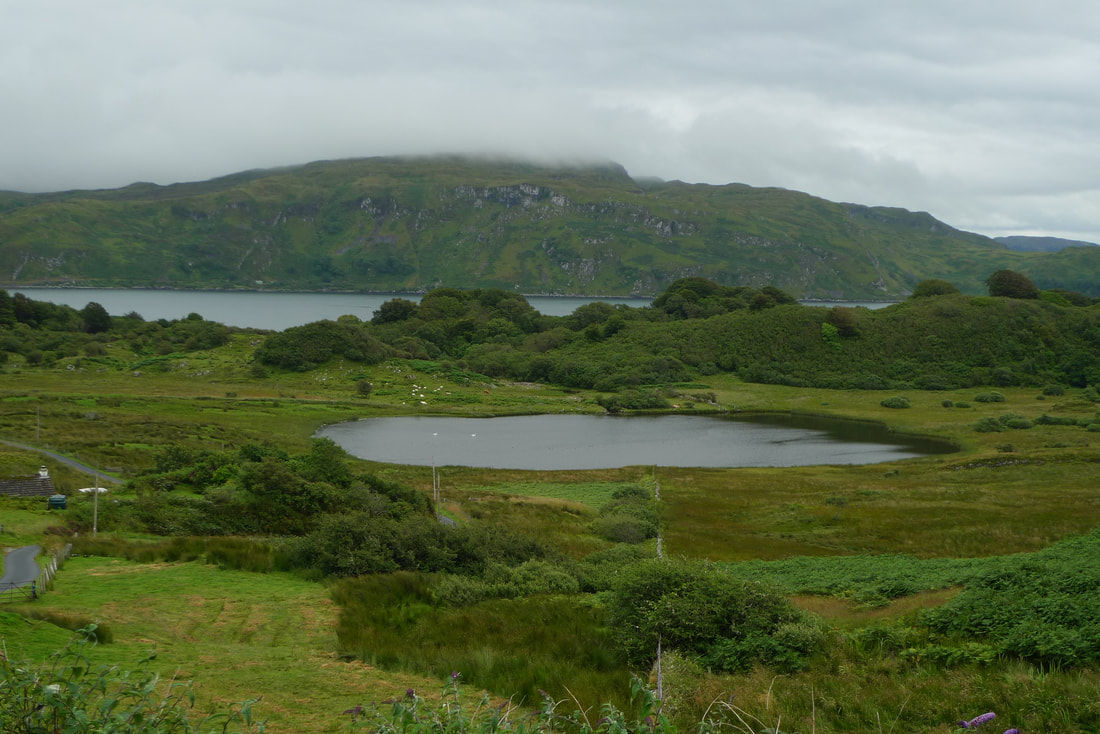
Ballachuan Loch
Ferry to Luing
Just under a mile from the church is Cuan where you can catch the ferry to the Isle of Luing.
The ferry runs every 30 minutes and the crossing takes about 5 minutes. 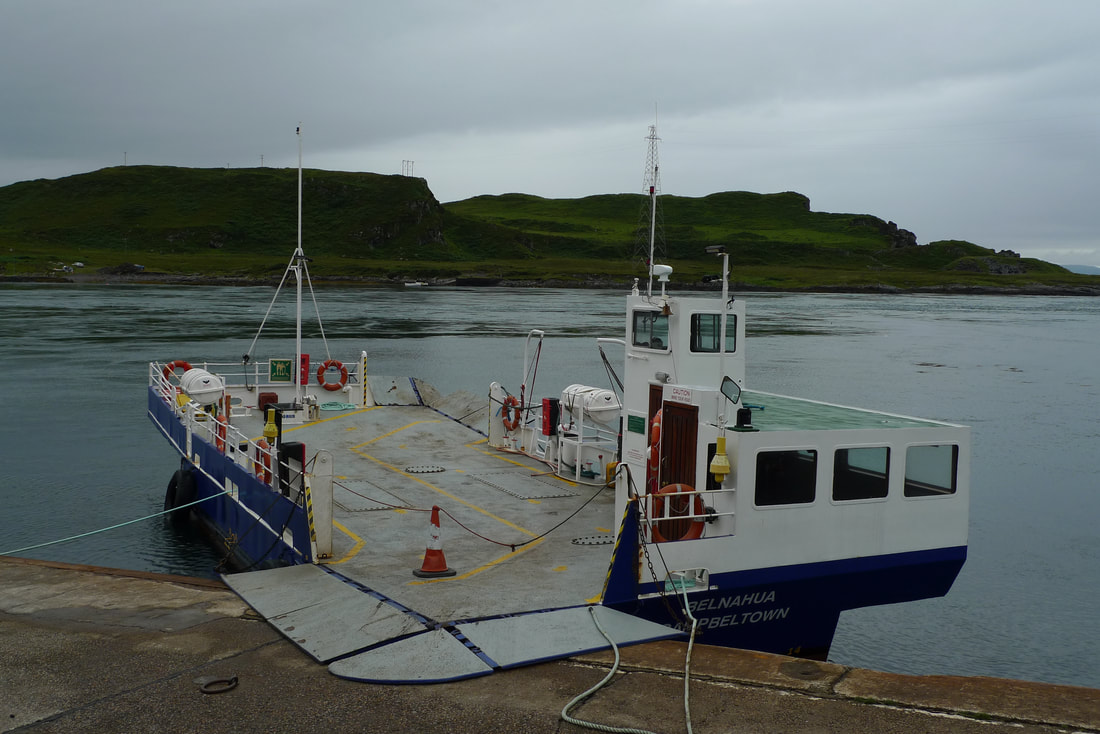
The ferry that crosses between the Isle of Seil and the Isle of Luing
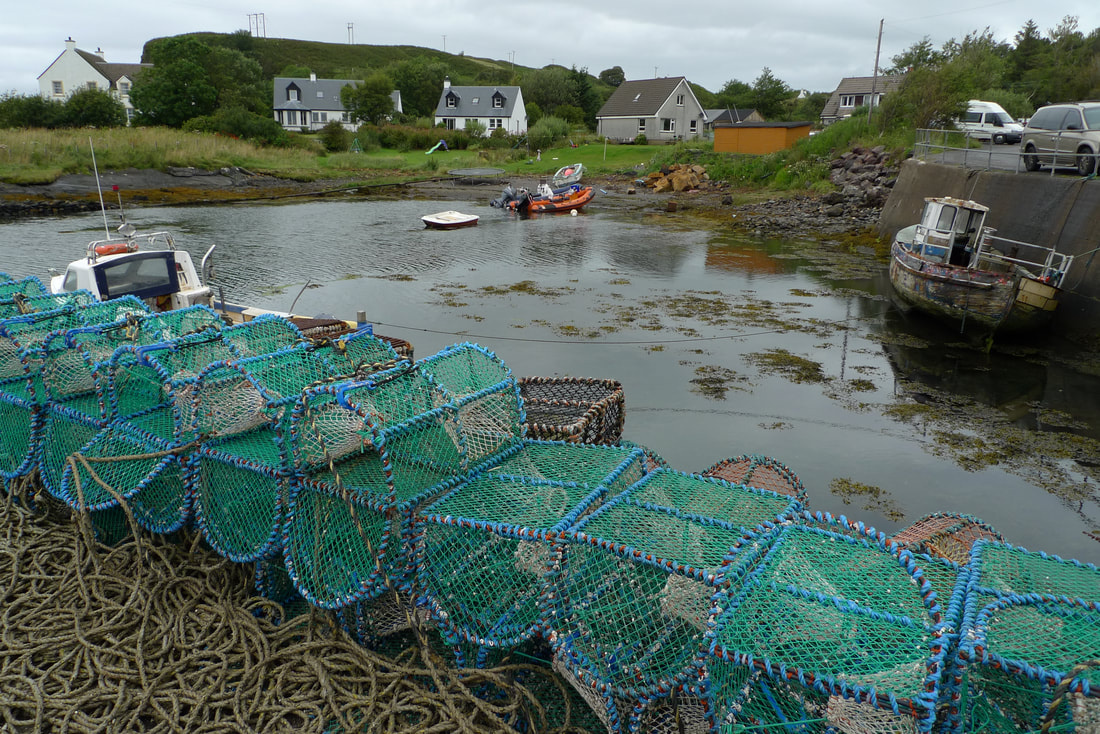
Lobster pots at Cuan where the ferry leaves for Luing
Even a short ferry trip has a restorative effect. There's something about the motion, the sound of water against the hull and the sea spray that makes you go into an almost meditative state.
How I felt coming here was perfectly summed up on one of the island's tourist information panels: "Isle of Luing- a place to think, a place to be."
Arriving in Luing the rain came on heavy. I sheltered in the ferry waiting room. It's kitted out with cushions, a stack of magazines and a noticeboard with community information.
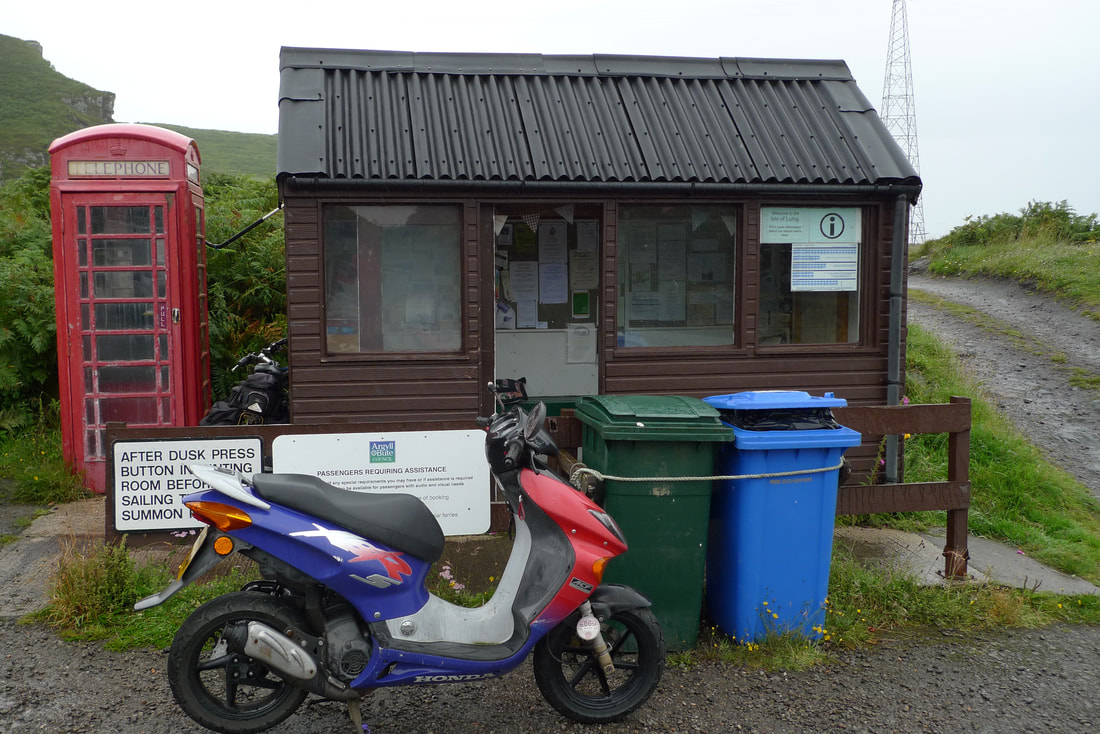
Isle of Luing ferry waiting room.
Views and perfect roads
There's a steep climb to leave the ferry dock, but the views are spectacular at the top. Even with clouds and mist the composition of water, islands and hills would sell a million postcards.
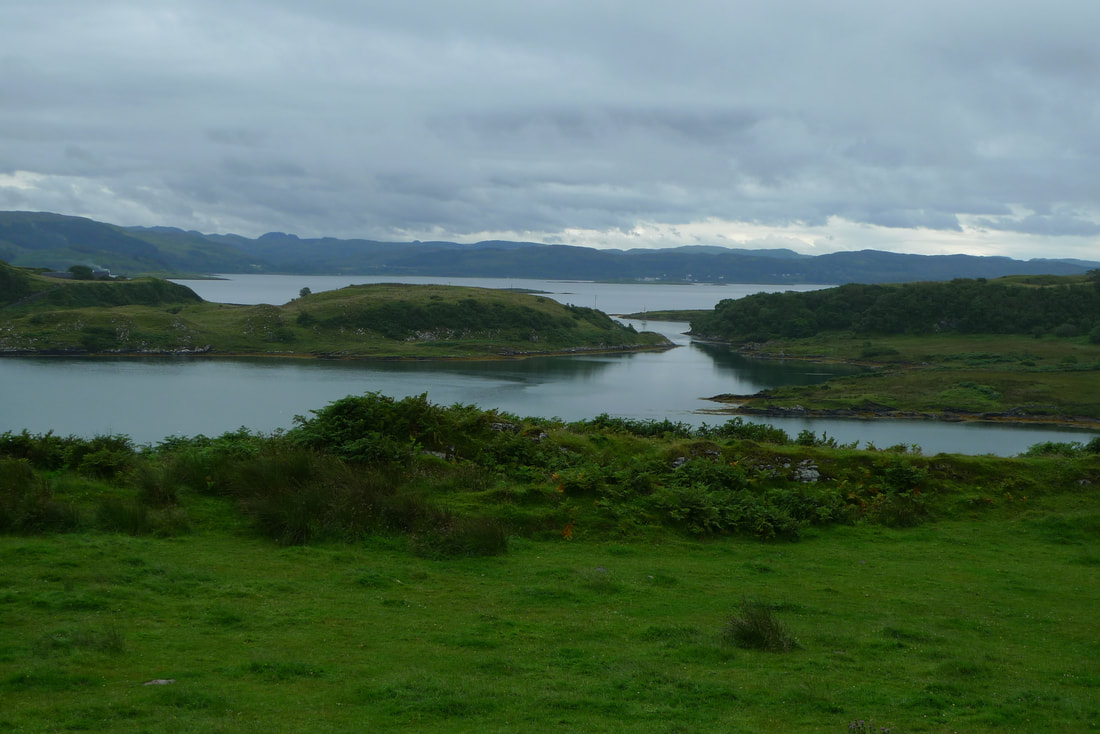
The view from the Isle of Luing
I knew immediately that I wanted to spend longer here. Reader, you should come here and enjoy this road. There's hardly any traffic and the green colours and landscape textures will make you smile all the way.
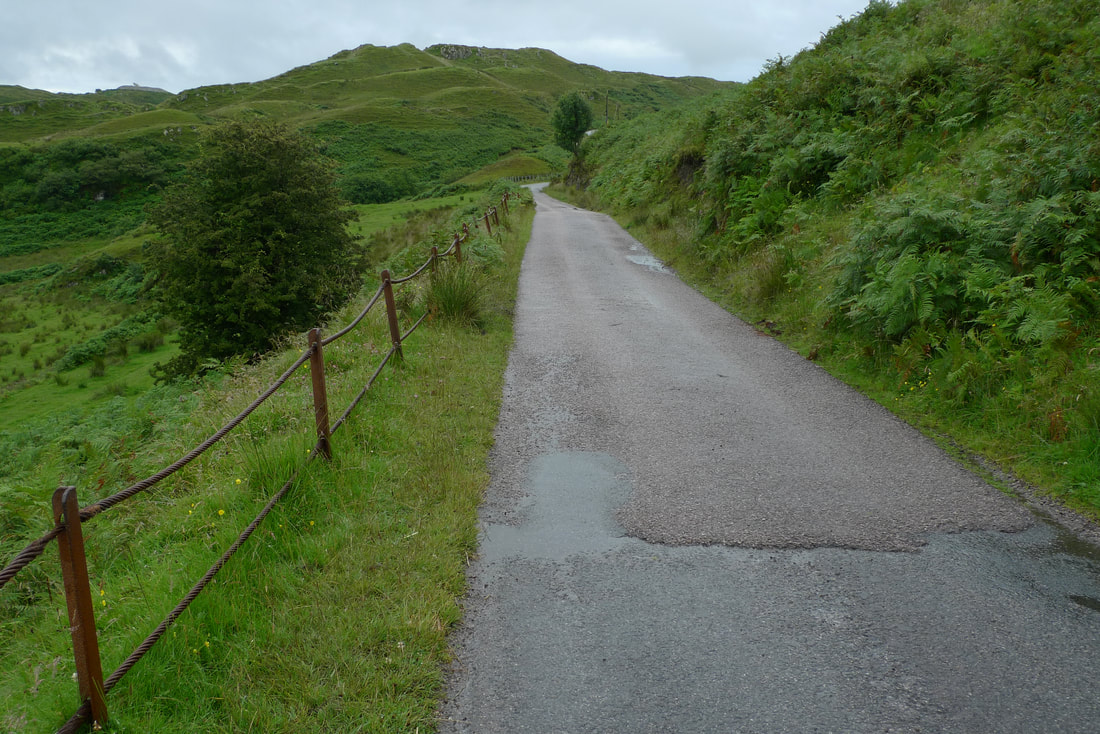
The wonderful textures and green colours of the landscape in Luing
At one point the road was blocked by a cow that was not for moving. She stood her ground as I carefully went around.
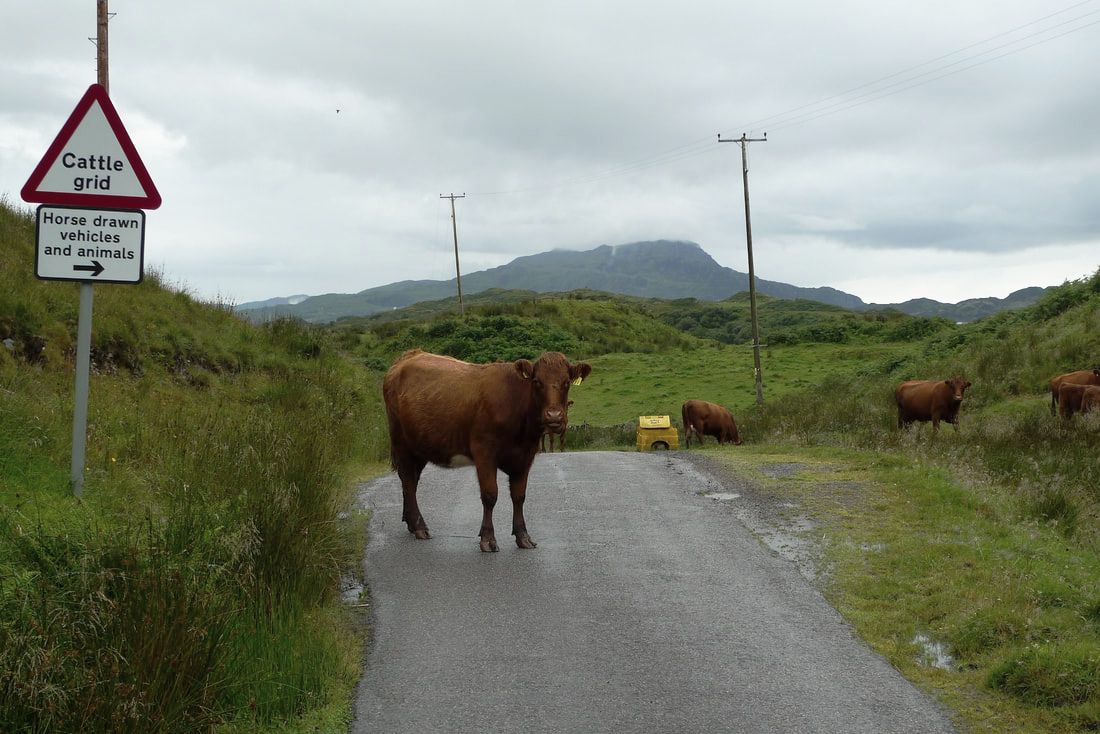
A cow blocking the road on Luing
Cullipool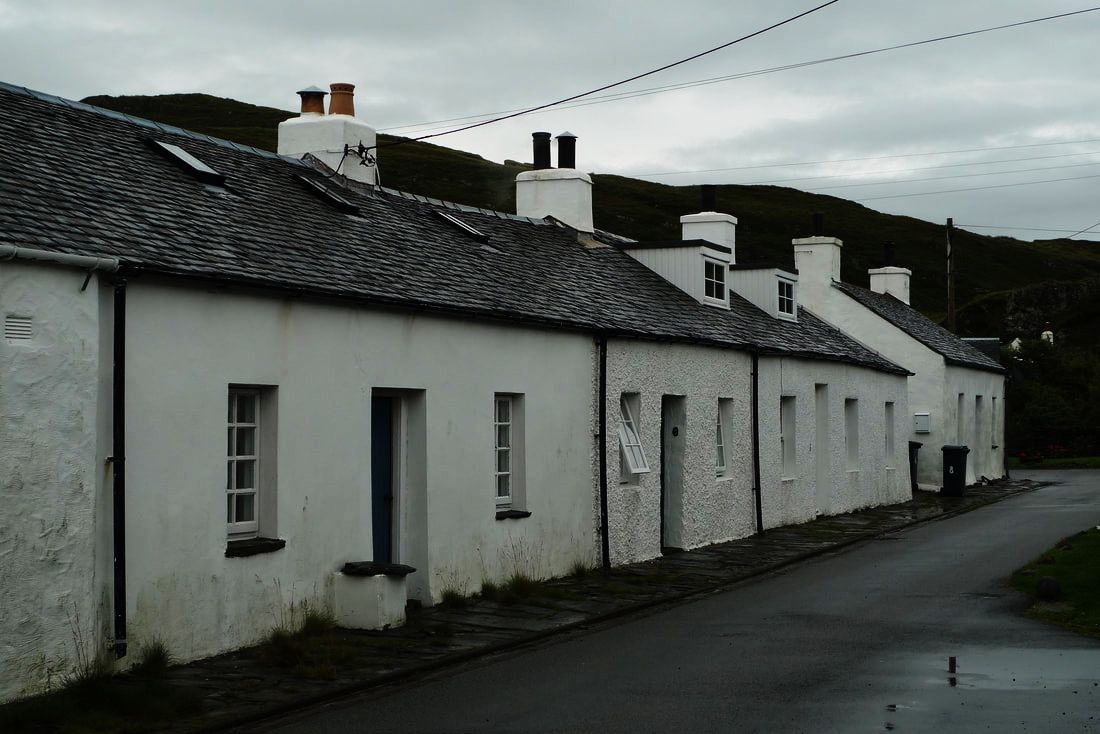
Cullipool
Around 2.5 miles from the ferry is Culipool. It's the largest settlement on the island, but that doesn't mean it's a busy place. Quite the opposite. The streets of white cottages were quiet and I didn't see another person.
It's very different to how this place must have been when the slate quarry was operating. It once employed 175 men and these cottages were their homes.
The quarry closed in 1965 and its remains are a fascinating, alien word. There are big hillsides in various states of destruction.
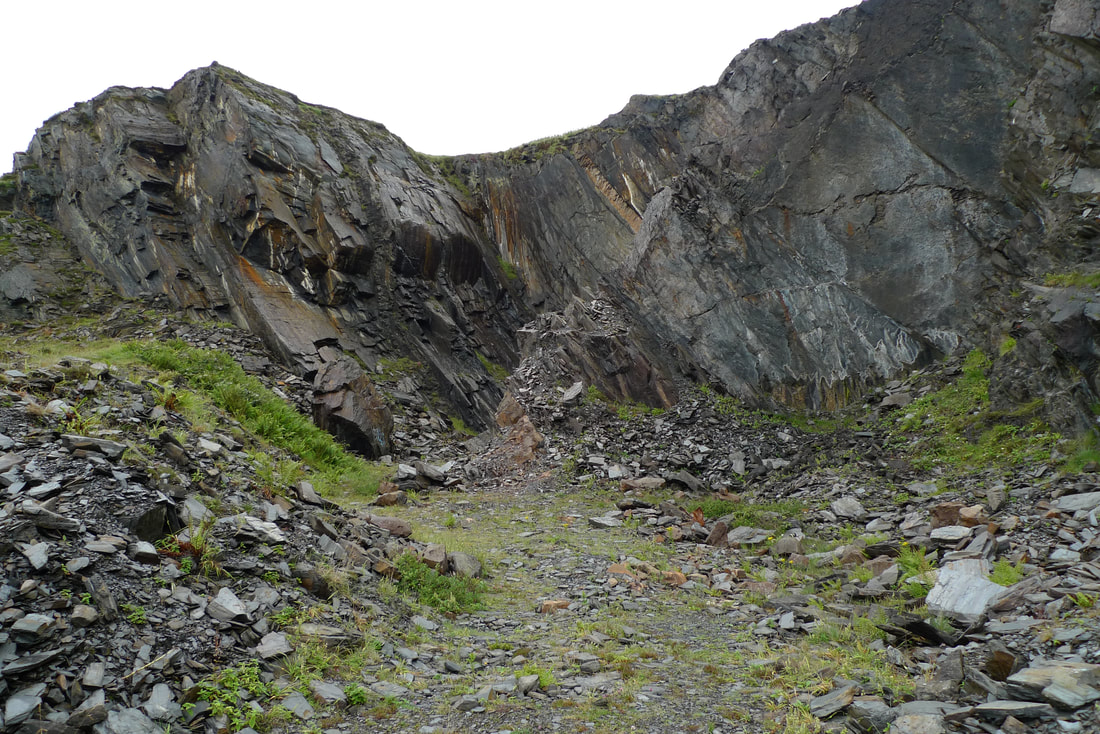
Remains of the slate quarry on Luing
Men were once suspended by rope from the top of these hills. They drilled holes and packed them with gunpowder. The blasts left these hills looking like something from a sci-fi film set. The ground is littered with shattered slate of all different sizes and shapes.
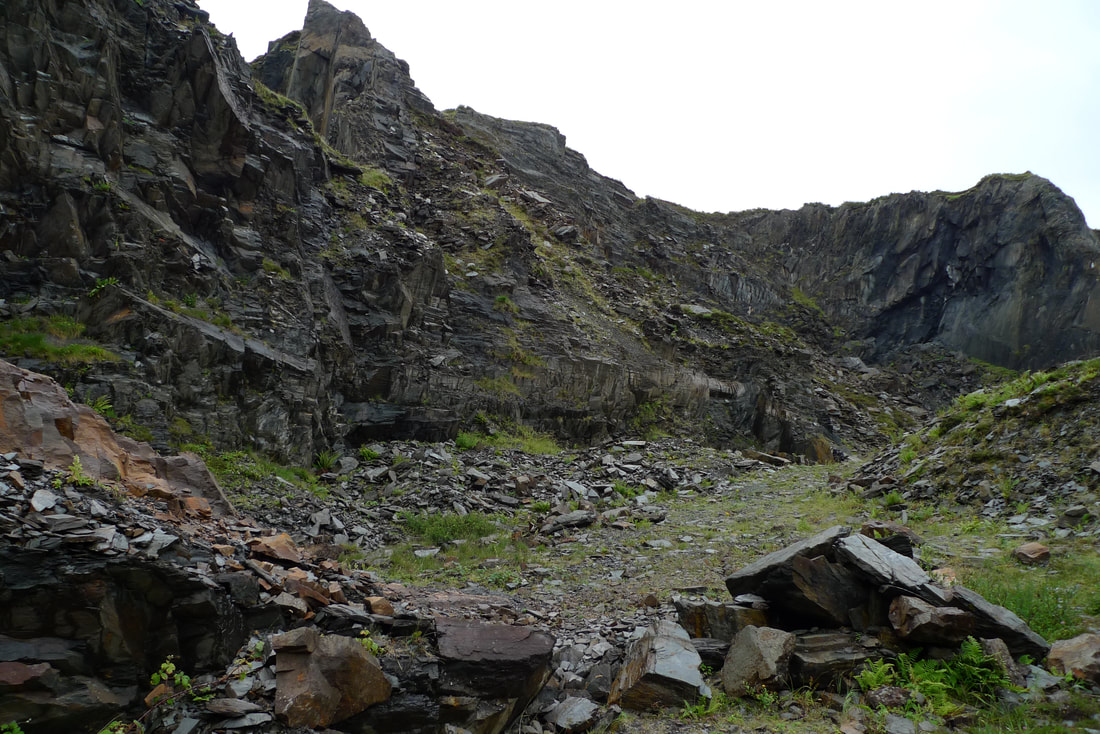
Remains of the slate quarry on Luing.
The beach at Cullipool is covered in shards of slate. When the waves roll in they push and then pull the slate. The sound this makes is gentle, soothing. It's a memory that will stay with me long after I depart these islands.
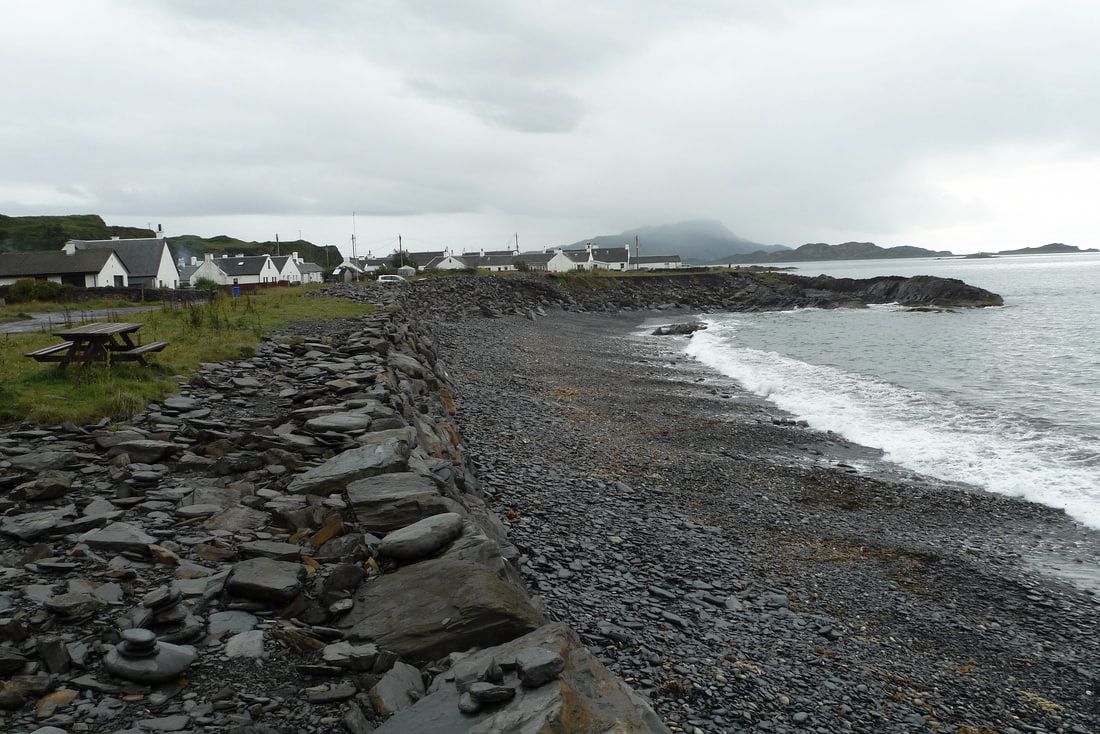
The beach in Cullipol is covered with shards of slate
I had to catch the last ferry back to the Isle of Seil so I couldn't spend any longer on Luing. If I am lucky to return one day I would visit:
The ferry was busier this time. The vehicle deck was so full that a van was on the ramp with its rear wheels dangling over the water. 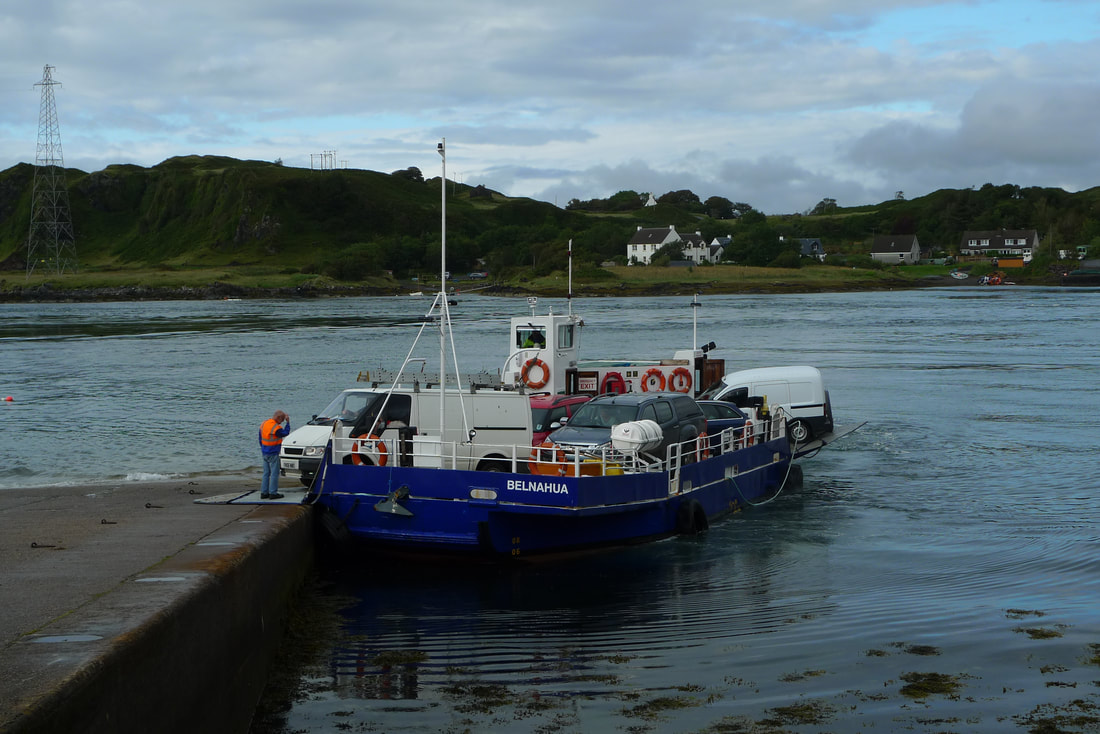
The ferry from Luing to Seil
Ellenabeich, Isle of Seil
It's about 3.5 miles from the ferry to Ellenabeich, the largest village on the island of Seil.
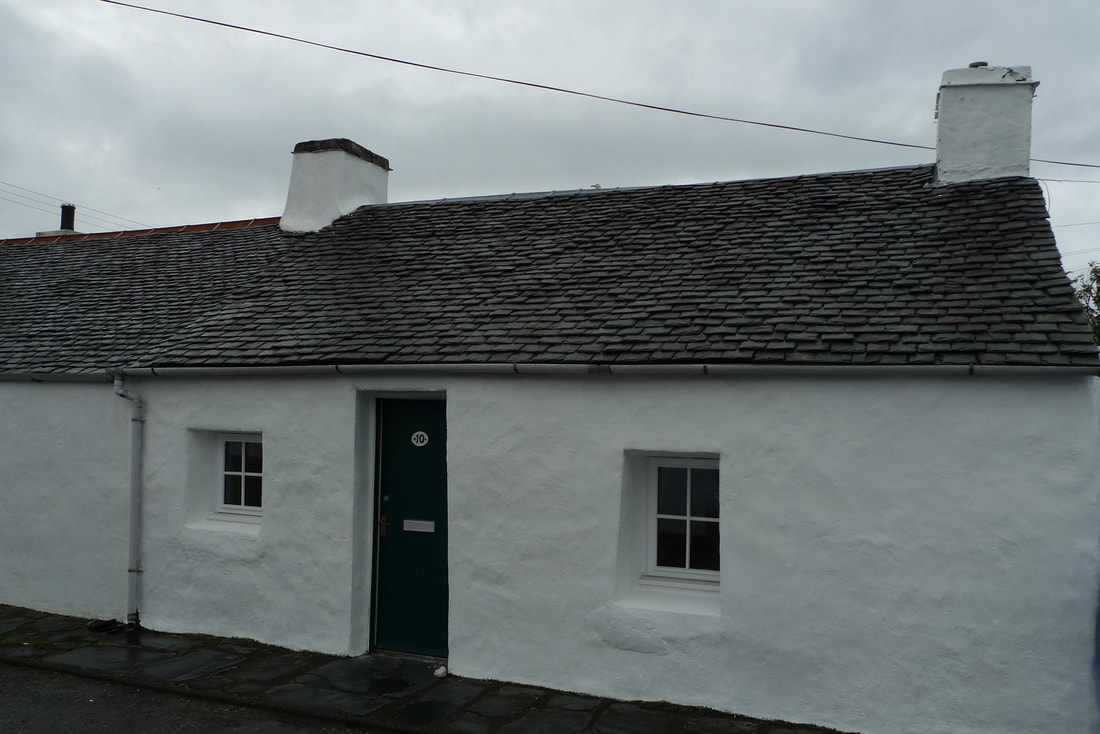
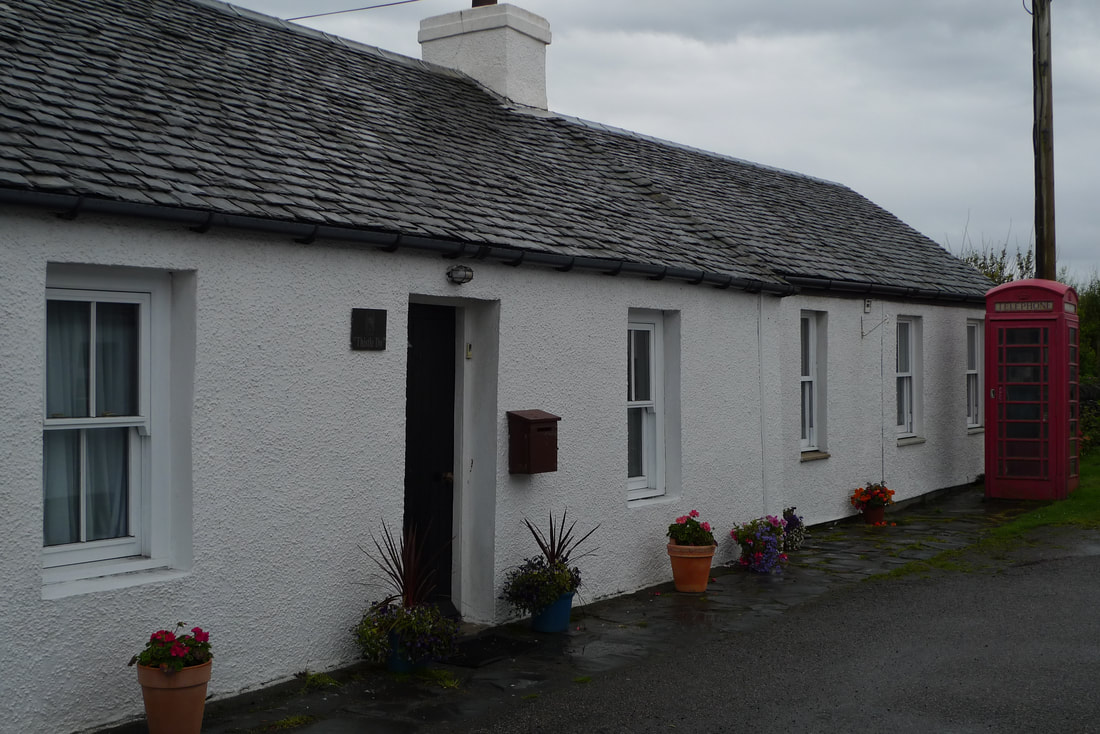
It's another settlement with rows of white workers cottages. Some have small front gardens adorned with plants. There's a village square with a crane rescued from the derelict pier as a a focal point. There's also a shop and a classic red phone box that looks great set against the white washed buildings. The street lamps, have a vintage look, a bit like gas lamps. 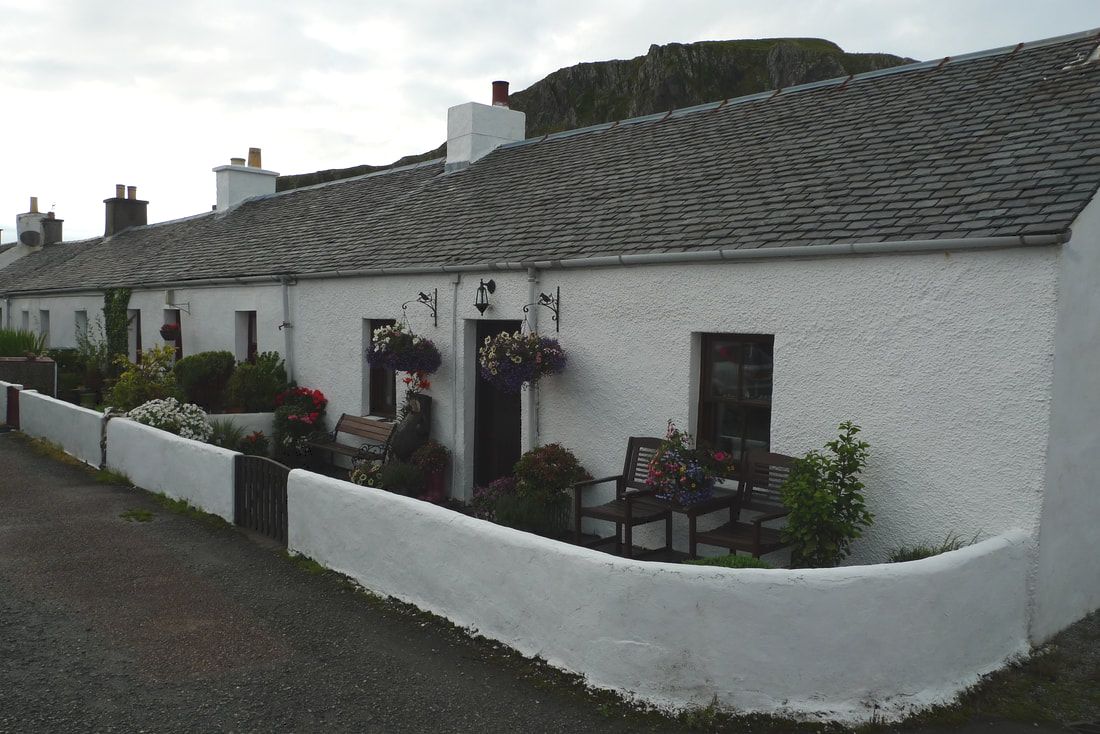
White cottages with front gardens in Ellenabeich
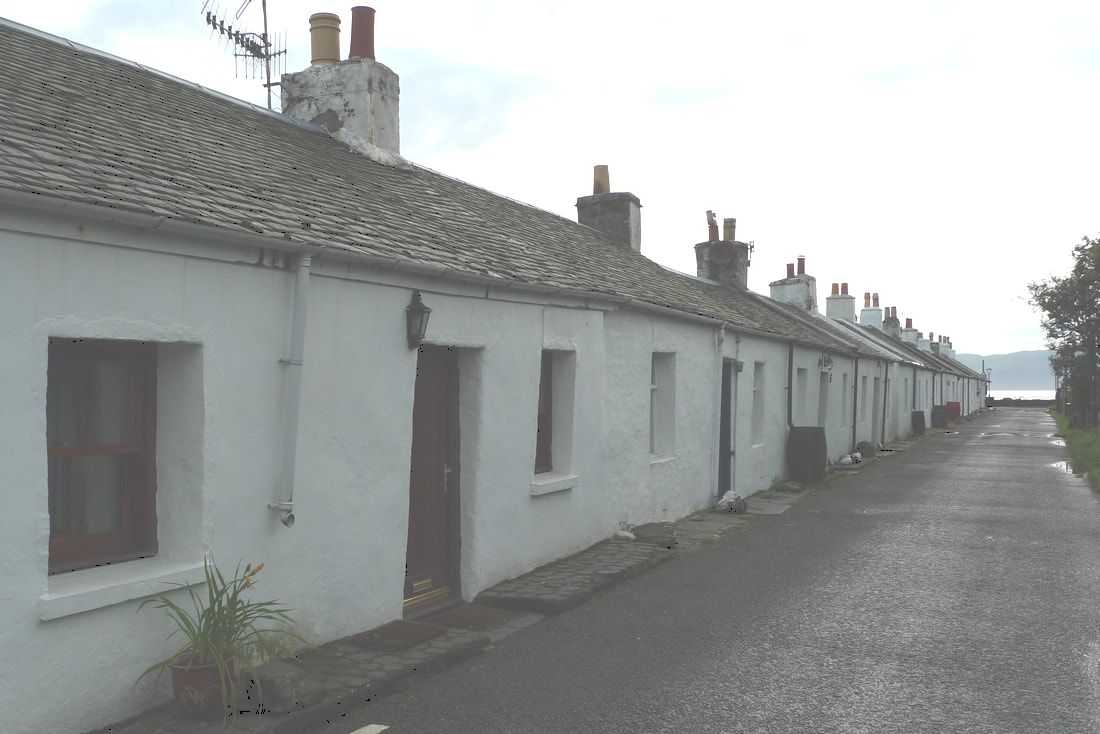
Row of cottages in Ellenabeich
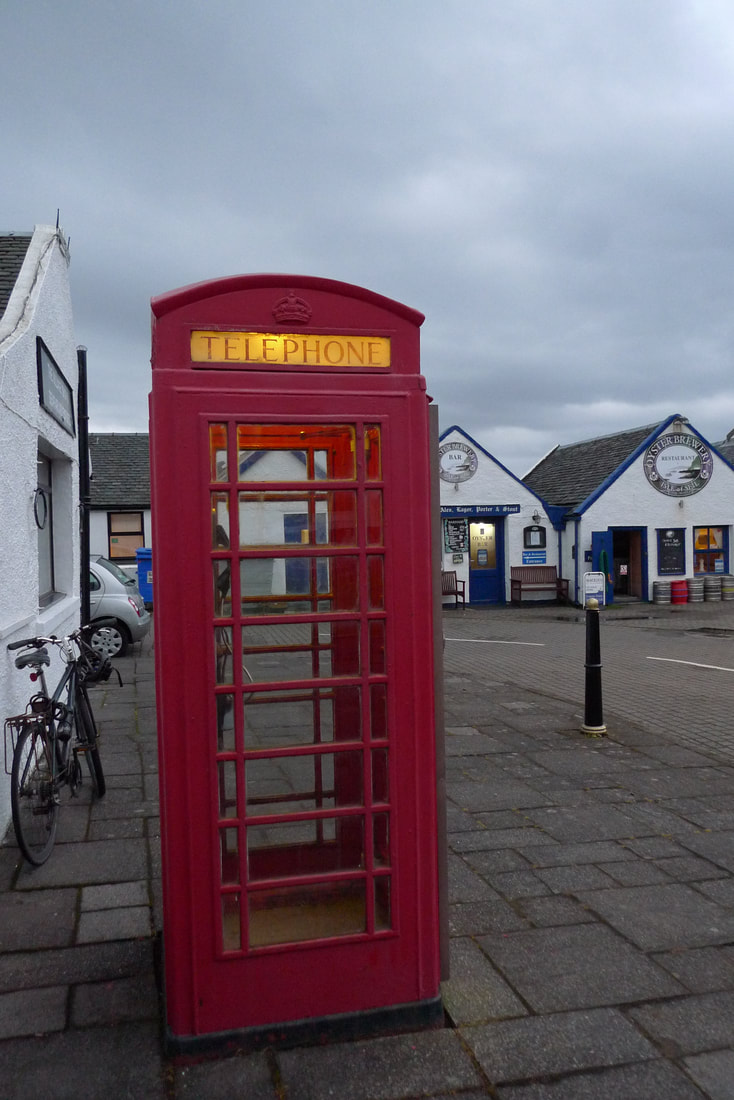
The telephone box in Ellenabeich with the Oyster Bar in the background
The Oyster Bar is the only place for a meal. There's quality seafood, burgers, steak and more. I had chowder. This was a super tasty creamy potato broth packed with smoked salmon, smoked haddock, prawns and scallops.
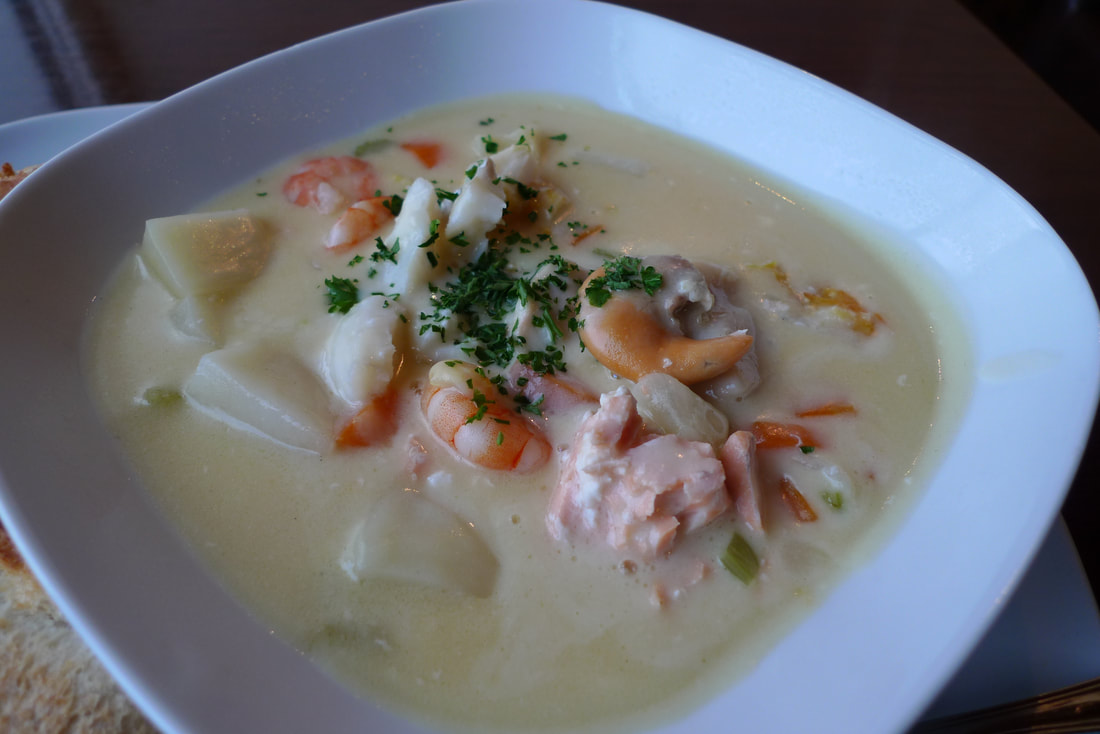
Chowder at The Oyster Bar
A night out
A normal Tuesday night at home would probably be spent watching the TV. In Ellenabeich I went for a bike ride.
I took the hill out of the village. The view up here shows off the beauty of this place. The craggy hill, Dun Mor, dominates the scene. You can see how close Easdale Island is to Ellenabeich. This island is famous for hosting the World Stone Skimming Championships each year. Competitors use Easdale slate skimming stones in one of the disused quarries. The island is car-free as the ferry takes only passengers. I didn't have time to visit Easdale this time around. 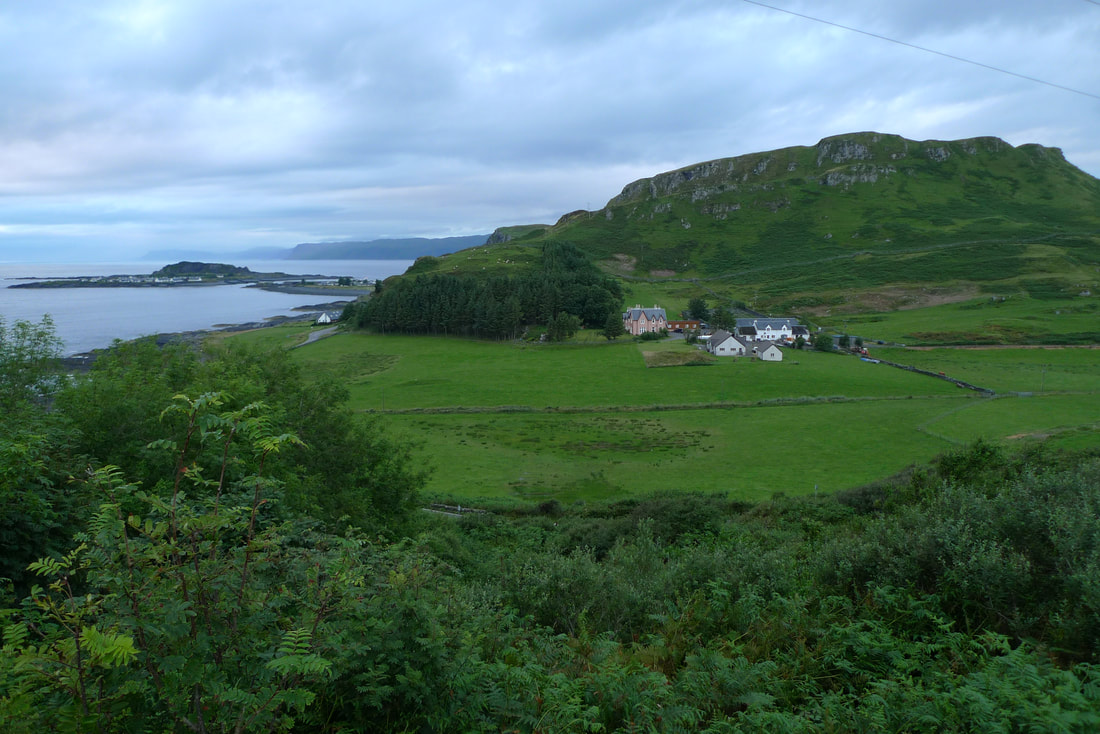
The view towards Ellenabeich. It's dominated by the hill, Dun Mor, On the left of the picture is the island of Easdale
I explored the rocky shoreline and the slate covered beaches. Apart from the gently rolling waves the only other sounds were the cry of seabirds and the occasional bleating sheep.
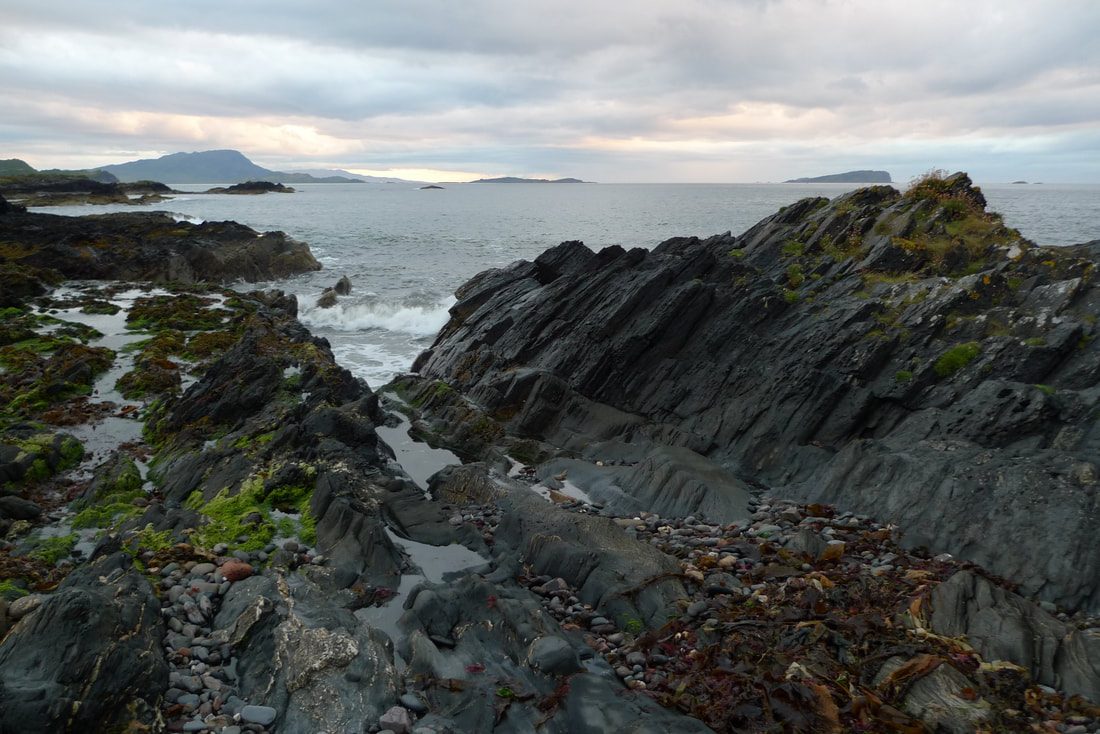
The rocky shoreline near Ellenabeich with views of islands
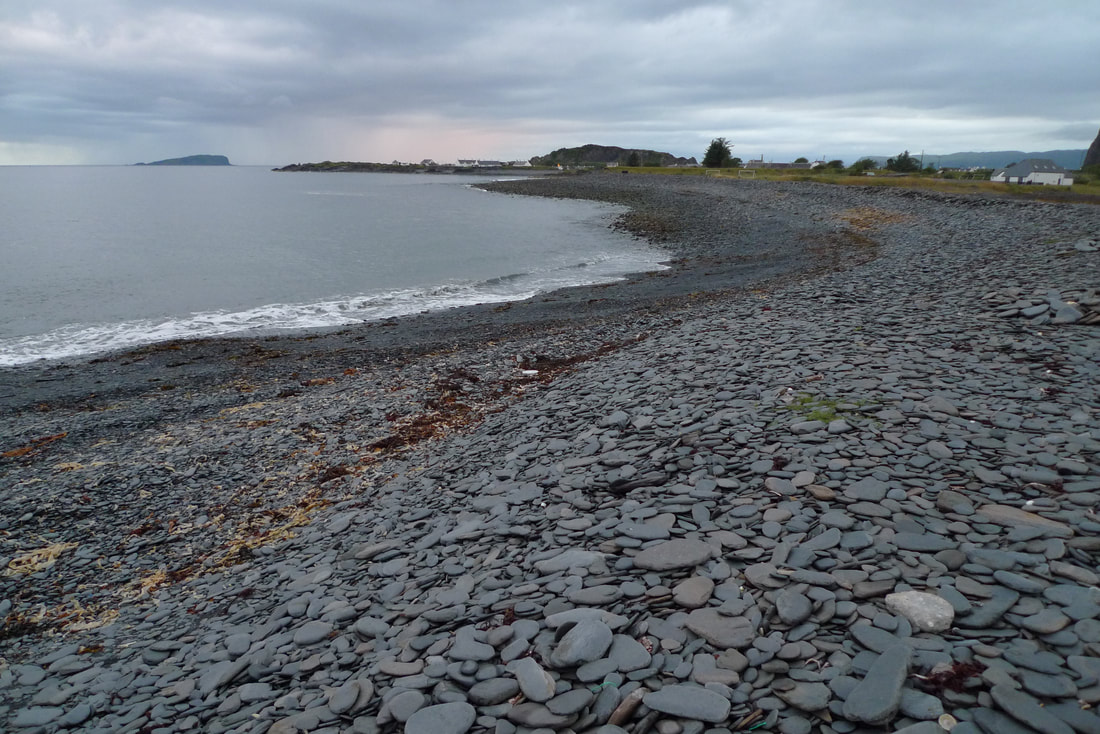
The beach at Ellenabeich is covered in shards of slate
Garragh Mhor bed and breakfast
I stayed in Garragh Mhor on Ellenabeich. The hosts were super welcoming. They told me about the incredible wildlife on the island. Otters passed their front door a few days ago. There was a time when a guest forgot to close the door and lots of toads made their way inside! A swarm of hornets once gathered above the B&B- it was like a black cloud sitting just above the roof.
I love that conversations with B&B owners can give you a real flavour of what it's like to live in the places you visit. Oh, and the smoked salmon with scrambled eggs for breakfast was superb. 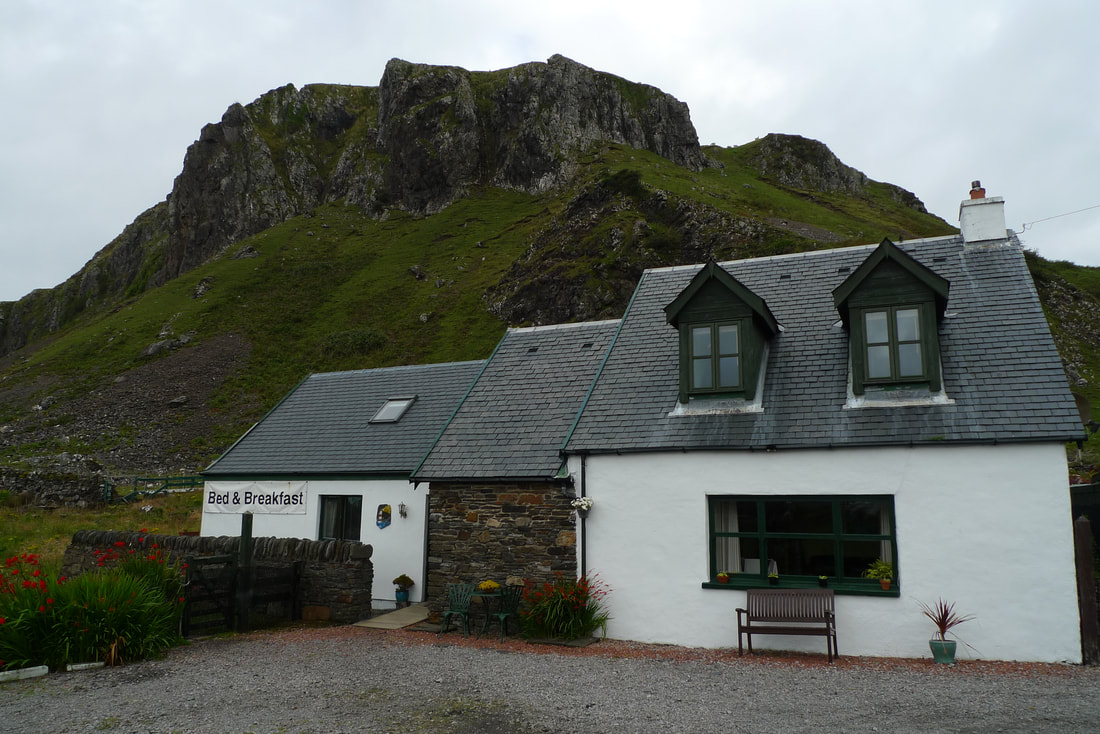
Garragh Mhor B&B in Ellenabeich, with Dun Mor towering above it
My thoughts on the Slate Islands
The Slate Islands are not as well-known as other islands in Scotland, like Skye or Harris. That can make them quieter, but the experience is just as good as those other places.
I thought the scenery was spectacular. I loved the novelty of crossing the 'bridge over the Atlantic' to get to the islands and then the short ferry ride across to Luing. The quiet roads make for great cycling and the industrial heritage of the islands is a fascinating part of Scotland's history. Explore Argyll and Bute
The Slate Islands are in Argyll and Bute. You can read more blogs about this part of Scotland.
 One of the best feelings as an athlete is knowing you’re ready to advance. After years of incremental growth and the excitement of discovering new approaches, athletes (whether hobbyists or amateurs hoping to go pro) are usually ready for a new challenge. In fact, this extends to anyone hoping to advance and challenge themselves. For example, Scottish poker pro David Docherty got his start back in 2008 after winning a contest to see the World Series of Poker Main Event live. The tournament captured his attention and he went on to start playing competitively online. Fast forward fifteen years and Docherty is one of the premier players in the UK scene. But to advance from a Texas Hold’em newcomer to one of Scotland’s top players, Docherty needed to break through the noise. To grow, he started rubbing elbows with industry pros at events like the European Poker Tour and online tournaments. By 2021, he had nabbed a six-figure win at the Grosvenor UK Poker Tour. For cyclists looking to level up their game—whether with the hopes of becoming the next David Millar or simply to challenge themselves with a route like Bealach na Ba—you’ll need to know the signs of when you’re ready to go from a spectator to a participant. And, from there, when you’re ready to leap from an amateur into the big leagues. Here are four signs that you might be ready. You’re a Pro with Your Cycling Kit, Including RepairsThe list of basic skills cyclists must develop is extensive, from learning how to ride in wind and rain, sit on a wheel, and drink while riding. But one of the most important skills revolves around the cycling repair kit. Not only should you be highly specialized with your kit, but you should also know how to use it in remote locations. This means knowing how to repair tire punctures and change a flat at the bare minimum. But if you’re ready for the next cycling challenge, you should be aware of a few other gear notes. These include things like greasing all threaded equipment, switching from metal to nylon tire levers, and knowing how to use a smartphone to keep track of dismantling. You’ve Built (or Joined) a Cycling CommunityFor Docherty to become one of the UK’s most qualified poker pros, he had to join the international poker community. Given most people practice with online events and games, Docherty’s community was largely virtual. By comparing his technique and performance against other pros, he was able to benchmark his progress. The same goes for cyclists. If you have a strong cycling community around you, you’re prepared to take on new challenges. Not only will a community support you, but they’ll also push you to perform at your highest level.  You’ve Got a Hankering for UltrasOne sure sign that you’re ready to advance is that you’ve started looking into ultras. These are some of the most demanding physical contests in the world—nonetheless in cycling. So, if you’ve started eyeing specific training programs that will help you prep for 50-70 km events or for those that run 70+ km, then it’s time to target a specific event. Keep in mind that you can start off a bit slower. For example, the Around the Bay ride includes options from 20 km to 300 km events. Rather than dive straight into a larger ultra, varied events like Around the Bay will let you take things at your own pace as you level up. Your Calendar is Filling UpThis sign goes hand in hand with having the itch to take on an ultra. As you become more enmeshed in the cycling world, you might find that you’re penciling down more events—whether with the aim of watching or participating. You might even be keeping track of pro cyclists as they prepare for the grand tours in France, Italy, and Spain. If that’s the case, then know that you’re psychologically prepped to start taking on new challenges, whether solo pursuits or organized events.
 
This is one of the best books I have read about cycling around the world. Julian Sayarer is a brilliant story teller. He notices details, he questions what he sees, he analyses. He creates a picture of the world that's so vivid it feels like you are right there with him.
Life Cycles is about braking the world record for a circumnavigation by bike. To do this Julian Sayarer must ride 110 miles every day for 6 months. There are a lot of books about cycling the world. I've noticed when there is a record attempt the content can be focused on times, distances and performance. A lot of readers want this, but I find that it can detract from what is also an incredible journey on planet earth. It should be an opportunity for the author to share their experience of the world. Thankfully, Sayarer has written an account that's very much about travel and people. The opening pages struck me as a somewhat cynical introduction to world record attempts. Sayarer certainly has strong opinions and is not afraid to share them throughout the book. Once I got used to this writing style it really grew on me. It's honest, raw and beautiful and that's why I loved this book. By describing what he sees, what he thinks about and who he meets, Sayarer creates a gripping account of world travel. The record attempt doesn't really matter as much as what he sees, who he talks to and what he experiences. I like that he tells us about the bad things as well as the good things. Even a description of the simple act of buying supplies in a Hungarian supermarket reveals so much about the world we live in. Sayarer meets some fascinating people on his journey. The conversations and encounters are beautifully told. One of my favourites is his meeting a homeless man cycling in New Mexico. In America homeless people riding a bike, loaded with belongings, is a common sight. So much so that Sayarer is often handed money by strangers, assuming him to be homeless. On the subject of America this book had me dreaming of visiting Oregon. The descriptions of this place are gorgeous and the author says "I want to ride through Oregon every day for the rest of my life." Kazakhstan is the other place that I really want to visit after reading this book. Some writers don't quite manage to paint a picture of what a country looks like, but Julian Sayarer does it perfectly. This book transports you to that place as if you are on that road and seeing it with your own eyes. There's plenty of drama in this book. The mechanical problems to contend with. The inevitable illness. Encounters with the police. Crazy weather and temperatures. Then there's the incredible physical and mental toll of this journey. It makes you wonder why anyone would want to do this. But the payoff is experiencing the world by bike and who wouldn't want to do that? Read a review of Fifty Miles Wide. This is another great cycling book by Julian Sayarer. This time the journey is in Israel and Palestine. 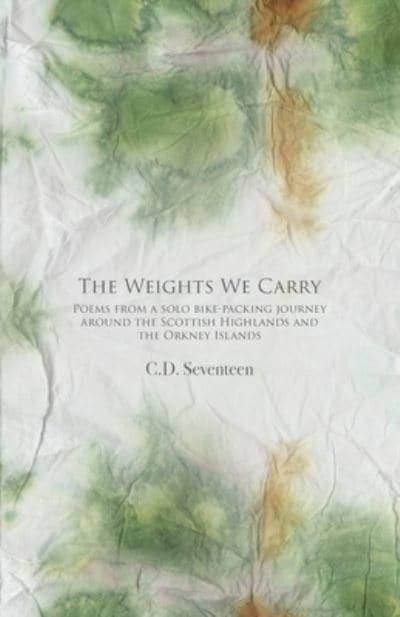
I want to leave this world behind, jump on a bike, go on a journey without others, dive deep into the self, and let the weight of my human identity dissolve into the wind."
C.D Seventeen embarked on a 46-day, 658 mile journey in the Scottish Highlands. This experience inspired her to write poems. This book is a collection of 22 poems, each paired with photographs from the journey. The combination of photography, using a film with a purple-hued character, and the poems makes for a beautiful book. The poems are thought-provoking. The author explains that writing them helped her on a journey of self-redemption. There's a theme of facing fear, creating freedom and expressing emotions. Travelling in Scotland by bicycle is an emotive experience. It impacts us in different ways and for C.D. Seventeen it has inspired this work of art. Each poem and photograph records an intimate moment in the journey and the pages are decorated with beautiful watercolour patterns. I liked picking up the book and opening it at a random page and letting the words and photography take me to that moment on this cycling journey. This is a unique book that illustrates the creativity that bicycle travel can inspire. 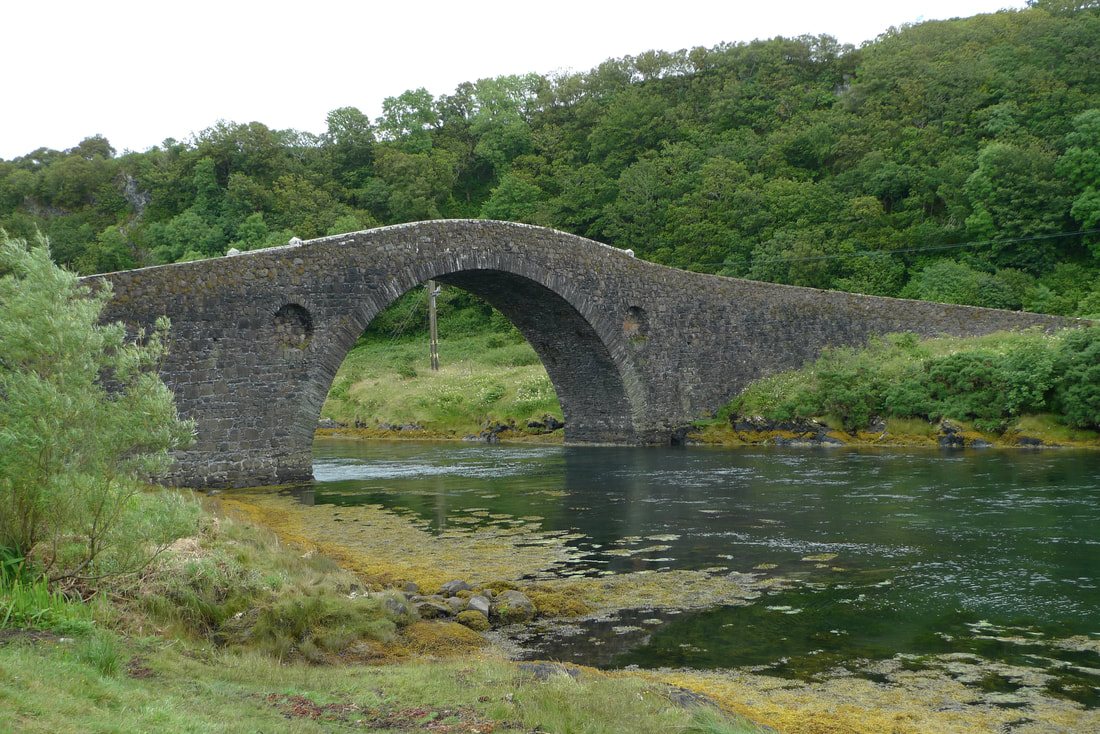
Did you know you can cross the Atlantic Ocean on a bridge? The water that flows under the The Clachan bridge is a sound that's connected to the Atlantic Ocean. It's why it's known as the 'bridge over the Atlantic'. One one side is mainland Scotland and on the other is the Island of Seil. The bridge is around 12 miles south of Oban
Highlights of the route
Train from Glasgow to Oban
This is a great way to start a bike trip. It takes just over 3 hours and you can relax with some of the best train views in the country. On this trip my highlights were counting at least 100 oystercatcher on a beach near Helensburgh. Around Garelochhead there were so many ferns that it felt like the train was fighting to get through them. I could hear them brush against the carriages and see them glisten with morning dew.
Bikes care carried free on this service, but you need to book in advance. Oban
There is the smell of sea and the cry of gulls. It was August and busy with tourists. Despite the warm weather the whisky shop had a fire blazing. It creates the right ambiance for whisky tasting, curled up in a leather armchair. A crab sandwich from the Oban Seafood Hut is lunch perfection. Follow this with a treat from the Oban Chocolate Company and you are set up for the afternoon.
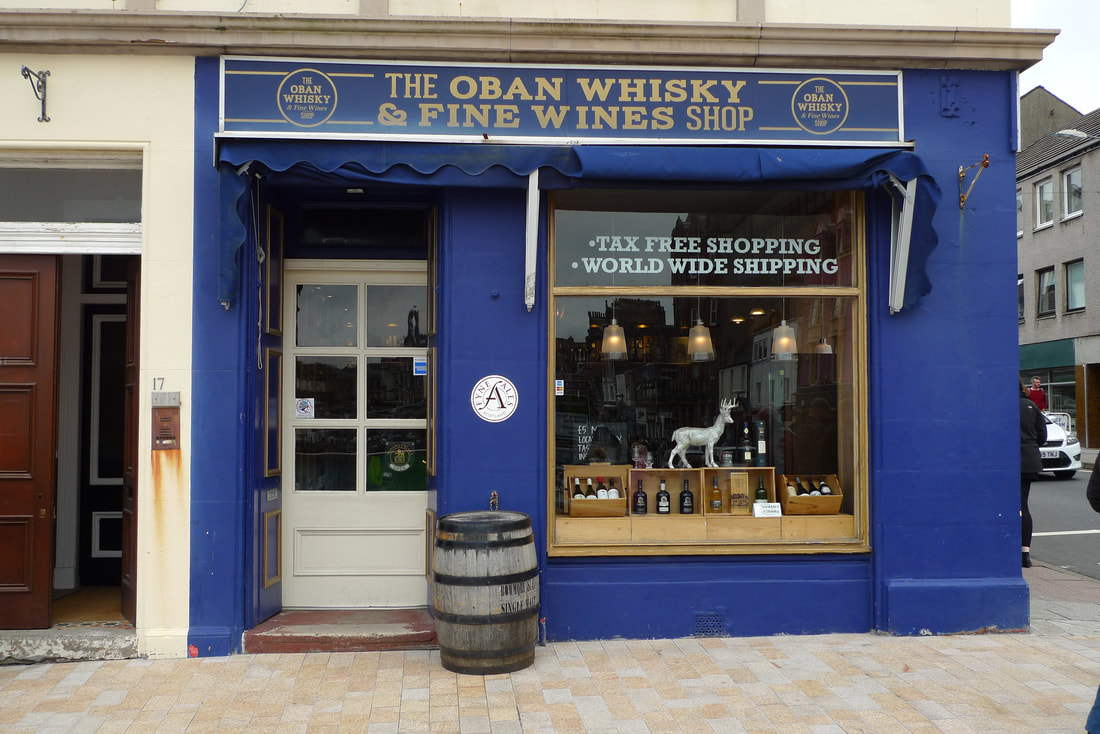
The Oban Whisky and Fine Wines Shop. Enjoy a browse, a tasting and a cosy fireplace
The A816 to Kilninver, 7.5 miles
There's no escaping that the only way to reach The Clachan Bridge is to use the A816.
You can avoid some of it by taking a twisty minor road that runs roughly parallel. This adds about 2 miles to the journey and you still have to do about 4 miles on the A-road. I didn't have time for this, so took the direct route. 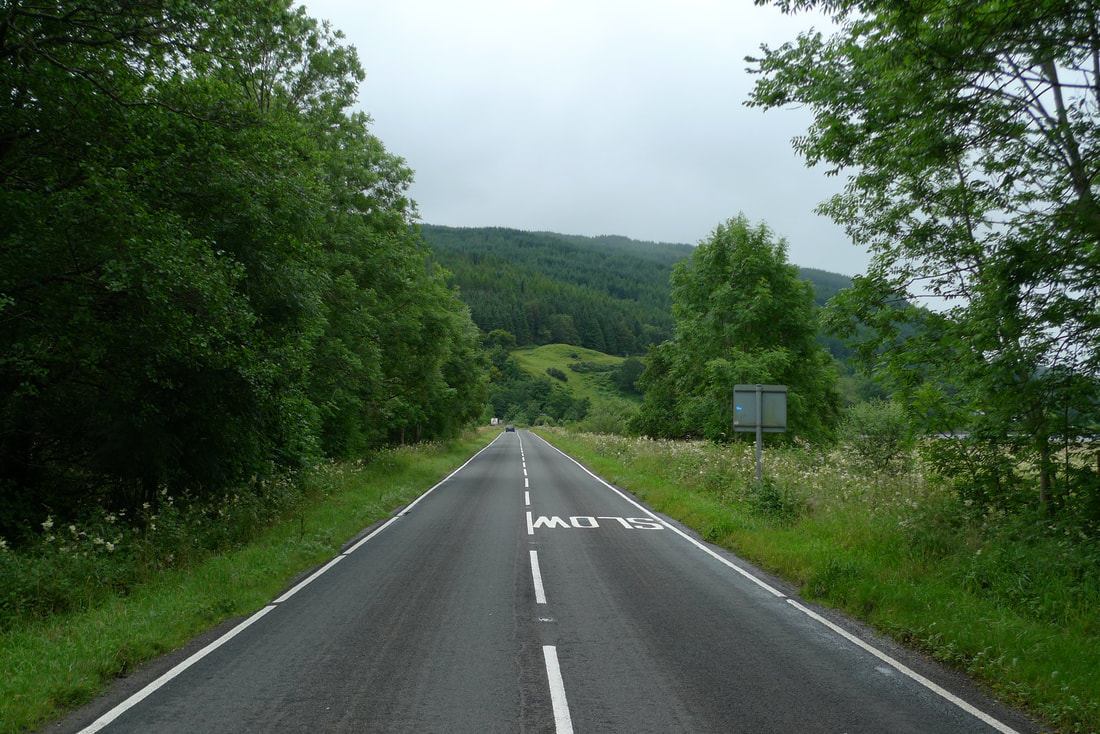
The A816
The most unpleasant part is getting out of Oban. There are several supermarkets and other business out this way and this can make the roads busy, but if you are used to city cycling its not too bad and it doesn't last long. Once you are through this the traffic thins out.
It was a tough climb on this road. There wasn't much to see until I reached Loch Feochan. The road runs along the shore, so you get a great view for this part. 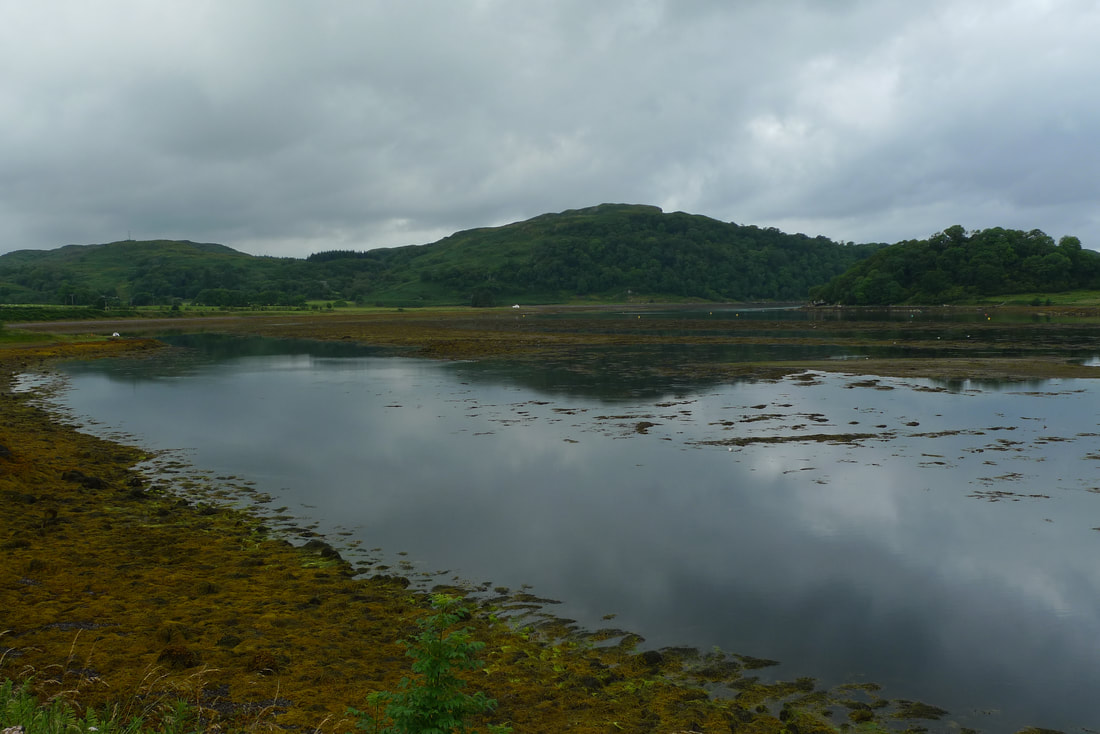
Loch Feochan
The churches
Churches are often the standout architecture when exploring Scotland. Even small churches, like the two on this route, have a presence. About 3 miles from Oban is Kilmore Church. It sits on a grassy bump that overlooks the loch. A different colour of stone has been used to pick out the corners and the window and door frames, giving it a distinctive look.
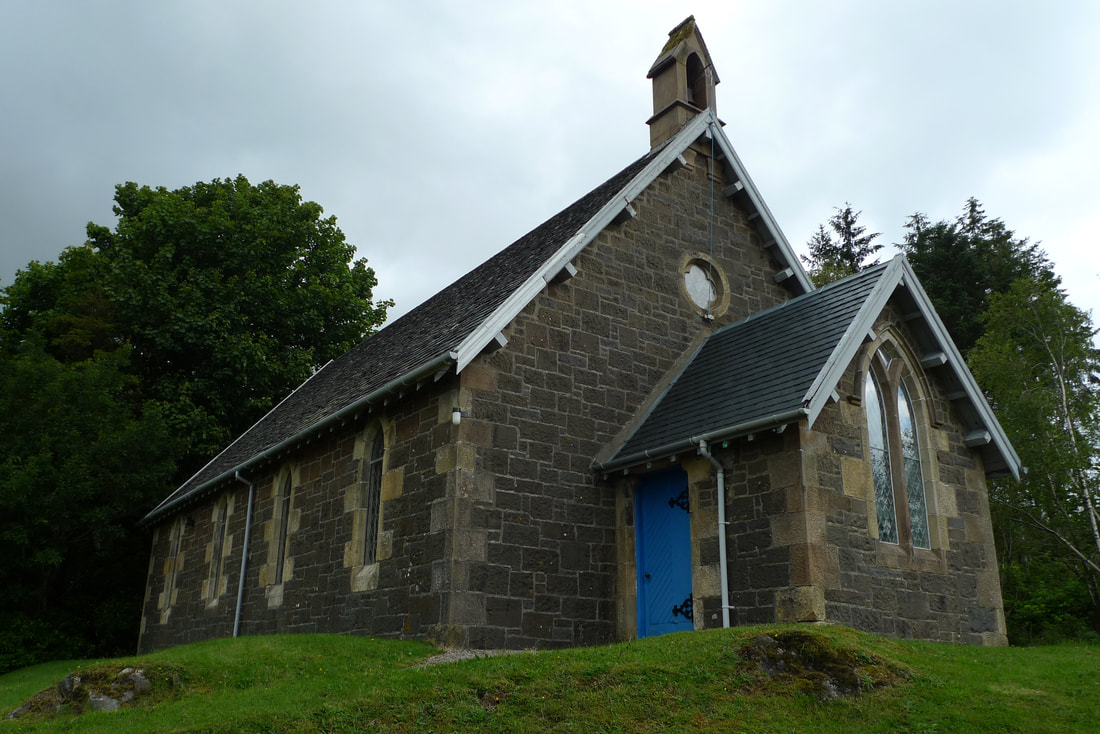
Kilmore Church
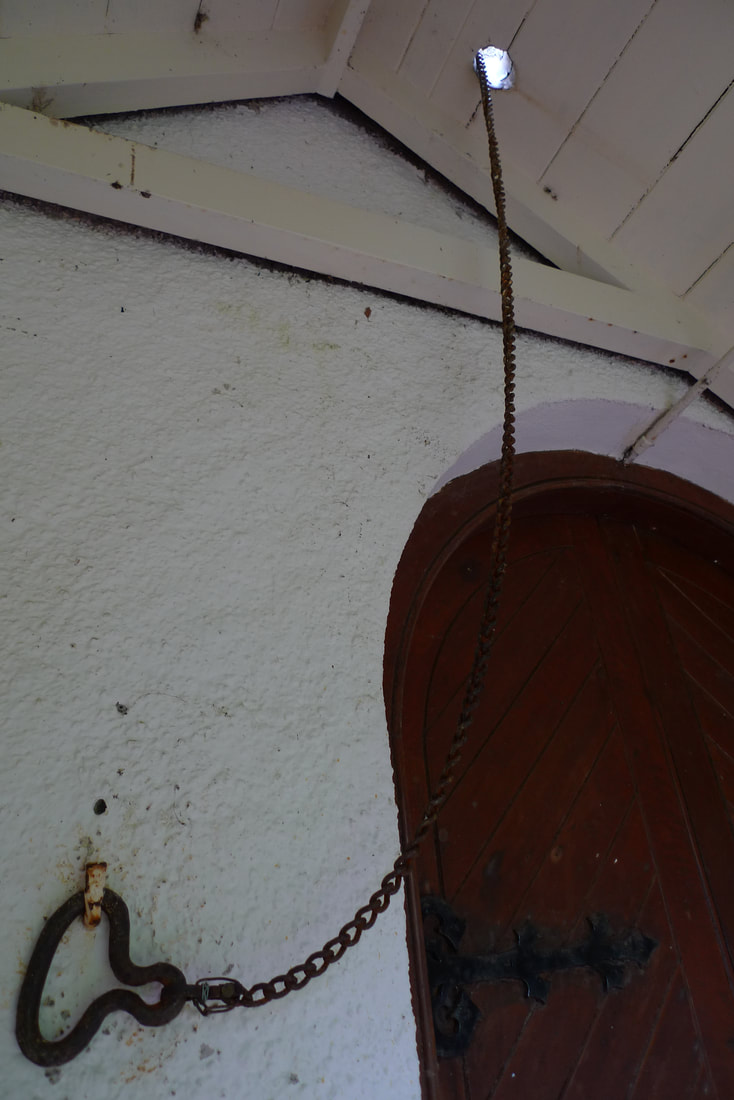
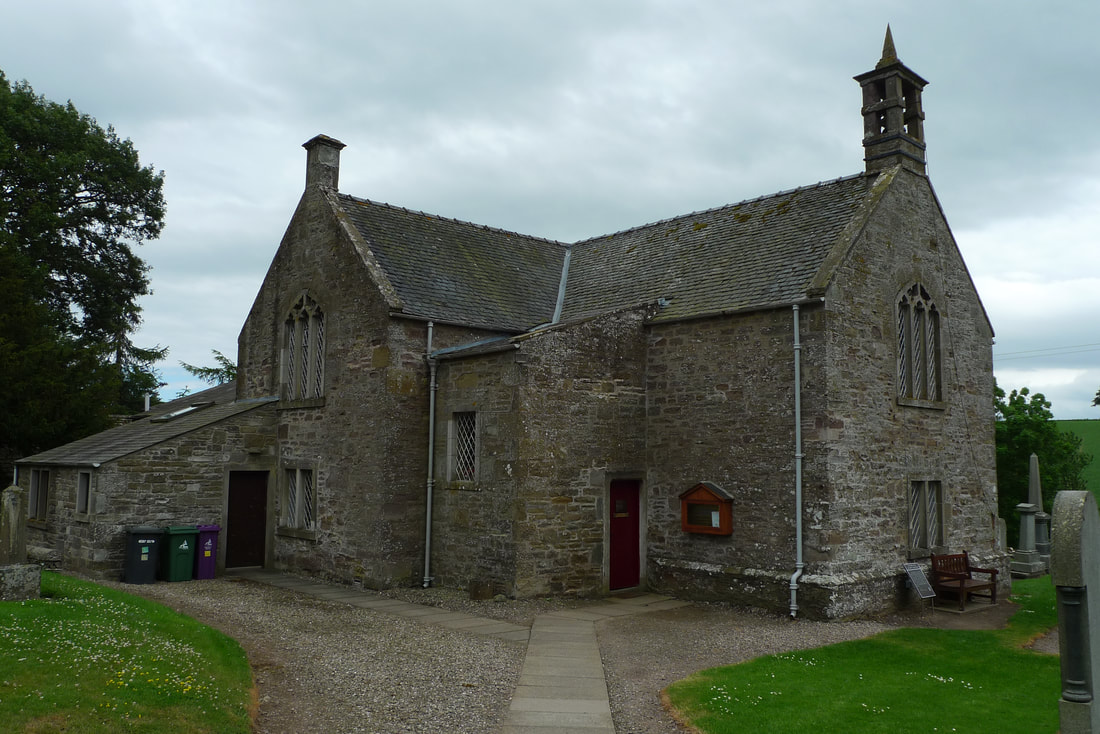
After leaving the A816 and turning onto the B844 you'll find Kilninver Parish Church. It was built in 1793. The front door is approached by a hedge-lined gravel path. That little walk is a joy. With the hedge enclosing you it feels like you have discovered a secret place. There's a wooden porch, a place to take off coats and leave umbrellas. It has a round hole cut in its roof for the chain that pulls the bell.
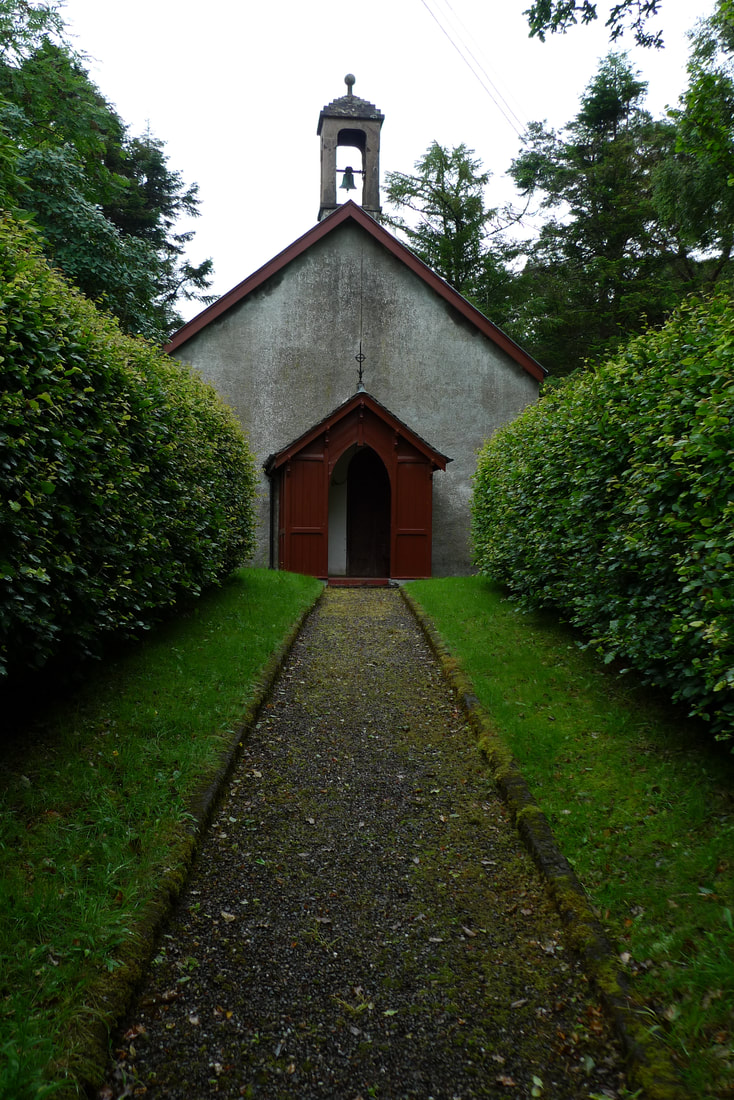
Kilninver Parish Church
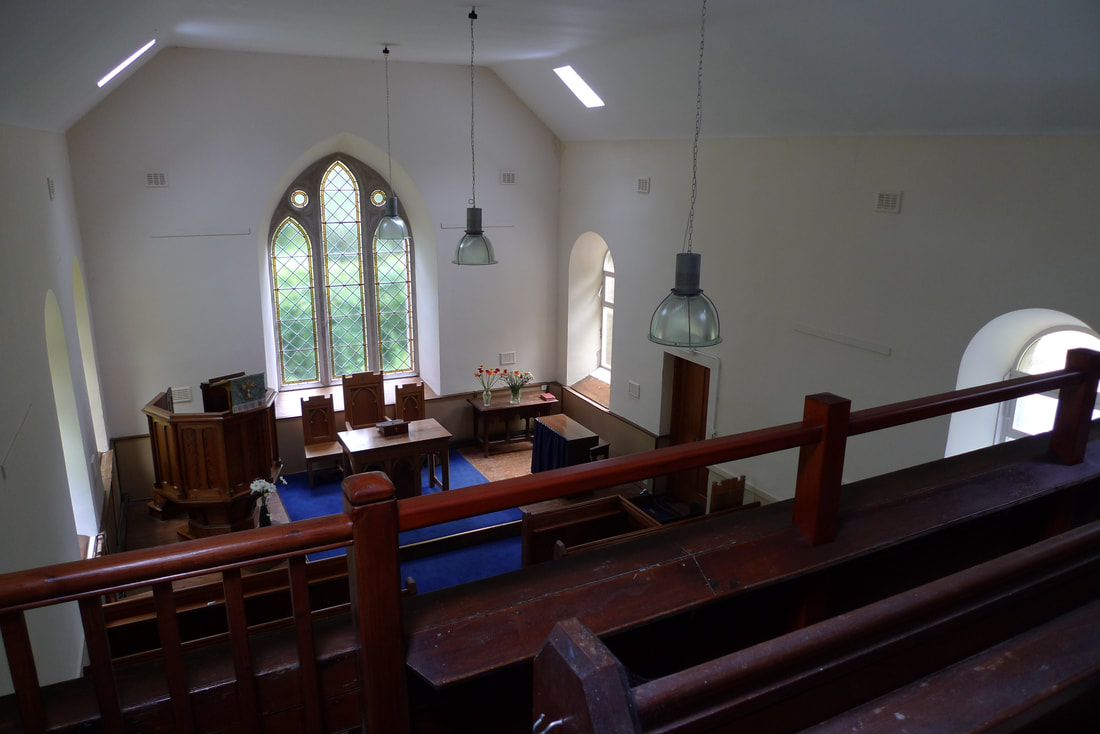
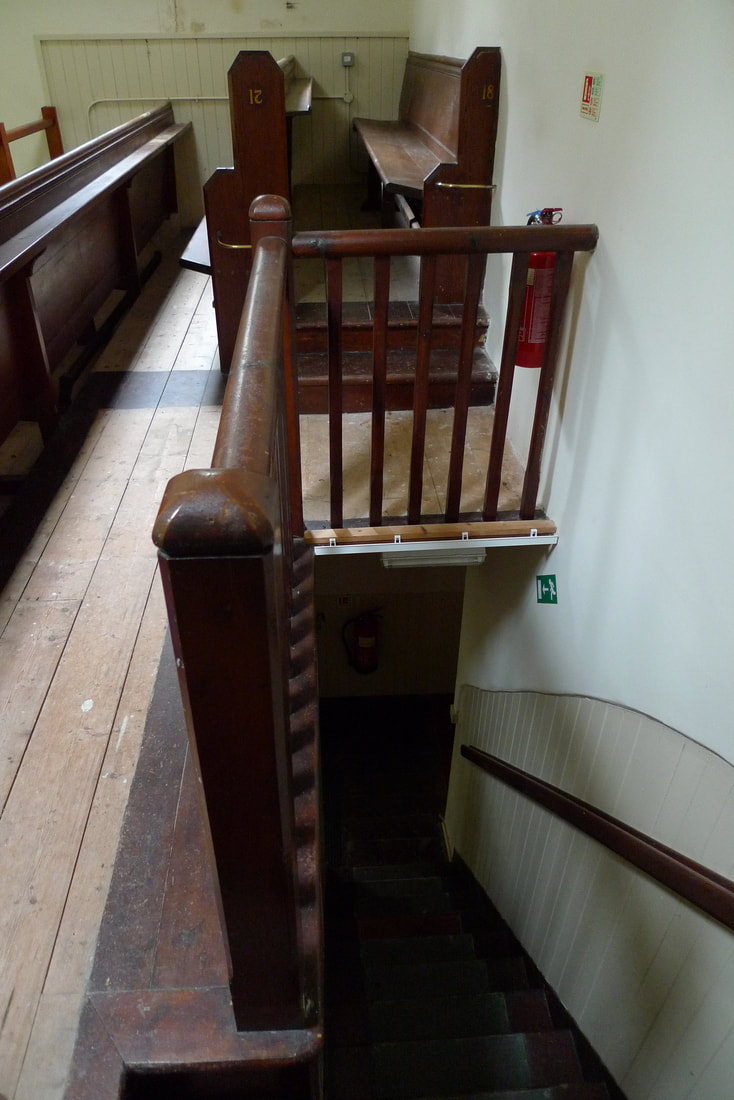
View from the upper gallery of Kilninver Parish Church
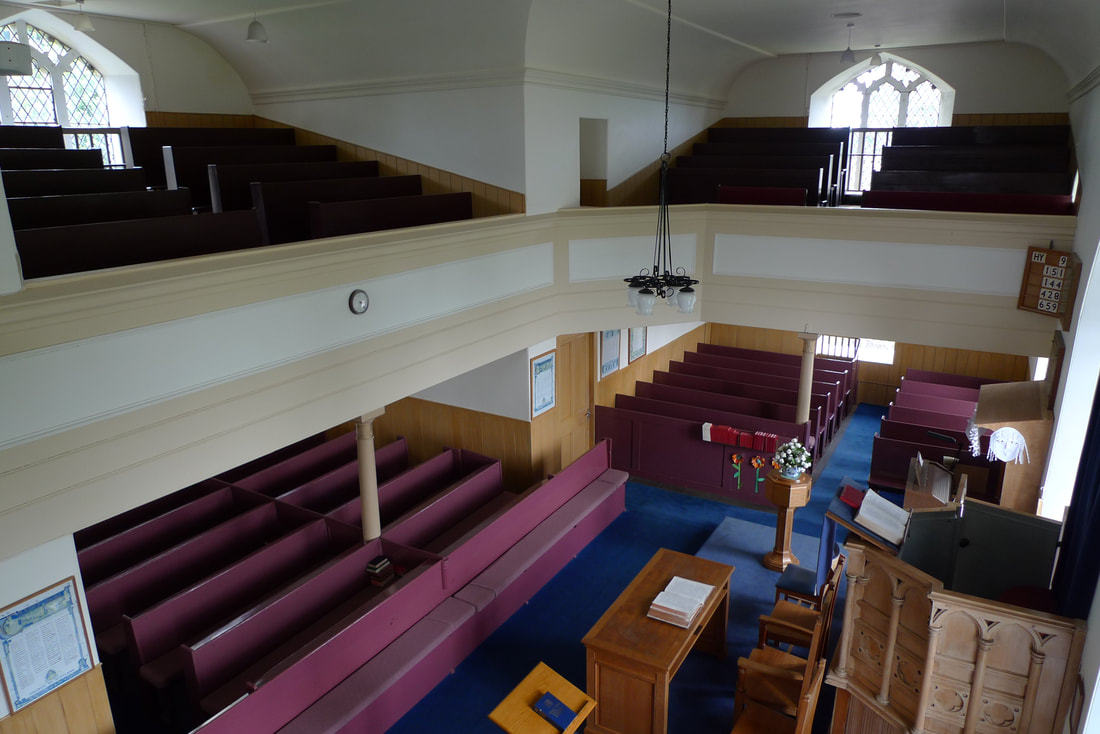
Inside the walls are white, offset by the dark wood of the pews. Light floods in from the large windows. A narrow staircase takes you to the upper gallery. A place to sit for a few minutes and enjoy how quiet it is and clear your mind.
To the bridge
It's just under 4 miles to The Clachan Bridge. There are a lot of hills on this road, some with 15% gradients.
The smells coming from this road were glorious. It was earthy from the ferns and grass, plus sweet from wildlowers. No candle can compete with the aroma sensation of cycling in Scotland. 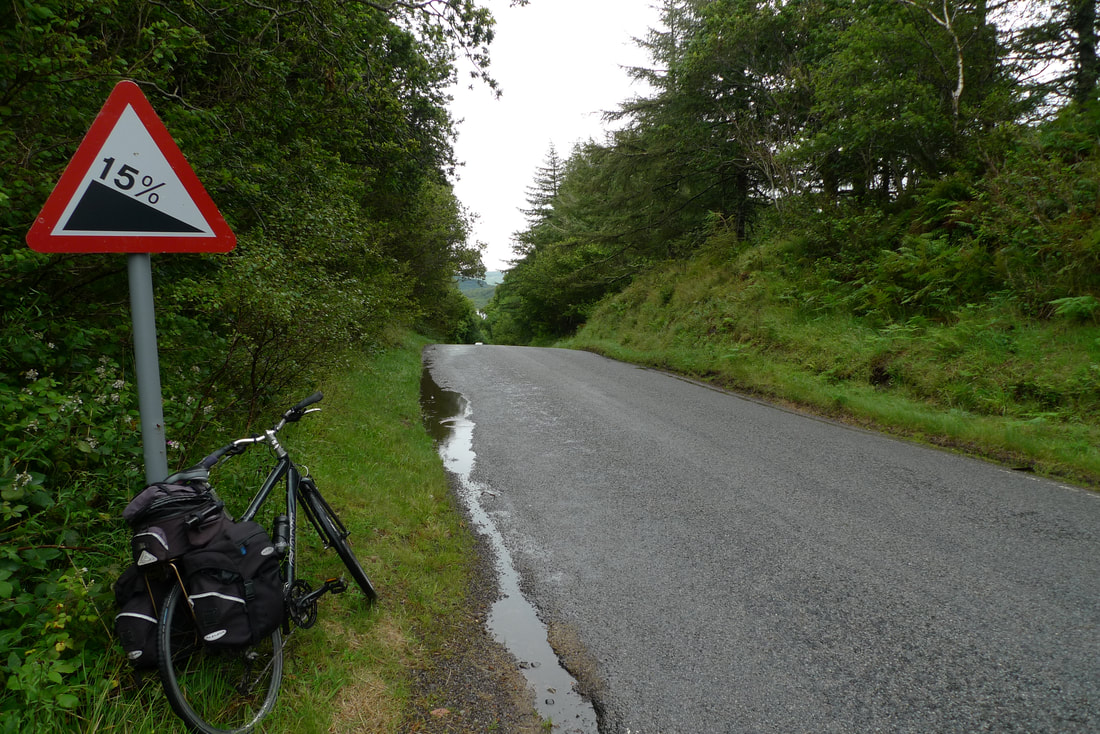
15 percent gradient on the road towards the 'Bridge over the Atlantic'
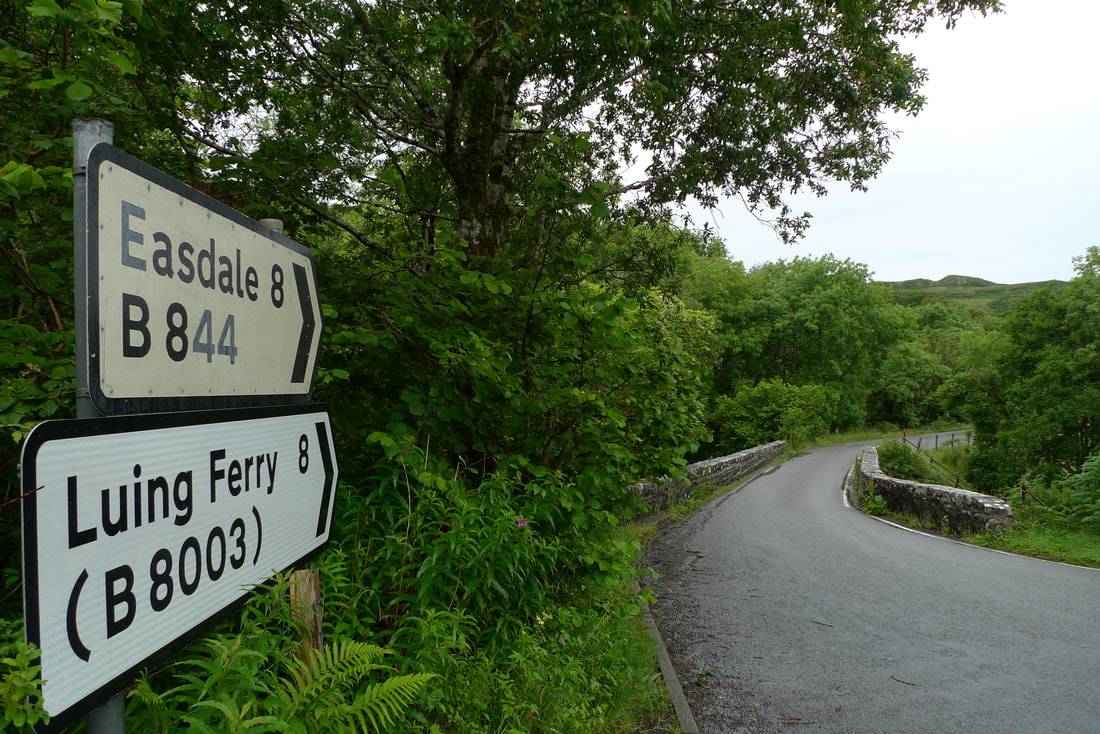
The road takes you to the ferries that cross to Easdale and Luing islands
Crossing the Atlantic
This location is spectacular. The view from the top of the bridge has islands and inlets and hills on the horizon.
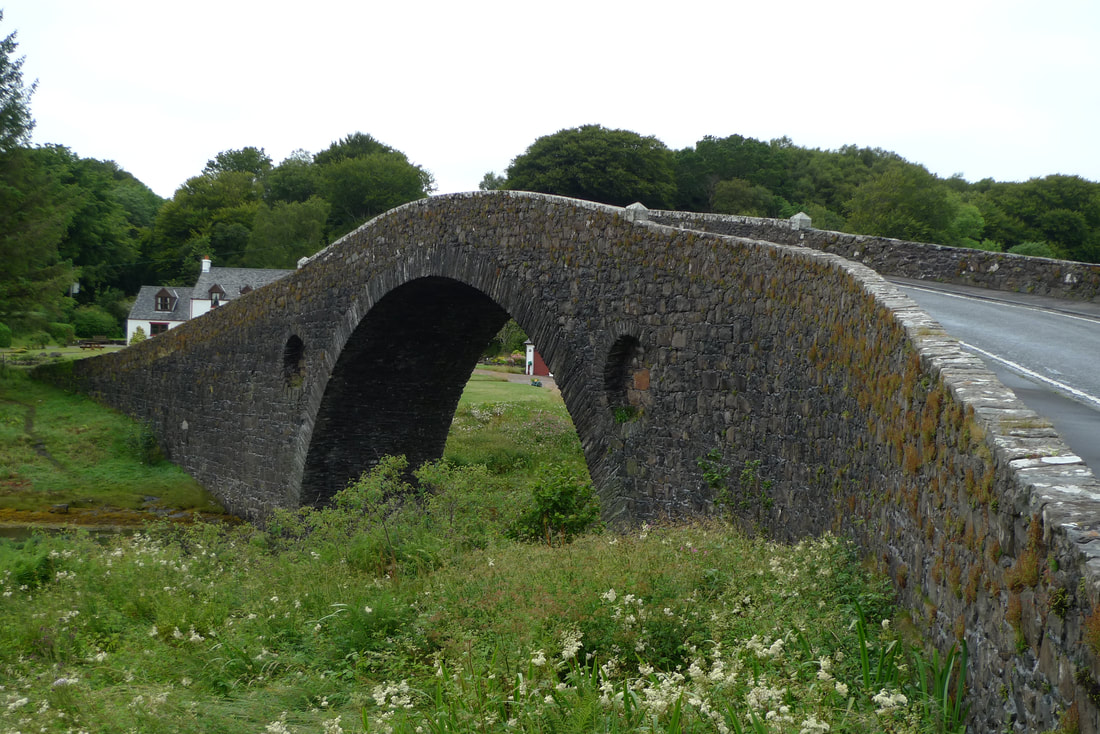
The Clachan Bridge, known as the 'bridge over the Atlantic'
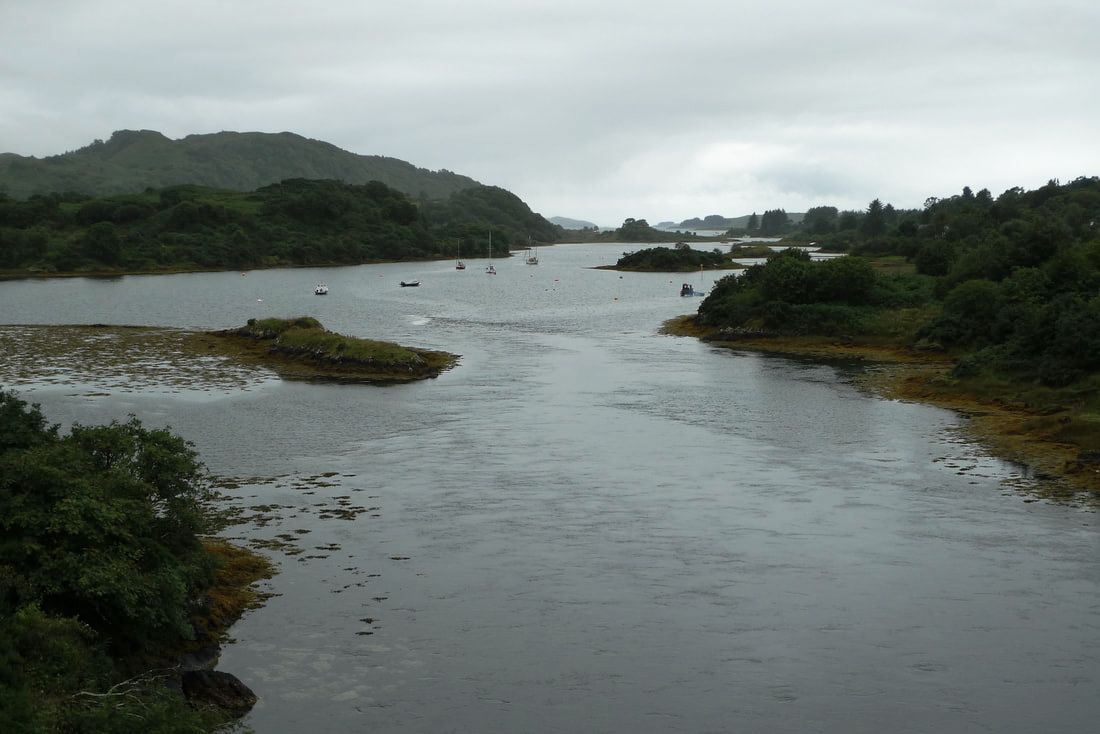
The view from the top of the 'bridge over the Atlantic'
The humpback bridge was completed in 1793, so it was never designed for motor traffic. I noticed that it's steep incline gave some drivers a bit of trouble with gear changes.
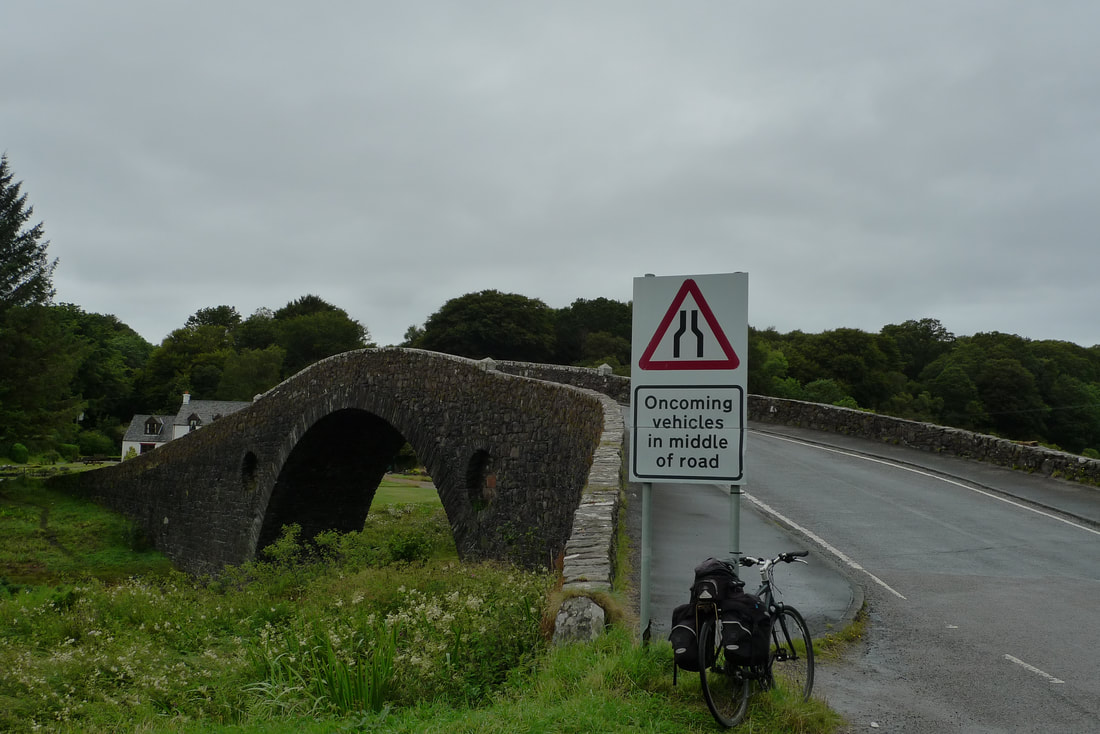
The Clachan Bridge dates from 1793, so was not designed for motor traffic
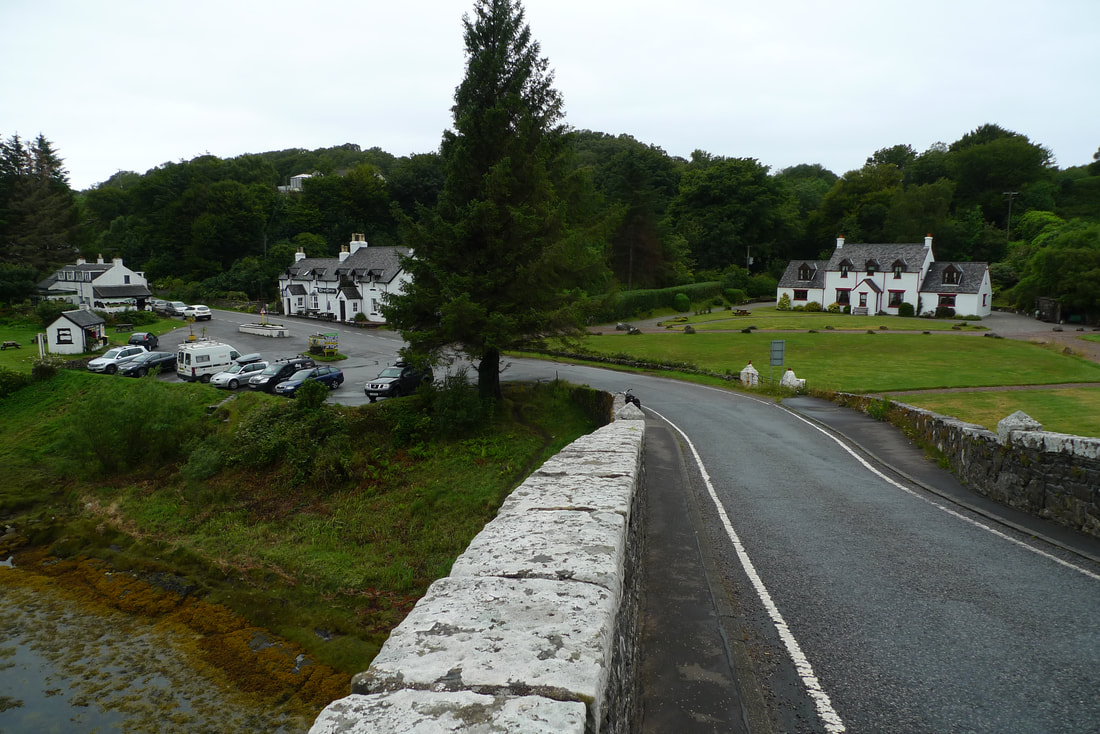
The view of Tigh an Truish and the other white properties from The Clachan Bridge
On the other side of the bridge there is a lovely scene of white-painted buildings. One of these is an inn called Tigh an Truish (house of the trousers). This curious name comes from the period when the Government banned the Gaelic language and the wearing of kilts. Islanders who crossed to the mainland would first stop in the inn to get changed out of their kilts and into trousers. When they returned to the island they would get changed back into their kilts.
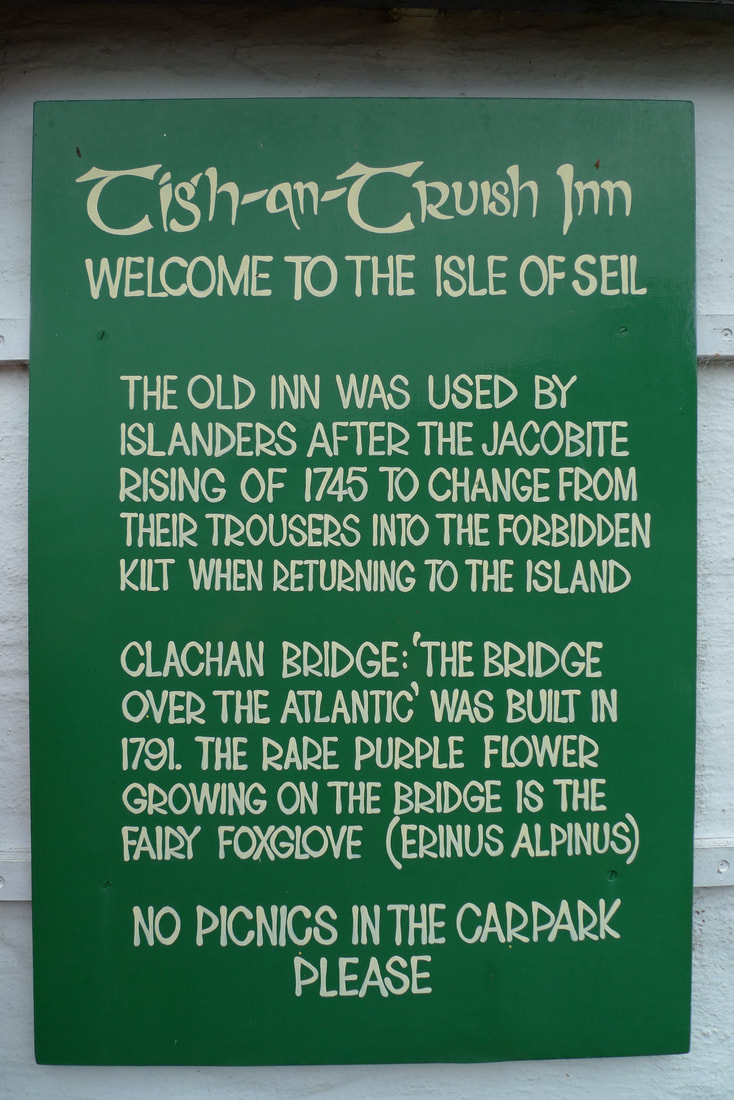
A sign that tells the history of the Clachan Bridge and the inn
The Slate Islands
After crossing the bridge you can explore the Slate Islands. Look out for my next blog.
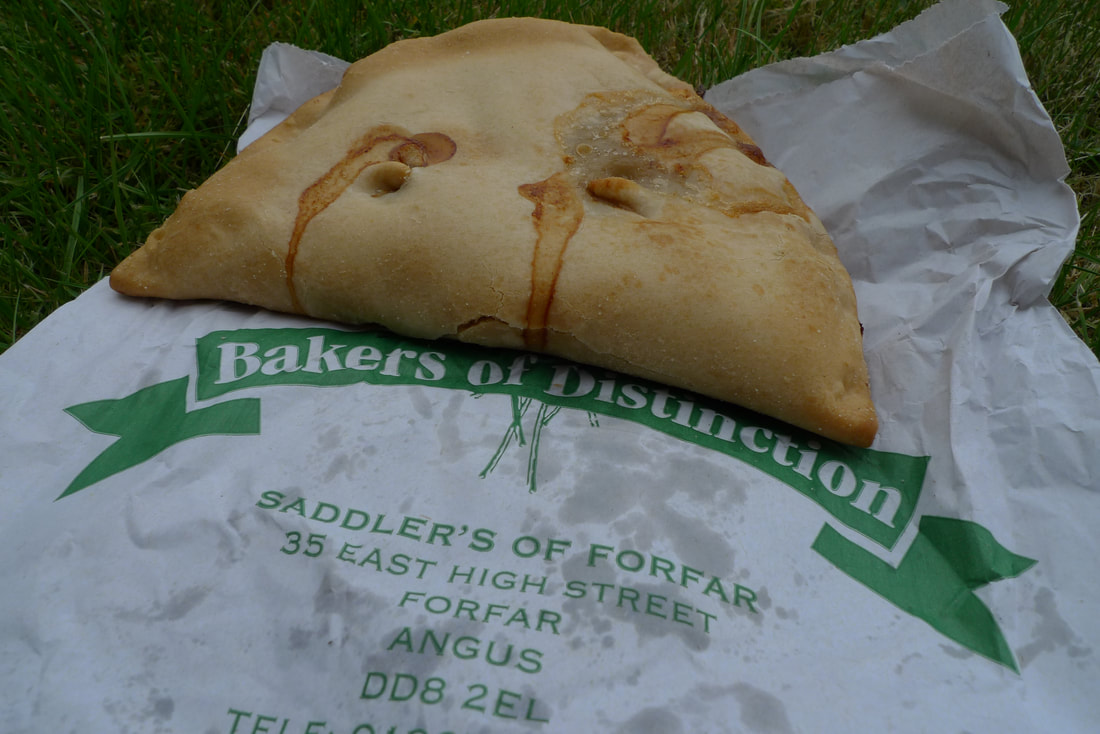
A Forfar Bridie
I love trying famous Scottish foods in the place that they come from. You can get variations of the bridie all over Scotland, but I can tell you that nothing beats a bridie from Forfar. On this route you can try one and see some of Scotland's finest Pictish stone carving.
Highlights of this route
Getting to Forfar
From Kirriemuir
I made this journey as part of a cycling trip to Glen Clova. I took the A926 from Kirriemuir to Forfar. It's only 6 miles. This road has a steady volume of traffic, but there is a way to avoid this. A pavement runs alongside the road. It has signage, in places, indicating that it is a shared pedestrian and cycle path. I was able to use this and encountered very few pedestrians. It's not the best surface in places, but for the short distance its worth it to avoid sharing the road with fast moving traffic. From Arbroath You can also do this route by taking a train to Arbroath. Forfar is around 15 miles from Arbroath. Just follow my blog in reverse if you are starting in Arbroath. Bridie at the priory
Once in Forfar I headed straight to Saddler's bakery for a bridie. Although the traditional tea room with its wood panelling was enticing, the bridie is best enjoyed as a takeaway food. I found the perfect location, about 10 minutes bike ride away, at Restenneth Priory.
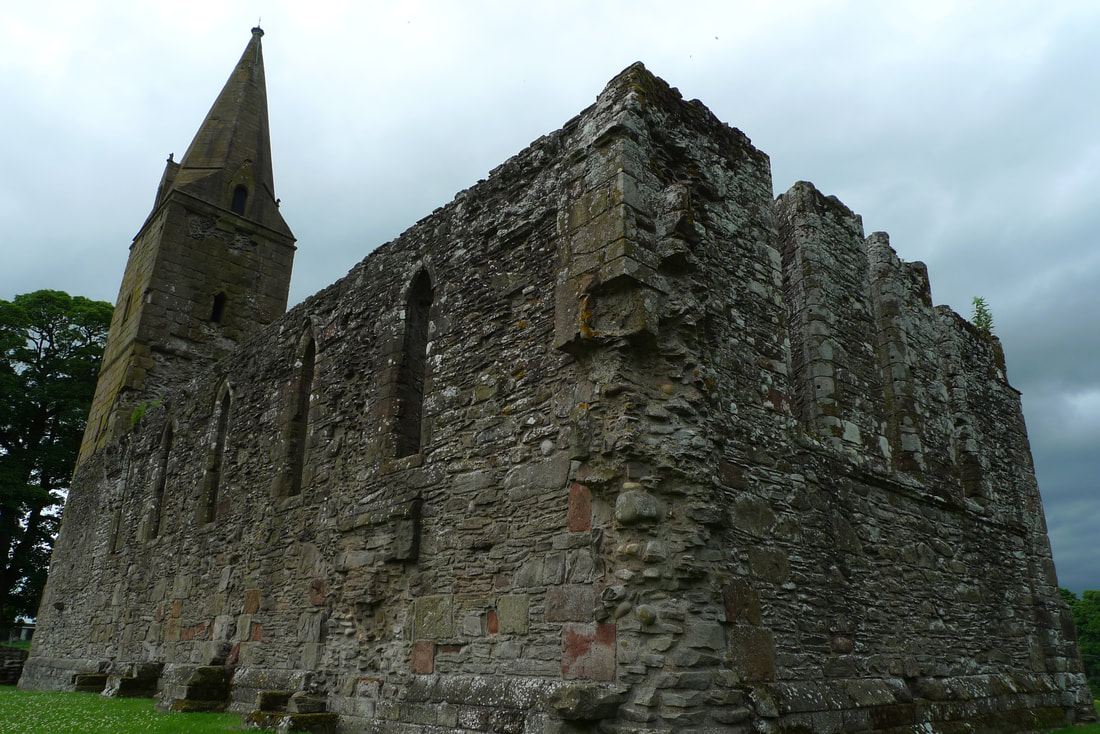
Restenneth Priory
The priory was founded in the early 1100s and the most distinctive feature of the ruin is the 14m high tower. In 1325 Robert the Bruce buried the body of his son here.
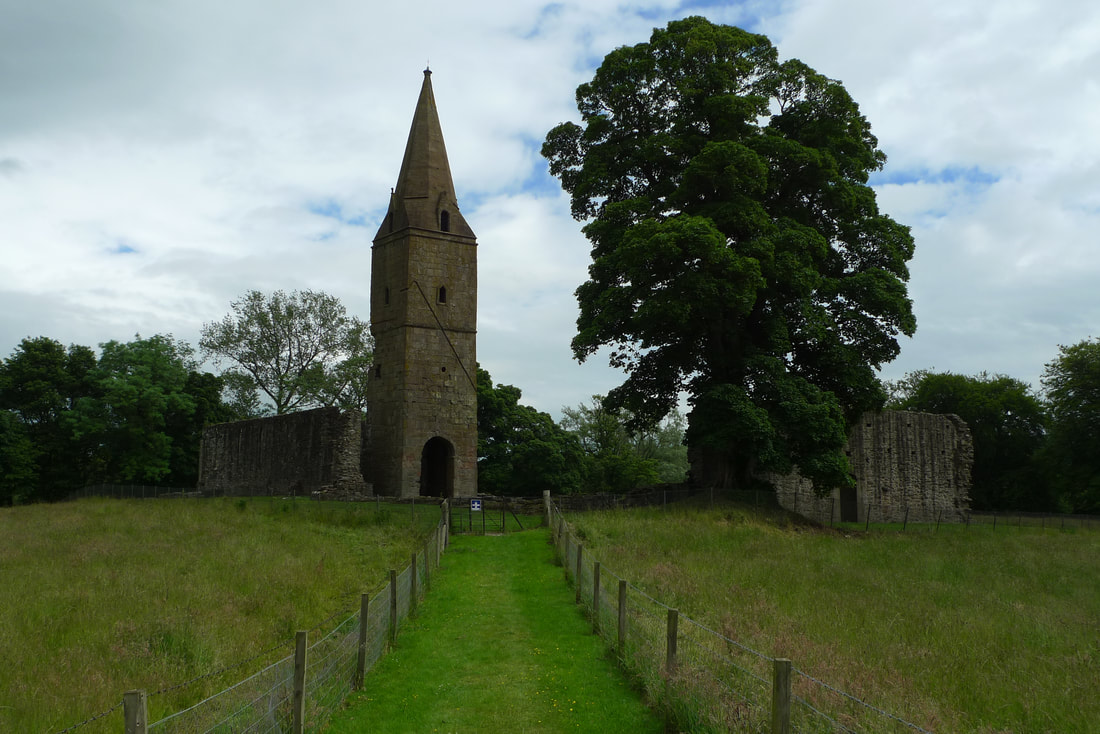
The tower of Restenneth Priory
There's not a great deal to see, but Restenneth is a pleasant spot. I took a seat and tried my first ever Forfar Bridie.
I loved every bite of it. The salty pastry was crispy in places. It was packed with a juicy meat filling made sweet by onions. A restaurant critic, Tam Cowan, was equally impressed: "My bridie was sensational — the soft buttery pastry was packed with mince and onion — and I marvelled at the simplicity of this very satisfying meal. Oysters? Lobster thermidor? Chateaubriand? Nah. Give me a bridie and beans any day of the week." There are two versions of how the bridie came about. One is that it started out as a traditional meal served to the bride at weddings, hence 'bridie'. The other is that a Margaret Bridie sold them in the eighteenth century from the market in Forfar. Pictish stones
If you come for a Forfar Bridie then you really should include a trip to the Aberlemno Pictish Stones. From Restenneth Priory it is a 5 mile cycle along the B9134 to reach them.
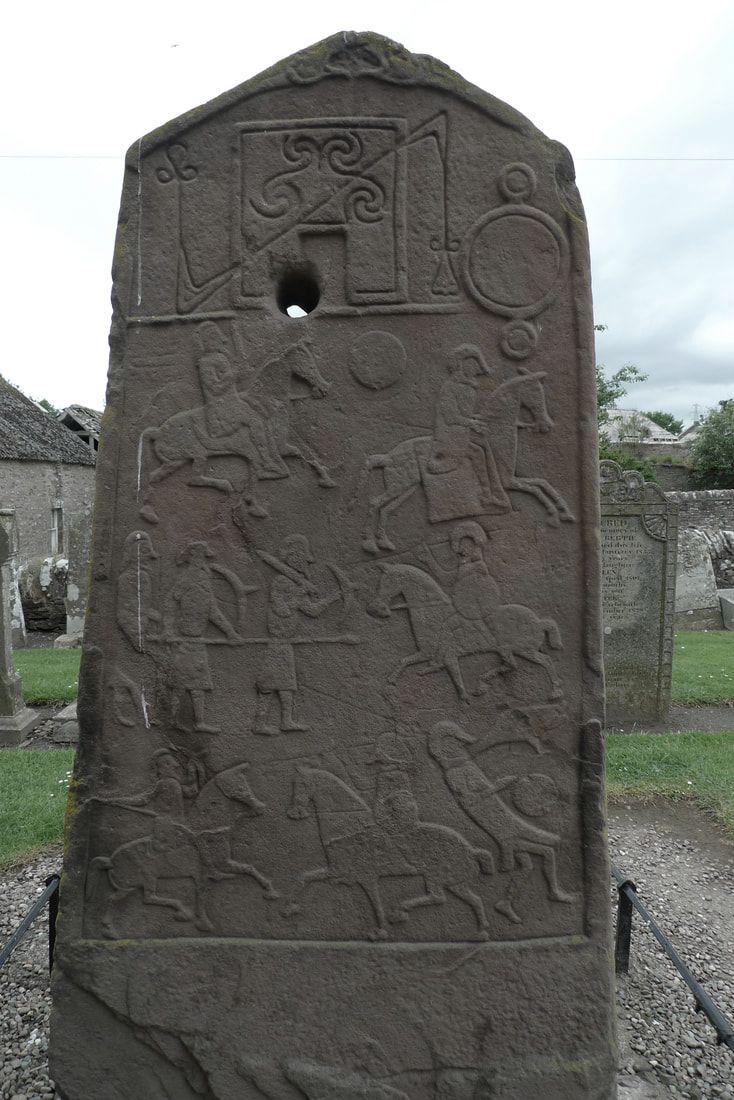
Battle scene on one of the Aberlemno stones
The four stones are among the best examples of Pictish stone carving in the country. They date between AD 500 and 800. The stone that depicts a battle is particularly exquisite, with helmeted figures on horseback.
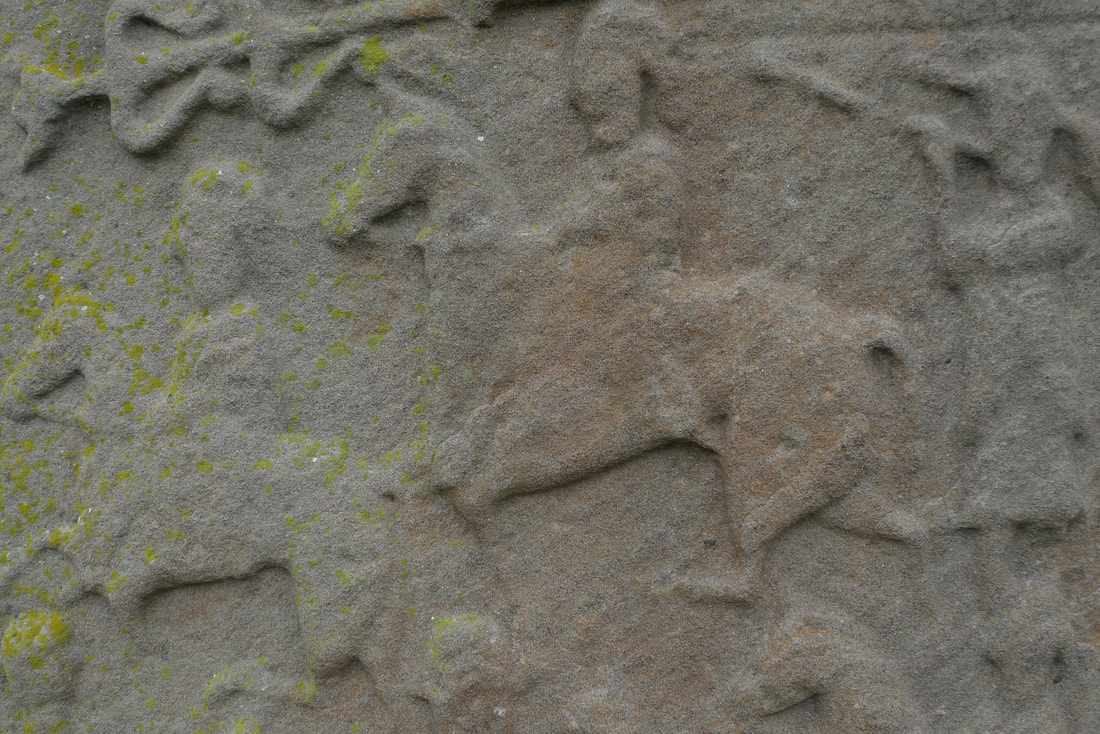
Detail of the battle scene on one of the Aberlemno standing stones
It is incredible that these are so well preserved and survive all that the Scottish weather can throw at them. They do get covered with wooden boxes in the winter months, so you need to time your visit to see them.
Another of the stones depicts a hunting scene, with figures on horseback. 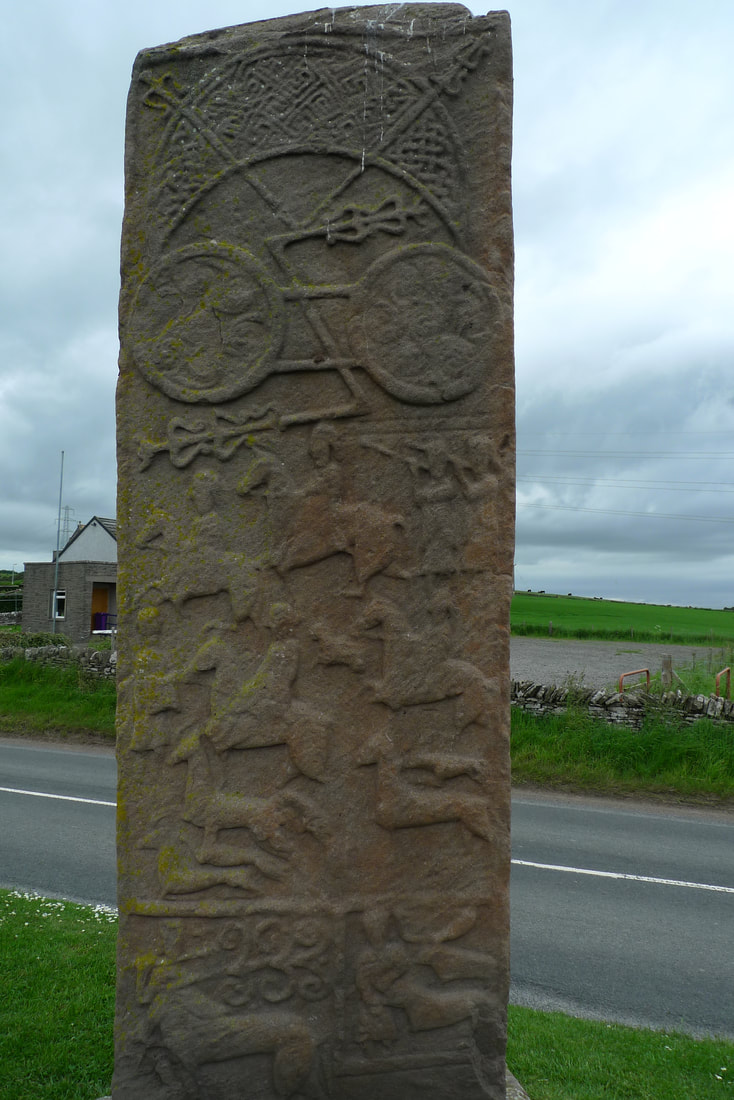
Hunting scene on one of the Aberlemno stones
Another stone looks onto a field. It has carvings of symbols that are typical of Pictish stones- the serpent and double-disc and z-rod.
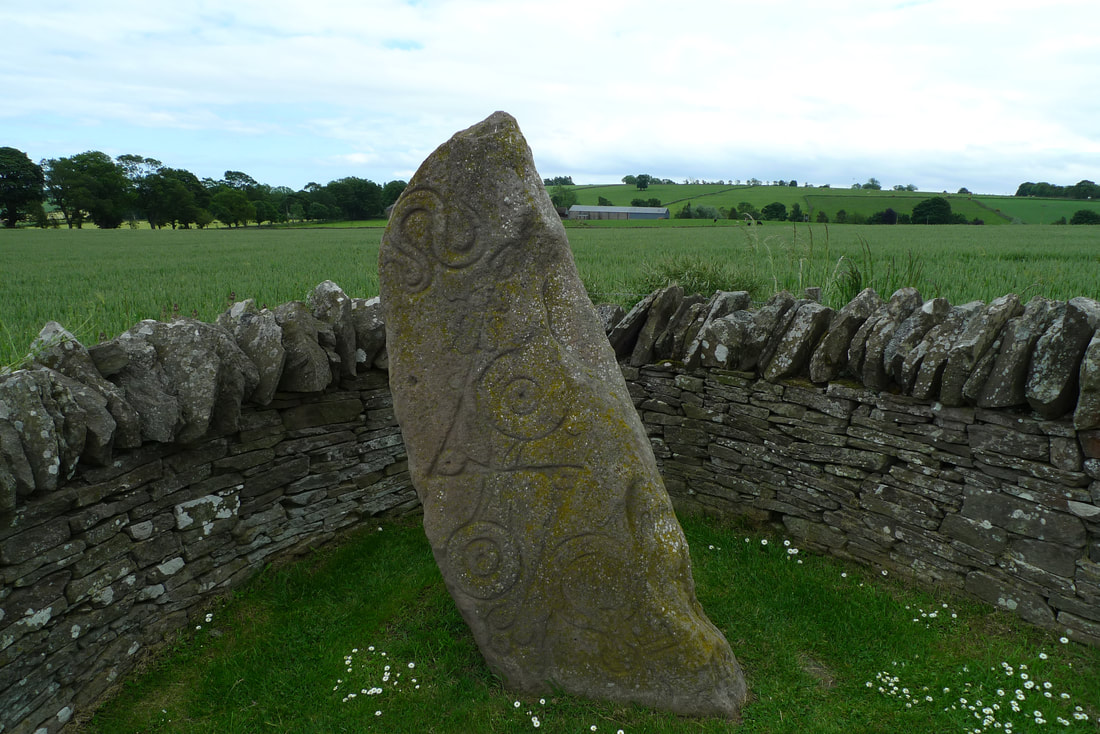
Aberlemno stone featuring Pictish symbols
The location of the road in relation to the stones is crazy. You have to be careful when viewing the stones.
The stones are adjacent to Aberlemno Parish Church. The building dates from 1772 and it was open during my visit. A spiral staircase takes you to the upper gallery where you can look down on the pulpit.
Balgavies Loch nature reserve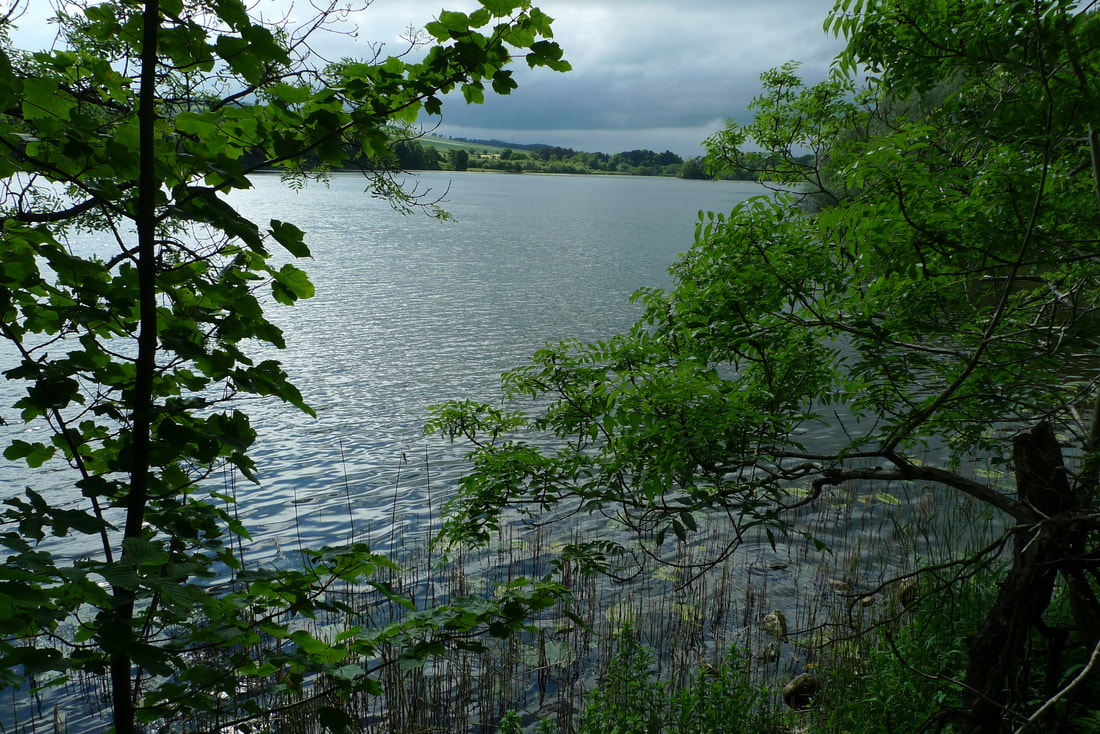
Balgavies Loch
This loch is about 4 miles south of the Aberlemno stones. Its a haven for wildlife, including red squirrel, kingfisher and skylark.
After miles of similar looking farmlands this is a surprising change of scenery. 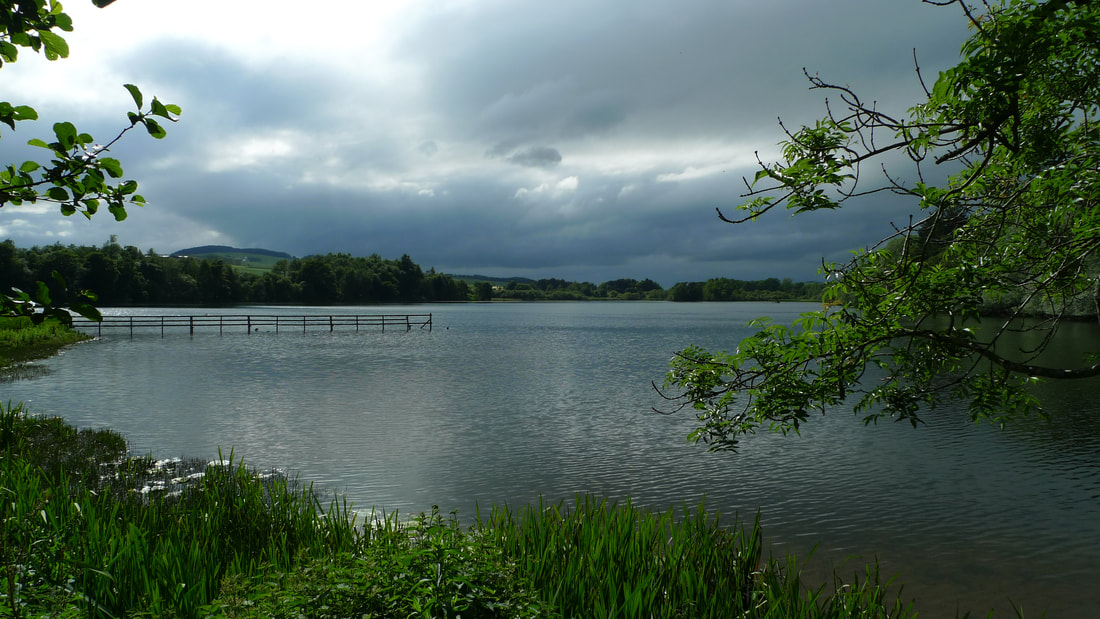
Balgavies Loch
Another suprise, next to the loch is a disused railway station. Auldbar Road station was on the Arbroath to Forfar Railway. The line closed in the 1960s, but you can still find a station house and signal box here.
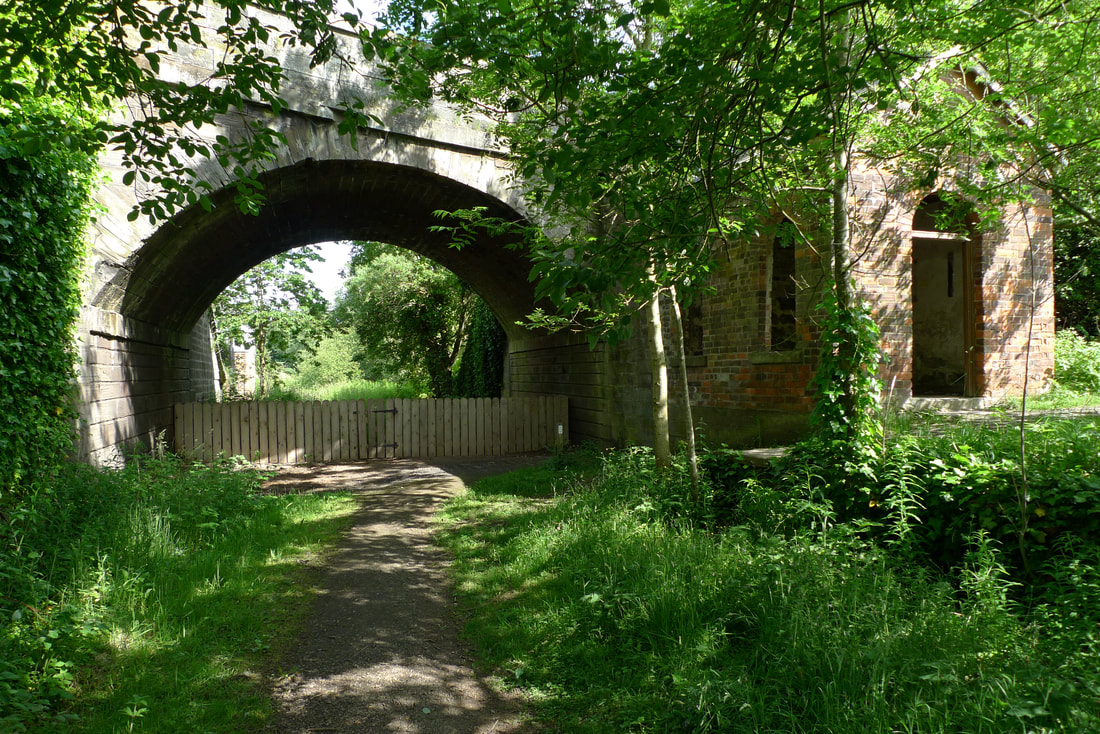
Auldbar Road station
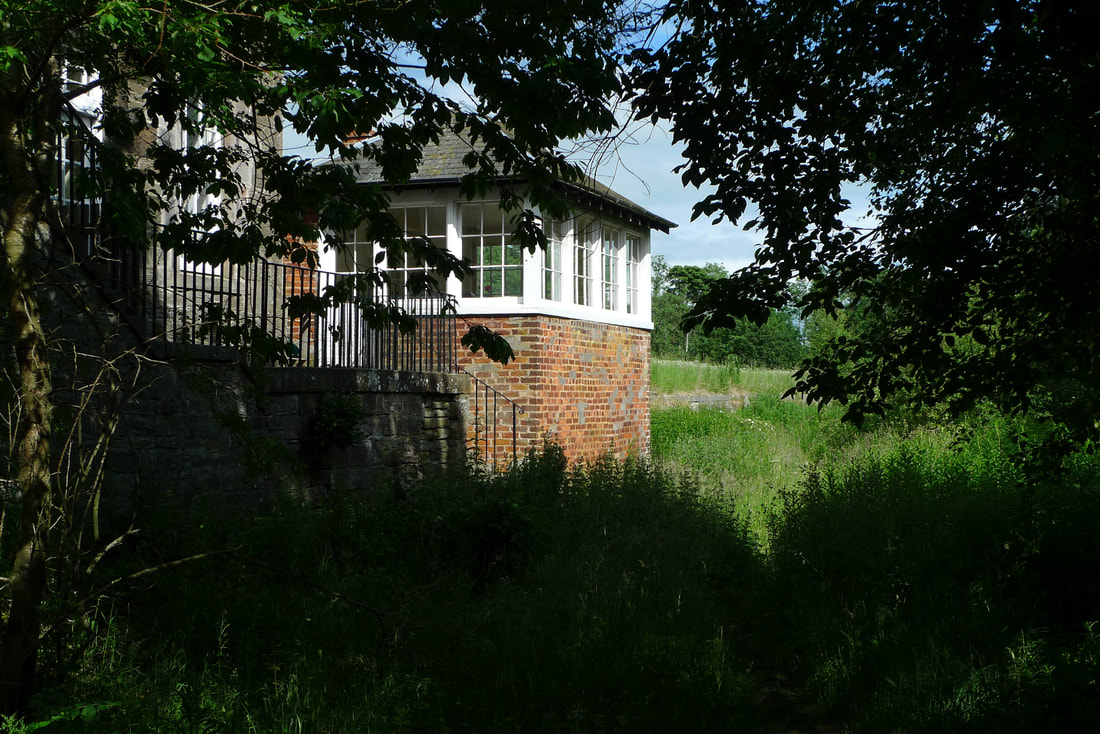
Signal box at Auldbar Road station
To Arbroath
It's about 12 miles to Arbroath station, where you can pick up trains heading to Aberdeen, Edinburgh and other locations. That's using the quieter roads, but you can reduce this by around 2 miles if you cycle on the busier A-roads.
I took the quiet roads. My head was down as I had a train to catch, so I didn't take in a lot of detail. It's farming country with good roads that don't get a lot of traffic. Taking up cycling as a hobby is a great way to stay in shape and get around in a cost-effective manner. It is also good for the environment to travel this way. However, buying a bicycle is just your first step toward receiving all of these benefits.
There are plenty of other cycling accessories that you will need to make all your journeys safer and more enjoyable. Here are just some of the biking accessories that every bike rider needs. Bike Lock One of the benefits of driving a car is that you never have to worry about where you are going to leave your vehicle. Many cyclists can benefit from using a bike lock to safely store their bikes when they are out and about. These locks are especially useful if your workplace doesn’t feature any off-street storage for those who choose to cycle instead of drive. No one wants to keep their bike with them all day. Using a bike lock allows you to safely store your bike outside without worrying about it being stolen. The best thing about bike locks is that they are small and malleable. This means that you can reliably bring them everywhere you go in your backpack or even your pockets. You will also notice how easy it is to find a spot for your bike outside. Bike Helmet A bike helmet isn’t just a necessary accessory, it is often required that cyclists wear them by law in many countries across the world, but it isn’t yet the law in the UK. These helmets are designed to protect your head, one of the most fragile parts of the human body, in the unfortunate event that you are knocked off your bike while riding. You can easily recover from a scraped knee or elbow, but head injuries tend to be a lot worse. You can always cycle with elbow pads and knee guards if you choose, but a bike helmet is an absolute must for every rider. To get the most out of one of these accessories, it is advised that you replace your helmet every three to five years. Lights Almost every bike is fitted with a front light and a rear reflective light as a legal requirement; however, you will need more than these if you plan to regularly cycle at night. You will find many kinds of cycling lights on the market, but the best ones are the kind that easily clips to your handlebars and can be charged by USB. That way, you should be able to keep them topped up wherever you are. Bicycle Insurance While the accessories above are all good to have, there is never a guarantee that they will work one hundred percent of the time. That is why it is a good idea to get bicycle insurance. This type of cover works like any other insurance policy, so bicycle insurance from a company like Bicy Insurance should cover the cost of your bike if it is damaged or stolen and it wasn’t your fault. You don’t want to be off the road for too long, and these small monthly payments can help you get back on your bike in no time. Of course, the cost of your policy will depend on the make and age of your current bike. Bicycle Pump All those hours on your bike are going to have an effect on your tires. Nothing lasts forever, and your bike tires will slowly deflate over time. This happens when you ride your bike and when it is left standing for a long while. Cycling is much easier and safer with fully inflated tires, which is why you will always need a bicycle pump. These bike pumps come in a variety of shapes and sizes. Fortunately, a real bike expert should point you toward the right pump. Again, these pumps are small enough to carry with you, so an unexpected flat tire shouldn’t get in your way. Bells Sometimes there is nothing worse than having to continuously stop to move around pedestrians in your way. A bike bell can alert those ahead of you and signal your presence so you can keep moving forward. However, it is always wise to stick to the cycle lanes where possible. Bike Computer Almost every bit of gym equipment has an in-built computer so that you can track your progress. Fortunately, you can also buy a similar device for your bike. An onboard bike computer clips safely onto your handlebars and features a calorie tracker, timer, and GPS system. This gadget is perfect for cyclists that take up the activity for exercise, although it is always handy to have a GPS on you. Allen Keys No one wants to be stranded at the side of the road. When you own a car, you can always rely on roadside assistance to help you out when things go wrong. Cyclists usually have to rely on themselves. That is why you will never regret carrying a set of allen keys with you. These small tools can help you navigate any part of your bike so that you can learn how to fix most issues yourself. Rucksack If you can take away any piece of advice from this article, it is that every cyclist can benefit from leaving the house with a rucksack. Whether you are cycling to lose weight or to speed up your morning commute, you will need somewhere to store your bike lock, onboard computer, bike pump, and allen keys. Even if you do not feel like you need all these accessories, you can’t deny that a rucksack wouldn’t come in handy for storing your waterproof gear. No one likes to cycle in the rain, so try to make sure you always come prepared. Conclusion As you can see, there are a lot of things that a cyclist needs. However, every rider will find a use for all these items. In other words, these are all bike accessories that every rider needs. |